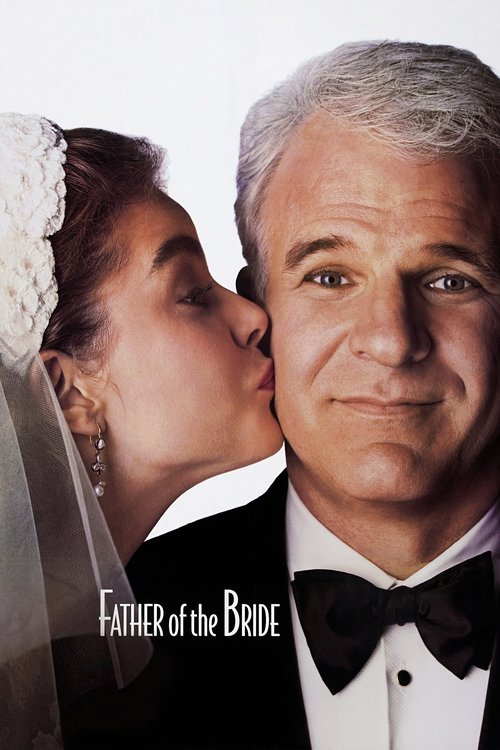
Father of the Bride
George Banks is an ordinary, middle-class man whose 22 year-old daughter Annie has decided to marry a man from an upper-class family, but George can't think of what life would be like without his daughter. His wife tries to make him happy for Annie, but when the wedding takes place at their home and a foreign wedding planner takes over the ceremony, he becomes slightly insane.
Despite a respectable budget of $20.0M, Father of the Bride became a commercial success, earning $89.3M worldwide—a 347% return.
1 win & 5 nominations


Plot Structure
Story beats plotted across runtime


Narrative Arc
Emotional journey through the story's key moments
Story Circle
Blueprint 15-beat structure
Arcplot Score Breakdown
Weighted: Precision (70%) + Arc (15%) + Theme (15%)
Father of the Bride (1991) demonstrates strategically placed plot construction, characteristic of Charles Shyer's storytelling approach. This structural analysis examines how the film's 15-point plot structure maps to proven narrative frameworks across 1 hour and 45 minutes. With an Arcplot score of 6.5, the film balances conventional beats with creative variation.
Characters
Cast & narrative archetypes

George Banks
Annie Banks-MacKenzie
Nina Banks
Bryan MacKenzie
Franck Eggelhoffer
Matty Banks
Main Cast & Characters
George Banks
Played by Steve Martin
An overprotective father who struggles to accept his daughter's upcoming wedding and impending independence.
Annie Banks-MacKenzie
Played by Kimberly Williams-Paisley
George's 22-year-old daughter who returns from Europe engaged and excited to plan her dream wedding.
Nina Banks
Played by Diane Keaton
George's supportive wife and voice of reason who balances her husband's anxiety with practical wisdom.
Bryan MacKenzie
Played by George Newbern
Annie's fiancé, a thoughtful and successful young man who loves Annie but must navigate George's protective nature.
Franck Eggelhoffer
Played by Martin Short
The flamboyant, eccentric wedding coordinator who transforms the Banks home with his extravagant vision.
Matty Banks
Played by Kieran Culkin
George and Nina's young son and Annie's brother who observes the wedding chaos with bemused detachment.
Structural Analysis
The Status Quo at 1 minutes (1% through the runtime) establishes George Banks sits alone in his disheveled house after the wedding, reflecting on how his life was perfect before his daughter announced her engagement. The house is a mess, he's exhausted, and he begins to narrate his story of how he became "father of the bride.".. The analysis reveals that this early placement immediately immerses viewers in the story world.
The inciting incident occurs at 13 minutes when Annie returns from studying in Rome and announces at dinner that she's engaged to Bryan MacKenzie, a man she met only three months ago. George is blindsided and devastated. His little girl is leaving him, and his perfect world is shattered in an instant.. At 12% through the film, this Disruption aligns precisely with traditional story structure. This beat shifts the emotional landscape, launching the protagonist into the central conflict.
The First Threshold at 27 minutes marks the transition into Act II, occurring at 25% of the runtime. This illustrates the protagonist's commitment to George makes the active choice to accept the wedding and commit to being fully involved. After initial resistance, he decides to embrace his role as father of the bride and dive into wedding planning, even if reluctantly. He crosses into the "wedding world" and there's no turning back., moving from reaction to action.
At 54 minutes, the Midpoint arrives at 51% of the runtime—precisely centered, creating perfect narrative symmetry. The analysis reveals that this crucial beat At the supermarket, George has a meltdown over the price of hot dog buns, leading to his arrest. This public breakdown represents a false defeat—his attempts to control the situation have failed spectacularly. The stakes raise as his behavior threatens to embarrass the family and damage the wedding. The fun is over., fundamentally raising what's at risk. The emotional intensity shifts, dividing the narrative into clear before-and-after phases.
The Collapse moment at 79 minutes (75% through) represents the emotional nadir. Here, On the eve of the wedding, George breaks down crying in his bedroom, finally confronting the death of his daughter's childhood and his role as the center of her world. This is his darkest moment—the "whiff of death" is the loss of Annie as his little girl. He must face that she's truly leaving., demonstrates the protagonist at their lowest point. This beat's placement in the final quarter sets up the climactic reversal.
The Second Threshold at 83 minutes initiates the final act resolution at 79% of the runtime. On the wedding day, George has a heartfelt moment with Annie where he realizes she'll always be his daughter, even as she becomes a wife. He synthesizes what he's learned: he can let her go AND keep his love for her. This realization gives him the strength to fulfill his role with grace., demonstrating the transformation achieved throughout the journey.
Emotional Journey
Father of the Bride's emotional architecture traces a deliberate progression across 15 carefully calibrated beats.
Narrative Framework
This structural analysis employs structural analysis methodology used to understand storytelling architecture. By mapping Father of the Bride against these established plot points, we can identify how Charles Shyer utilizes or subverts traditional narrative conventions. The plot point approach reveals not only adherence to structural principles but also creative choices that distinguish Father of the Bride within the comedy genre.
Charles Shyer's Structural Approach
Among the 5 Charles Shyer films analyzed on Arcplot, the average structural score is 7.2, reflecting strong command of classical structure. Father of the Bride takes a more unconventional approach compared to the director's typical style. For comparative analysis, explore the complete Charles Shyer filmography.
Comparative Analysis
Additional comedy films include The Bad Guys, Ella Enchanted and The Evening Star. For more Charles Shyer analyses, see Father of the Bride Part II, Irreconcilable Differences and I Love Trouble.
Plot Points by Act
Act I
SetupStatus Quo
George Banks sits alone in his disheveled house after the wedding, reflecting on how his life was perfect before his daughter announced her engagement. The house is a mess, he's exhausted, and he begins to narrate his story of how he became "father of the bride."
Theme
Nina tells George "You're not losing a daughter, you're gaining a son," articulating the film's central theme about accepting change and letting go. George dismisses this, revealing his resistance to the truth he must eventually embrace.
Worldbuilding
Flashback to the Banks family's idyllic life before the disruption. George's world is established: successful businessman, loving wife Nina, son Matty, and especially his close bond with 22-year-old daughter Annie. We see their comfortable upper-middle-class home, family dynamics, and George's contentment with the status quo.
Disruption
Annie returns from studying in Rome and announces at dinner that she's engaged to Bryan MacKenzie, a man she met only three months ago. George is blindsided and devastated. His little girl is leaving him, and his perfect world is shattered in an instant.
Resistance
George resists the engagement and upcoming wedding. He debates whether this is really happening, questions Bryan's worthiness, and struggles with the cost and scale of the wedding. Nina acts as his guide, helping him process the change. George meets flamboyant wedding coordinator Franck Eggelhoffer, which forces him to confront the reality of the wedding.
Act II
ConfrontationFirst Threshold
George makes the active choice to accept the wedding and commit to being fully involved. After initial resistance, he decides to embrace his role as father of the bride and dive into wedding planning, even if reluctantly. He crosses into the "wedding world" and there's no turning back.
Mirror World
George observes Annie and Bryan together, seeing their genuine love and excitement. This relationship (the B-story) will teach George what he needs to learn: that love means letting go, and that Annie's happiness matters more than his own comfort. Their joy begins to soften his resistance.
Premise
The "fun and games" of wedding planning: George navigates the absurd world of expensive weddings, deals with Franck's outrageous ideas, struggles with the mounting costs, meets Bryan's wealthy parents, and experiences the comedy and chaos of preparations. This is what the audience came for—Steve Martin navigating wedding madness.
Midpoint
At the supermarket, George has a meltdown over the price of hot dog buns, leading to his arrest. This public breakdown represents a false defeat—his attempts to control the situation have failed spectacularly. The stakes raise as his behavior threatens to embarrass the family and damage the wedding. The fun is over.
Opposition
Pressure intensifies on all fronts: George must deal with legal consequences, the wedding preparations become more elaborate and expensive, he feels increasingly inadequate compared to Bryan's wealthy family, and he realizes he's losing control of everything. His resistance and flaws make everything harder as the wedding date approaches.
Collapse
On the eve of the wedding, George breaks down crying in his bedroom, finally confronting the death of his daughter's childhood and his role as the center of her world. This is his darkest moment—the "whiff of death" is the loss of Annie as his little girl. He must face that she's truly leaving.
Crisis
George processes his grief and has a quiet moment with Nina, who helps him understand that this is the natural order of things. He sits in the dark, reflecting on memories of Annie growing up, moving through his emotional darkness before finding clarity.
Act III
ResolutionSecond Threshold
On the wedding day, George has a heartfelt moment with Annie where he realizes she'll always be his daughter, even as she becomes a wife. He synthesizes what he's learned: he can let her go AND keep his love for her. This realization gives him the strength to fulfill his role with grace.
Synthesis
The wedding ceremony and reception unfold beautifully. George walks Annie down the aisle with genuine joy, gives her away with grace, and celebrates the union. He executes his role as father of the bride perfectly, having transformed from resistant to accepting. The finale brings resolution to all the wedding chaos.
Transformation
George stands in the same messy house as the opening, but now he's at peace. He reflects on how everything turned out perfectly, realizing he didn't lose a daughter but gained a son. The closing image mirrors the opening but shows his complete transformation from resistance to acceptance, fear to peace.