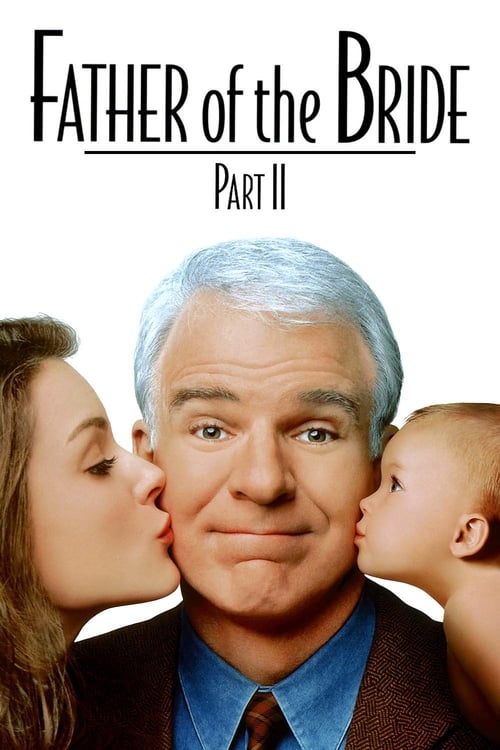
Father of the Bride Part II
Just when George Banks has recovered from his daughter's wedding, he receives the news that she's pregnant ... and that George's wife is expecting too. He was planning on selling their home, but that's a plan that—like George—will have to change with the arrival of both a grandchild and a kid of his own.
The film earned $76.6M at the global box office.
1 win & 2 nominations


Plot Structure
Story beats plotted across runtime


Narrative Arc
Emotional journey through the story's key moments
Story Circle
Blueprint 15-beat structure
Arcplot Score Breakdown
Weighted: Precision (70%) + Arc (15%) + Theme (15%)
Father of the Bride Part II (1995) exhibits meticulously timed narrative design, characteristic of Charles Shyer's storytelling approach. This structural analysis examines how the film's 15-point plot structure maps to proven narrative frameworks across 1 hour and 46 minutes. With an Arcplot score of 7.2, the film balances conventional beats with creative variation.
Characters
Cast & narrative archetypes

George Banks
Nina Banks
Annie Banks-MacKenzie
Bryan MacKenzie
Matty Banks
Franck Eggelhoffer
Main Cast & Characters
George Banks
Played by Steve Martin
Overprotective father dealing with his daughter's marriage and his wife's unexpected pregnancy simultaneously
Nina Banks
Played by Diane Keaton
George's wife who becomes pregnant at the same time as her daughter, handling the chaos with grace
Annie Banks-MacKenzie
Played by Kimberly Williams-Paisley
George and Nina's daughter, newly married and pregnant with her first child
Bryan MacKenzie
Played by George Newbern
Annie's supportive husband who gets a job offer that threatens to move the family away
Matty Banks
Played by Kieran Culkin
George and Nina's teenage son, the sarcastic and perceptive youngest child
Franck Eggelhoffer
Played by Martin Short
The flamboyant wedding coordinator who returns to help with baby preparations
Structural Analysis
The Status Quo at 1 minutes (1% through the runtime) establishes George Banks reflects on his life settling into empty-nest contentment. His daughter Annie is married and gone, the house is quiet, and he's looking forward to a peaceful middle age with wife Nina.. Notably, this early placement immediately immerses viewers in the story world.
The inciting incident occurs at 12 minutes when Annie announces she's pregnant. George is overwhelmed with the news that he'll be a grandfather, triggering an identity crisis about aging and his place in the family hierarchy.. At 12% through the film, this Disruption aligns precisely with traditional story structure. This beat shifts the emotional landscape, launching the protagonist into the central conflict.
The First Threshold at 26 minutes marks the transition into Act II, occurring at 24% of the runtime. This shows the protagonist's commitment to Nina reveals she's ALSO pregnant. George's crisis deepens exponentially - now he'll be both a grandfather AND a new father simultaneously, forcing him into the very situation he was trying to avoid., moving from reaction to action.
At 54 minutes, the Midpoint arrives at 50% of the runtime—precisely centered, creating perfect narrative symmetry. The analysis reveals that this crucial beat At the baby shower, George has a moment of false victory - he thinks he's accepted everything and has it under control. Both women are healthy, the house is ready, he's adapting. But complications are coming., fundamentally raising what's at risk. The emotional intensity shifts, dividing the narrative into clear before-and-after phases.
The Collapse moment at 78 minutes (74% through) represents the emotional nadir. Here, Both Nina and Annie go into labor simultaneously during a crisis moment. George completely falls apart, unable to be in two places at once, realizing he can't control everything. His worst fear materialized - he's failing both of them., illustrates the protagonist at their lowest point. This beat's placement in the final quarter sets up the climactic reversal.
The Second Threshold at 84 minutes initiates the final act resolution at 80% of the runtime. George surrenders control and accepts he can only be present, not perfect. He realizes that both women are strong, that family supports each other, and that his role is to embrace the messiness, not orchestrate it., demonstrating the transformation achieved throughout the journey.
Emotional Journey
Father of the Bride Part II's emotional architecture traces a deliberate progression across 15 carefully calibrated beats.
Narrative Framework
This structural analysis employs proven narrative structure principles that track dramatic progression. By mapping Father of the Bride Part II against these established plot points, we can identify how Charles Shyer utilizes or subverts traditional narrative conventions. The plot point approach reveals not only adherence to structural principles but also creative choices that distinguish Father of the Bride Part II within the comedy genre.
Charles Shyer's Structural Approach
Among the 5 Charles Shyer films analyzed on Arcplot, the average structural score is 7.2, reflecting strong command of classical structure. Father of the Bride Part II represents one of the director's most structurally precise works. For comparative analysis, explore the complete Charles Shyer filmography.
Comparative Analysis
Additional comedy films include The Bad Guys, Ella Enchanted and The Evening Star. For more Charles Shyer analyses, see Irreconcilable Differences, I Love Trouble and Father of the Bride.
Plot Points by Act
Act I
SetupStatus Quo
George Banks reflects on his life settling into empty-nest contentment. His daughter Annie is married and gone, the house is quiet, and he's looking forward to a peaceful middle age with wife Nina.
Theme
Nina casually mentions how their friends are becoming grandparents and how life moves in cycles. The theme: accepting life's transitions and finding joy in new beginnings rather than clinging to the past.
Worldbuilding
Establishment of George's comfortable routine, his architectural firm, Nina's life, and their relationship with Annie and Bryan. George is adjusting to being a father-of-the-bride in the past tense.
Disruption
Annie announces she's pregnant. George is overwhelmed with the news that he'll be a grandfather, triggering an identity crisis about aging and his place in the family hierarchy.
Resistance
George struggles with the idea of being a grandfather, feeling old and irrelevant. He debates selling the house and starting fresh. Nina tries to help him process, but he resists accepting this new phase.
Act II
ConfrontationFirst Threshold
Nina reveals she's ALSO pregnant. George's crisis deepens exponentially - now he'll be both a grandfather AND a new father simultaneously, forcing him into the very situation he was trying to avoid.
Mirror World
Annie and Nina bond over their shared pregnancy experience, becoming equals rather than mother-daughter. This relationship mirrors the theme: embracing unconventional family structures and finding connection across generations.
Premise
The "fun and games" of dual pregnancies: doctor appointments together, George's neurotic overprotectiveness, renovating the house for babies, dealing with family reactions. George alternates between panic and attempted control.
Midpoint
At the baby shower, George has a moment of false victory - he thinks he's accepted everything and has it under control. Both women are healthy, the house is ready, he's adapting. But complications are coming.
Opposition
Third trimester challenges escalate: both women uncomfortable, George exhausted trying to care for both, family tensions rising, the house renovation chaotic. George's controlling tendencies make everything worse. His fear of inadequacy grows.
Collapse
Both Nina and Annie go into labor simultaneously during a crisis moment. George completely falls apart, unable to be in two places at once, realizing he can't control everything. His worst fear materialized - he's failing both of them.
Crisis
The chaotic rush to the hospital, George's frantic attempts to manage the impossible. His dark night: accepting he must let go of control and trust that life will unfold as it should, not as he plans.
Act III
ResolutionSecond Threshold
George surrenders control and accepts he can only be present, not perfect. He realizes that both women are strong, that family supports each other, and that his role is to embrace the messiness, not orchestrate it.
Synthesis
Both deliveries happen successfully with George present for both through quick transitions. The family rallies around them. George experiences the miracle of birth and new beginnings simultaneously as father and grandfather.
Transformation
Final image mirrors the opening: George reflects on his life, but now embraces the beautiful chaos of two babies, multiple generations under one roof. He's no longer afraid of aging - he's grateful for the abundance of family and love.