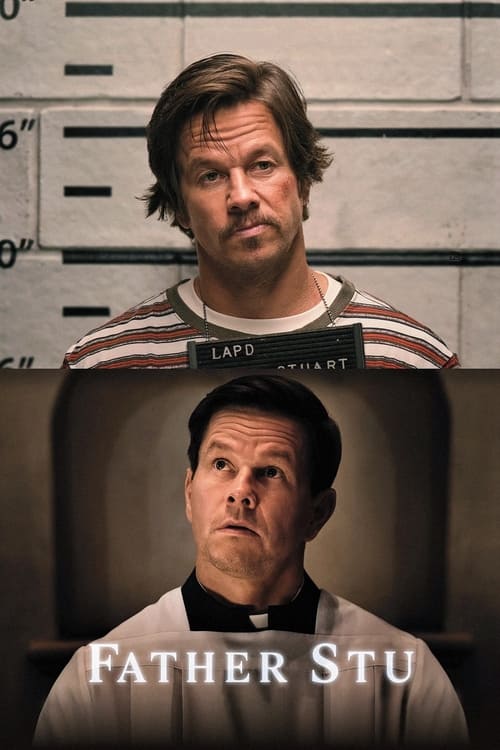
Father Stu
The true-life story of boxer-turned-priest. When an injury ends his amateur boxing career, Stuart Long moves to Los Angeles to find money and fame. While scraping by as a supermarket clerk, he meets Carmen, a Sunday school teacher who seems immune to his bad-boy charm. Determined to win her over, the longtime agnostic starts going to church to impress her. However, a motorcycle accident leaves him wondering if he can use his second chance to help others, leading to the surprising realization that he's meant to be a Catholic priest.
Despite its limited budget of $4.0M, Father Stu became a solid performer, earning $21.6M worldwide—a 440% return. The film's unconventional structure attracted moviegoers, illustrating how strong storytelling can transcend budget limitations.
2 wins & 5 nominations


Plot Structure
Story beats plotted across runtime


Narrative Arc
Emotional journey through the story's key moments
Story Circle
Blueprint 15-beat structure
Arcplot Score Breakdown
Weighted: Precision (70%) + Arc (15%) + Theme (15%)
Father Stu (2022) reveals precise narrative design, characteristic of Rosalind Ross's storytelling approach. This structural analysis examines how the film's 15-point plot structure maps to proven narrative frameworks across 2 hours and 4 minutes. With an Arcplot score of 7.4, the film balances conventional beats with creative variation.
Characters
Cast & narrative archetypes

Stuart Long
Kathleen Long
Bill Long
Carmen
Father Tolleson
Monsignor Kelly
Main Cast & Characters
Stuart Long
Played by Mark Wahlberg
A failed boxer turned aspiring actor who experiences a spiritual transformation after a motorcycle accident, eventually becoming a Catholic priest despite debilitating illness.
Kathleen Long
Played by Jacki Weaver
Stu's estranged, devoutly Catholic mother who struggles with alcoholism and grief over her deceased son, maintaining faith despite family dysfunction.
Bill Long
Played by Mel Gibson
Stu's bitter, atheist father who works as a meat packer and has a contentious relationship with his son, harboring deep resentment and grief.
Carmen
Played by Teresa Ruiz
A devout Catholic woman Stu meets and pursues romantically, who becomes instrumental in his spiritual journey and conversion to Catholicism.
Father Tolleson
Played by Malcolm McDowell
A skeptical priest who initially doubts Stu's vocation but eventually becomes his mentor and supporter through seminary and illness.
Monsignor Kelly
Played by Cody Fern
A senior church official who evaluates Stu's fitness for priesthood and must decide whether to allow his ordination despite his progressive illness.
Structural Analysis
The Status Quo at 1 minutes (1% through the runtime) establishes Stu is a washed-up boxer working at a grocery store meat counter in Montana, angry and directionless, dreaming of becoming an actor despite his broken life.. Of particular interest, this early placement immediately immerses viewers in the story world.
The inciting incident occurs at 14 minutes when Stu moves to Los Angeles to pursue acting, a desperate gamble to escape his small-town failure and reinvent himself.. At 11% through the film, this Disruption aligns precisely with traditional story structure. This beat shifts the emotional landscape, launching the protagonist into the central conflict.
The First Threshold at 30 minutes marks the transition into Act II, occurring at 24% of the runtime. This demonstrates the protagonist's commitment to Stu is in a devastating motorcycle accident that nearly kills him, experiencing a vision of the Virgin Mary that profoundly shakes him and plants the seed of genuine faith., moving from reaction to action.
At 61 minutes, the Midpoint arrives at 50% of the runtime—precisely centered, creating perfect narrative symmetry. Notably, this crucial beat Stu is diagnosed with inclusion body myositis, a rare degenerative muscle disease that will progressively destroy his body; his dream of priesthood appears impossible., fundamentally raising what's at risk. The emotional intensity shifts, dividing the narrative into clear before-and-after phases.
The Collapse moment at 92 minutes (74% through) represents the emotional nadir. Here, Stu is told he cannot be ordained; his disease has progressed too far, his body failing. The dream of priesthood—his purpose and redemption—appears dead., shows the protagonist at their lowest point. This beat's placement in the final quarter sets up the climactic reversal.
The Second Threshold at 98 minutes initiates the final act resolution at 79% of the runtime. Stu realizes his suffering itself is his ministry; he makes a final appeal to the bishop, arguing that his broken body is how he can best serve—ministry through vulnerability, not strength., demonstrating the transformation achieved throughout the journey.
Emotional Journey
Father Stu's emotional architecture traces a deliberate progression across 15 carefully calibrated beats.
Narrative Framework
This structural analysis employs a 15-point narrative structure framework that maps key story moments. By mapping Father Stu against these established plot points, we can identify how Rosalind Ross utilizes or subverts traditional narrative conventions. The plot point approach reveals not only adherence to structural principles but also creative choices that distinguish Father Stu within the drama genre.
Comparative Analysis
Additional drama films include After Thomas, South Pacific and Dirty Dancing: Havana Nights.
Plot Points by Act
Act I
SetupStatus Quo
Stu is a washed-up boxer working at a grocery store meat counter in Montana, angry and directionless, dreaming of becoming an actor despite his broken life.
Theme
Stu's mother tells him, "You can't run from God," foreshadowing his spiritual journey and the film's central question: can transformation come through surrender?
Worldbuilding
Establishment of Stu's broken world: estranged alcoholic father, strained relationship with devout Catholic mother, dead-end job, failed boxing career, and desperate dreams of Hollywood fame.
Disruption
Stu moves to Los Angeles to pursue acting, a desperate gamble to escape his small-town failure and reinvent himself.
Resistance
Stu struggles in LA: humiliating acting jobs, working at a supermarket, meets Carmen at church (initially to impress her), begins attending RCIA classes with mixed motives.
Act II
ConfrontationFirst Threshold
Stu is in a devastating motorcycle accident that nearly kills him, experiencing a vision of the Virgin Mary that profoundly shakes him and plants the seed of genuine faith.
Mirror World
Stu's relationship with Carmen deepens as he begins genuine conversion; she represents the life of faith and authenticity he's been running from, embodying the theme of grace through vulnerability.
Premise
Stu pursues priesthood with his characteristic intensity: enters seminary, navigates the challenges of formation, reconciles with Carmen as a friend, begins healing family wounds, shows genuine transformation.
Midpoint
Stu is diagnosed with inclusion body myositis, a rare degenerative muscle disease that will progressively destroy his body; his dream of priesthood appears impossible.
Opposition
Seminary superiors doubt Stu's ability to serve as a priest with his condition; his body deteriorates rapidly; he fights to continue formation while managing pain and disability; faces potential dismissal.
Collapse
Stu is told he cannot be ordained; his disease has progressed too far, his body failing. The dream of priesthood—his purpose and redemption—appears dead.
Crisis
Stu wrestles with despair and anger, questioning why God would call him only to take it away; confronts the ultimate surrender of his will and ego.
Act III
ResolutionSecond Threshold
Stu realizes his suffering itself is his ministry; he makes a final appeal to the bishop, arguing that his broken body is how he can best serve—ministry through vulnerability, not strength.
Synthesis
Stu is ordained a priest; serves his community powerfully through his suffering; reconciles fully with his father; reaches people through authenticity and shared brokenness; lives out his vocation despite physical decline.
Transformation
Father Stu, now severely disabled but radiant with purpose, celebrates Mass and ministers to others; the angry, broken boxer has become a vessel of grace, transformed through surrender.