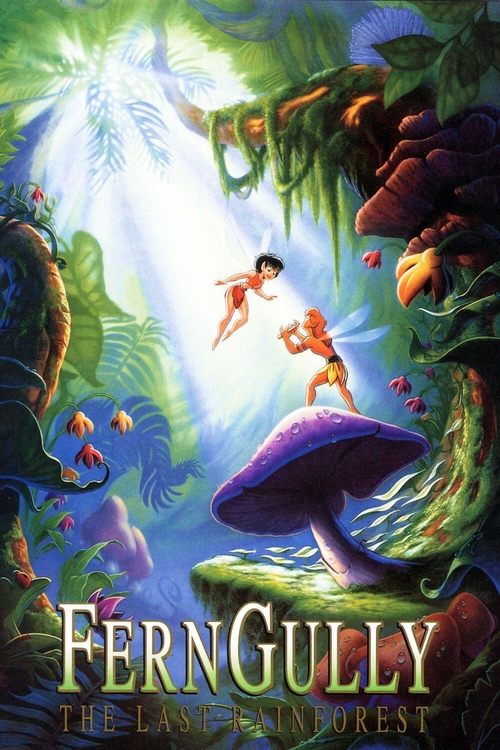
FernGully: The Last Rainforest
When a sprite named Crysta shrinks a human boy, Zak, down to her size, he vows to help the magical fairy folk stop a greedy logging company from destroying their home: the pristine rainforest known as FernGully. Zak and his new friends fight to defend FernGully from lumberjacks — and the vengeful spirit they accidentally unleash after chopping down a magic tree.
Working with a respectable budget of $24.0M, the film achieved a steady performer with $32.7M in global revenue (+36% profit margin).
3 wins & 1 nomination


Plot Structure
Story beats plotted across runtime


Narrative Arc
Emotional journey through the story's key moments
Story Circle
Blueprint 15-beat structure
Arcplot Score Breakdown
Weighted: Precision (70%) + Arc (15%) + Theme (15%)
FernGully: The Last Rainforest (1992) exemplifies precise dramatic framework, characteristic of Bill Kroyer's storytelling approach. This structural analysis examines how the film's 15-point plot structure maps to proven narrative frameworks across 1 hour and 16 minutes. With an Arcplot score of 7.6, the film showcases strong structural fundamentals.
Characters
Cast & narrative archetypes

Crysta
Zak Young
Hexxus
Magi Lune
Pips
Batty Koda
Main Cast & Characters
Crysta
Played by Samantha Mathis
A young, adventurous fairy who discovers humans and fights to save the rainforest from destruction.
Zak Young
Played by Jonathan Ward
A human logger who is shrunk to fairy size and learns to appreciate the rainforest he was helping destroy.
Hexxus
Played by Tim Curry
An ancient evil spirit of pollution and destruction released from his tree prison, bent on consuming the forest.
Magi Lune
Played by Grace Zabriskie
The wise elder fairy and Crysta's mentor who holds the magic of the forest and passes her knowledge to the next generation.
Pips
Played by Christian Slater
A small fairy who has romantic feelings for Crysta and initially sees Zak as a rival.
Batty Koda
Played by Robin Williams
A neurotic, experimental fruit bat who escaped from a research lab and bears the scars of human testing.
Structural Analysis
The Status Quo at 1 minutes (1% through the runtime) establishes Crysta flies through the pristine rainforest of FernGully, a magical fairy living in harmony with nature. The rainforest is lush, vibrant, and untouched by human destruction.. Of particular interest, this early placement immediately immerses viewers in the story world.
The inciting incident occurs at 8 minutes when Crysta ventures beyond the safe boundaries of FernGully and encounters human loggers cutting down trees. She witnesses the destruction firsthand, disrupting her naive worldview about humans.. At 11% through the film, this Disruption aligns precisely with traditional story structure. This beat shifts the emotional landscape, launching the protagonist into the central conflict.
The First Threshold at 18 minutes marks the transition into Act II, occurring at 24% of the runtime. This reveals the protagonist's commitment to Crysta actively chooses to show Zak the beauty of the rainforest and help him understand the fairy world, hoping to change his perspective. This commits her to teaching him rather than sending him away., moving from reaction to action.
At 37 minutes, the Midpoint arrives at 49% of the runtime—precisely centered, creating perfect narrative symmetry. Of particular interest, this crucial beat Hexxus is accidentally released from the tree when the loggers cut it down. The false victory of Zak's transformation is shattered by the unleashing of the ancient evil spirit of pollution and destruction. Stakes are raised dramatically., fundamentally raising what's at risk. The emotional intensity shifts, dividing the narrative into clear before-and-after phases.
The Collapse moment at 56 minutes (74% through) represents the emotional nadir. Here, Magi Lune sacrifices herself to pass her powers to Crysta, dying to save the forest. This is the literal death moment - the mentor dies, and Crysta must face Hexxus without guidance, feeling unprepared and lost., indicates the protagonist at their lowest point. This beat's placement in the final quarter sets up the climactic reversal.
The Second Threshold at 60 minutes initiates the final act resolution at 79% of the runtime. Crysta realizes she must use Magi's teachings combined with her own connection to the forest and her bond with Zak. She accepts her power and understands that nature and humans must work together. New resolve to act., demonstrating the transformation achieved throughout the journey.
Emotional Journey
FernGully: The Last Rainforest's emotional architecture traces a deliberate progression across 15 carefully calibrated beats.
Narrative Framework
This structural analysis employs proven narrative structure principles that track dramatic progression. By mapping FernGully: The Last Rainforest against these established plot points, we can identify how Bill Kroyer utilizes or subverts traditional narrative conventions. The plot point approach reveals not only adherence to structural principles but also creative choices that distinguish FernGully: The Last Rainforest within the family genre.
Comparative Analysis
Additional family films include The Black Stallion, The Bad Guys and Ella Enchanted.
Plot Points by Act
Act I
SetupStatus Quo
Crysta flies through the pristine rainforest of FernGully, a magical fairy living in harmony with nature. The rainforest is lush, vibrant, and untouched by human destruction.
Theme
Magi Lune warns Crysta about humans and their destructive nature, stating that all living things are connected. This establishes the environmental theme: understanding and respecting the balance of nature.
Worldbuilding
Establishes FernGully's magical world, the fairy community, Crysta's curiosity about humans, and the threat of Hexxus trapped in a tree. Shows Crysta's sheltered innocence and her mentor relationship with Magi.
Disruption
Crysta ventures beyond the safe boundaries of FernGully and encounters human loggers cutting down trees. She witnesses the destruction firsthand, disrupting her naive worldview about humans.
Resistance
Crysta debates whether to intervene with the humans. She accidentally shrinks Zak while trying to save him from a falling tree, forcing her to bring a human into FernGully and hide him from the other fairies.
Act II
ConfrontationFirst Threshold
Crysta actively chooses to show Zak the beauty of the rainforest and help him understand the fairy world, hoping to change his perspective. This commits her to teaching him rather than sending him away.
Mirror World
Zak and Crysta's relationship deepens as he begins to see the forest through her eyes. He represents the possibility of human redemption and embodies the counter-theme: humans can change and reconnect with nature.
Premise
The fun exploration of FernGully through Zak's eyes. Crysta shows him the magic of the rainforest, he learns about the interconnected ecosystem, and their romance blossoms. The promise of transformation through understanding.
Midpoint
Hexxus is accidentally released from the tree when the loggers cut it down. The false victory of Zak's transformation is shattered by the unleashing of the ancient evil spirit of pollution and destruction. Stakes are raised dramatically.
Opposition
Hexxus grows stronger by feeding on pollution from the logging machine. The destruction accelerates. Crysta and Zak must convince the other fairies of the threat while Hexxus corrupts the forest. Their relationship is tested by distrust.
Collapse
Magi Lune sacrifices herself to pass her powers to Crysta, dying to save the forest. This is the literal death moment - the mentor dies, and Crysta must face Hexxus without guidance, feeling unprepared and lost.
Crisis
Crysta grieves Magi's death and doubts her ability to save FernGully. The forest is being destroyed rapidly. Dark night of despair as Hexxus seems unstoppable and the logging machine threatens everything.
Act III
ResolutionSecond Threshold
Crysta realizes she must use Magi's teachings combined with her own connection to the forest and her bond with Zak. She accepts her power and understands that nature and humans must work together. New resolve to act.
Synthesis
Crysta and Zak work together to stop Hexxus. Zak sabotages the machine from inside while Crysta uses her new magic to trap Hexxus in a new tree seed, combining human action with fairy magic to save the forest.
Transformation
Zak returns to human size but is transformed in spirit. He stops the logging operation and vows to protect the forest. Crysta has become the new protector of FernGully, having grown from naive fairy to wise guardian who understands balance.