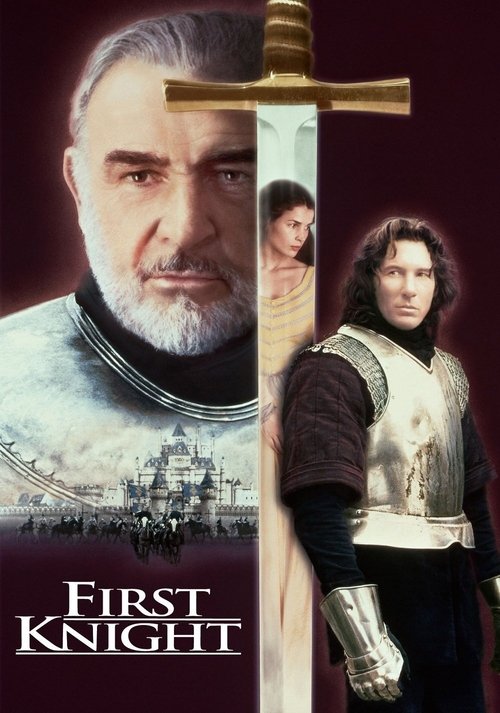
First Knight
The timeless tale of King Arthur and the legend of Camelot are retold in this passionate period drama. Arthur is reluctant to hand the crown to Lancelot, and Guinevere is torn between her loyalty to her husband and her growing love for his rival. But Lancelot must balance his loyalty to the throne with the rewards of true love.
Despite a moderate budget of $55.0M, First Knight became a financial success, earning $127.6M worldwide—a 132% return.


Plot Structure
Story beats plotted across runtime


Narrative Arc
Emotional journey through the story's key moments
Story Circle
Blueprint 15-beat structure
Arcplot Score Breakdown
Weighted: Precision (70%) + Arc (15%) + Theme (15%)
First Knight (1995) exhibits strategically placed story structure, characteristic of Jerry Zucker's storytelling approach. This structural analysis examines how the film's 15-point plot structure maps to proven narrative frameworks across 2 hours and 14 minutes. With an Arcplot score of 7.3, the film balances conventional beats with creative variation.
Characters
Cast & narrative archetypes

Lancelot
King Arthur
Guinevere
Malagant
Main Cast & Characters
Lancelot
Played by Richard Gere
A wandering swordsman who lives only for the thrill of combat until he falls in love with Guinevere and must choose between freedom and duty.
King Arthur
Played by Sean Connery
The noble and aging king of Camelot who seeks to unite Britain through law and justice, struggling with the betrayal of those he loves most.
Guinevere
Played by Julia Ormond
The Lady of Lyonesse who is torn between her duty to marry Arthur and her passionate love for Lancelot.
Malagant
Played by Ben Cross
A former Knight of the Round Table turned renegade warlord who seeks to overthrow Arthur and conquer Camelot.
Structural Analysis
The Status Quo at 1 minutes (1% through the runtime) establishes Lancelot navigates a deadly gauntlet obstacle course for prize money, demonstrating his carefree, mercenary lifestyle as a wandering swordsman with no commitments or loyalties.. Of particular interest, this early placement immediately immerses viewers in the story world.
The inciting incident occurs at 17 minutes when Malagant's men ambush Guinevere's caravan on the road to Camelot, attempting to kidnap her. This violent attack disrupts her journey and forces the question of whether she can safely reach her wedding.. At 13% through the film, this Disruption is delayed, allowing extended setup of the story world. This beat shifts the emotional landscape, launching the protagonist into the central conflict.
The First Threshold at 32 minutes marks the transition into Act II, occurring at 24% of the runtime. This shows the protagonist's commitment to Lancelot chooses to stay in Camelot and requests to join the Round Table. He actively decides to abandon his wandering life and commit to something greater, entering Arthur's world of honor and service., moving from reaction to action.
At 67 minutes, the Midpoint arrives at 50% of the runtime—precisely centered, creating perfect narrative symmetry. Of particular interest, this crucial beat Lancelot and Guinevere kiss in the woods, crossing the line of betrayal. This false victory (they give in to love) is actually the moment that dooms them—Malagant's spy witnesses the kiss, giving him leverage., fundamentally raising what's at risk. The emotional intensity shifts, dividing the narrative into clear before-and-after phases.
The Collapse moment at 99 minutes (74% through) represents the emotional nadir. Here, Malagant stabs Arthur during the invasion of Camelot. The king—the embodiment of honor and the dream of a just society—falls mortally wounded. The whiff of death is literal; Arthur is dying., shows the protagonist at their lowest point. This beat's placement in the final quarter sets up the climactic reversal.
The Second Threshold at 108 minutes initiates the final act resolution at 80% of the runtime. Arthur knights Lancelot as "First Knight" and charges him with protecting Guinevere and Camelot. Lancelot accepts the mantle of duty over personal desire, synthesizing his skills as a warrior with Arthur's principles of service., demonstrating the transformation achieved throughout the journey.
Emotional Journey
First Knight's emotional architecture traces a deliberate progression across 15 carefully calibrated beats.
Narrative Framework
This structural analysis employs systematic plot point analysis that identifies crucial turning points. By mapping First Knight against these established plot points, we can identify how Jerry Zucker utilizes or subverts traditional narrative conventions. The plot point approach reveals not only adherence to structural principles but also creative choices that distinguish First Knight within the action genre.
Jerry Zucker's Structural Approach
Among the 3 Jerry Zucker films analyzed on Arcplot, the average structural score is 7.5, reflecting strong command of classical structure. First Knight takes a more unconventional approach compared to the director's typical style. For comparative analysis, explore the complete Jerry Zucker filmography.
Comparative Analysis
Additional action films include The Bad Guys, Puss in Boots and Venom: The Last Dance. For more Jerry Zucker analyses, see Rat Race, Ghost.
Plot Points by Act
Act I
SetupStatus Quo
Lancelot navigates a deadly gauntlet obstacle course for prize money, demonstrating his carefree, mercenary lifestyle as a wandering swordsman with no commitments or loyalties.
Theme
Guinevere tells her handmaiden: "I do want to be loved. But there are other things in life besides love." This establishes the central thematic tension between personal desire and duty/responsibility.
Worldbuilding
Establish the political landscape: Guinevere rules Leonesse and is about to marry King Arthur to unite their kingdoms. Malagant, a rogue knight, threatens her lands and wants power. Arthur represents order and Camelot's dream of peace through law.
Disruption
Malagant's men ambush Guinevere's caravan on the road to Camelot, attempting to kidnap her. This violent attack disrupts her journey and forces the question of whether she can safely reach her wedding.
Resistance
Lancelot rescues Guinevere and escorts her to Camelot. Their chemistry is immediate. Guinevere debates her path—marry Arthur for duty or follow her heart. Lancelot is drawn to Camelot but resists commitment.
Act II
ConfrontationFirst Threshold
Lancelot chooses to stay in Camelot and requests to join the Round Table. He actively decides to abandon his wandering life and commit to something greater, entering Arthur's world of honor and service.
Mirror World
Arthur and Lancelot have their first substantive conversation about service and dedication. Arthur becomes the mentor/thematic mirror who embodies the principle of duty over self—the lesson Lancelot must learn.
Premise
Lancelot proves himself as Camelot's champion, winning the gauntlet contest. Arthur marries Guinevere. The love triangle intensifies as Lancelot and Guinevere struggle with their forbidden attraction while Arthur trusts them both completely.
Midpoint
Lancelot and Guinevere kiss in the woods, crossing the line of betrayal. This false victory (they give in to love) is actually the moment that dooms them—Malagant's spy witnesses the kiss, giving him leverage.
Opposition
Malagant uses knowledge of the betrayal to sow discord. He kidnaps Guinevere and attacks Camelot from within using secret passages. Lancelot and Guinevere's guilt grows. Arthur faces the collapse of his dream as his knights are divided and his city invaded.
Collapse
Malagant stabs Arthur during the invasion of Camelot. The king—the embodiment of honor and the dream of a just society—falls mortally wounded. The whiff of death is literal; Arthur is dying.
Crisis
Arthur confronts Lancelot and Guinevere about their betrayal. Despite the pain, he forgives them, demonstrating perfect love and duty. Lancelot faces his shame and realizes what true honor means—not just skill, but sacrifice and loyalty.
Act III
ResolutionSecond Threshold
Arthur knights Lancelot as "First Knight" and charges him with protecting Guinevere and Camelot. Lancelot accepts the mantle of duty over personal desire, synthesizing his skills as a warrior with Arthur's principles of service.
Synthesis
Lancelot leads the knights to rescue Guinevere from Malagant's fortress. He defeats Malagant in single combat. Arthur dies peacefully, his dream preserved. Lancelot chooses duty—he will serve Guinevere as protector, not lover.
Transformation
Guinevere and Lancelot stand together at Arthur's funeral, transformed. Mirror of opening: Lancelot began as a man serving only himself; he ends as First Knight, dedicated to a higher cause, having chosen duty over desire.