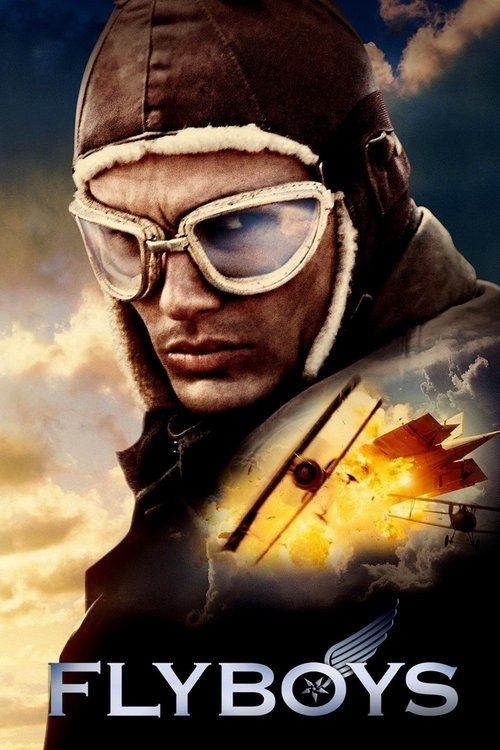
Flyboys
The adventures of the Lafayette Escadrille, young Americans who volunteered for the French military before the U.S. entered World War I, and became the country's first fighter pilots.
The film box office disappointment against its mid-range budget of $60.0M, earning $17.9M globally (-70% loss). While initial box office returns were modest, the film has gained appreciation for its compelling narrative within the action genre.
2 wins & 3 nominations


Plot Structure
Story beats plotted across runtime


Narrative Arc
Emotional journey through the story's key moments
Story Circle
Blueprint 15-beat structure
Arcplot Score Breakdown
Weighted: Precision (70%) + Arc (15%) + Theme (15%)
Flyboys (2006) reveals carefully calibrated dramatic framework, characteristic of Tony Bill's storytelling approach. This structural analysis examines how the film's 15-point plot structure maps to proven narrative frameworks across 2 hours and 18 minutes. With an Arcplot score of 6.4, the film takes an unconventional approach to traditional narrative frameworks.
Characters
Cast & narrative archetypes

Blaine Rawlings
Reed Cassidy
Lucienne
Eugene Skinner
Briggs Lowry
Eddie Beagle
Captain Georges Thenault
The Black Falcon
Main Cast & Characters
Blaine Rawlings
Played by James Franco
A Texas rancher who joins the Lafayette Escadrille to escape losing his family's ranch and find purpose in the skies over France.
Reed Cassidy
Played by Martin Henderson
A veteran pilot and mentor haunted by personal tragedy, serving as the squadron's ace and guiding the new recruits.
Lucienne
Played by Jennifer Decker
A French woman running her family's estate who becomes Rawlings' love interest while dealing with wartime occupation.
Eugene Skinner
Played by Abdul Salis
A former soldier from the Ninth Cavalry who joins the Lafayette Escadrille seeking honor and equality in combat.
Briggs Lowry
Played by Tyler Labine
A wealthy, entitled young man fleeing scandal who must learn courage and selflessness in the face of war.
Eddie Beagle
Played by David Ellison
A good-natured pilot who struggles with the violence and terror of aerial combat but remains loyal to his squadron.
Captain Georges Thenault
Played by Jean Reno
The French commanding officer of the Lafayette Escadrille who leads the American volunteers with discipline and respect.
The Black Falcon
Played by Gunnar Winbergh
A legendary German ace pilot who serves as Cassidy's nemesis and the squadron's most feared adversary.
Structural Analysis
The Status Quo at 2 minutes (1% through the runtime) establishes Blaine Rawlings works on his family's failing Texas ranch, facing foreclosure and an uncertain future. The bank is repossessing his land, and he has nothing left.. Of particular interest, this early placement immediately immerses viewers in the story world.
The inciting incident occurs at 17 minutes when Blaine and the recruits arrive in France and meet Captain Thenault, who welcomes them to the Lafayette Escadrille. They are now committed to becoming fighter pilots in a foreign war.. At 13% through the film, this Disruption is delayed, allowing extended setup of the story world. This beat shifts the emotional landscape, launching the protagonist into the central conflict.
The First Threshold at 36 minutes marks the transition into Act II, occurring at 26% of the runtime. This reveals the protagonist's commitment to The squadron embarks on their first combat mission. Blaine and the others actively choose to engage the enemy, crossing from trainees to warriors. They encounter German planes and experience real aerial combat for the first time., moving from reaction to action.
At 70 minutes, the Midpoint arrives at 50% of the runtime—precisely centered, creating perfect narrative symmetry. Structural examination shows that this crucial beat The squadron suffers significant casualties during a major mission. Several pilots are killed, including close friends. The stakes become intensely personal, and the reality of mortality hits hard. The fun is over., fundamentally raising what's at risk. The emotional intensity shifts, dividing the narrative into clear before-and-after phases.
The Collapse moment at 103 minutes (75% through) represents the emotional nadir. Here, Reed Cassidy is killed in aerial combat with the Black Falcon after a vengeful pursuit. The mentor dies, and the squadron loses its most experienced pilot. Blaine witnesses the death and feels the full weight of loss., indicates the protagonist at their lowest point. This beat's placement in the final quarter sets up the climactic reversal.
The Second Threshold at 111 minutes initiates the final act resolution at 80% of the runtime. Blaine learns that German forces are advancing on Lucienne's village and orphanage. He realizes he must act, combining his love for Lucienne with his duty as a pilot. He chooses to lead a desperate rescue mission., demonstrating the transformation achieved throughout the journey.
Emotional Journey
Flyboys's emotional architecture traces a deliberate progression across 15 carefully calibrated beats.
Narrative Framework
This structural analysis employs structural analysis methodology used to understand storytelling architecture. By mapping Flyboys against these established plot points, we can identify how Tony Bill utilizes or subverts traditional narrative conventions. The plot point approach reveals not only adherence to structural principles but also creative choices that distinguish Flyboys within the action genre.
Tony Bill's Structural Approach
Among the 2 Tony Bill films analyzed on Arcplot, the average structural score is 6.6, demonstrating varied approaches to story architecture. Flyboys takes a more unconventional approach compared to the director's typical style. For comparative analysis, explore the complete Tony Bill filmography.
Comparative Analysis
Additional action films include The Bad Guys, Puss in Boots and Venom: The Last Dance. For more Tony Bill analyses, see My Bodyguard.
Plot Points by Act
Act I
SetupStatus Quo
Blaine Rawlings works on his family's failing Texas ranch, facing foreclosure and an uncertain future. The bank is repossessing his land, and he has nothing left.
Theme
A recruitment officer tells potential pilots: "You'll be fighting for honor, glory, and France." The theme of finding purpose through courage and sacrifice is introduced.
Worldbuilding
Introduction of diverse recruits joining the Lafayette Escadrille: Blaine seeking purpose, Briggs Lowry fleeing family pressure, Eugene Skinner escaping racism, and others with their own motivations. Establishes WWI context and the novelty of aerial combat.
Disruption
Blaine and the recruits arrive in France and meet Captain Thenault, who welcomes them to the Lafayette Escadrille. They are now committed to becoming fighter pilots in a foreign war.
Resistance
The pilots undergo rigorous training under veteran pilot Reed Cassidy, who becomes their reluctant mentor. They struggle with flight basics, face the reality of war, and witness the dangers ahead. Cassidy teaches them survival tactics while battling his own demons.
Act II
ConfrontationFirst Threshold
The squadron embarks on their first combat mission. Blaine and the others actively choose to engage the enemy, crossing from trainees to warriors. They encounter German planes and experience real aerial combat for the first time.
Mirror World
Blaine meets Lucienne, a French woman working at a local bistro. Their romantic connection begins, representing hope, love, and what they're fighting to protect beyond glory and honor.
Premise
The promise of aerial dogfights and WWI aviation adventure. The pilots experience victories and losses, bond as brothers, enjoy Paris nightlife, and Blaine deepens his relationship with Lucienne. They become confident fighter aces while the romance blossoms.
Midpoint
The squadron suffers significant casualties during a major mission. Several pilots are killed, including close friends. The stakes become intensely personal, and the reality of mortality hits hard. The fun is over.
Opposition
The German Black Falcon and his squadron increasingly dominate the skies. Cassidy becomes obsessed with revenge. Blaine faces pressure from all sides: mounting casualties, Lucienne's endangered family, and the overwhelming German air superiority. Everything intensifies.
Collapse
Reed Cassidy is killed in aerial combat with the Black Falcon after a vengeful pursuit. The mentor dies, and the squadron loses its most experienced pilot. Blaine witnesses the death and feels the full weight of loss.
Crisis
The surviving pilots mourn Cassidy and process the devastating losses. Blaine grapples with fear and doubt about continuing the fight. The emotional toll of war threatens to break their spirit.
Act III
ResolutionSecond Threshold
Blaine learns that German forces are advancing on Lucienne's village and orphanage. He realizes he must act, combining his love for Lucienne with his duty as a pilot. He chooses to lead a desperate rescue mission.
Synthesis
The Lafayette Escadrille launches a final assault to protect the village and defeat the Black Falcon. Blaine faces his fears, honors Cassidy's memory, and leads with courage. Epic aerial combat culminates in Blaine destroying the Black Falcon and saving Lucienne, though he crash-lands behind enemy lines.
Transformation
Blaine survives and reunites with Lucienne at her family farm. The aimless ranch boy has become a hero who found purpose, brotherhood, and love through courage and sacrifice. He is transformed, having earned his place in the world.