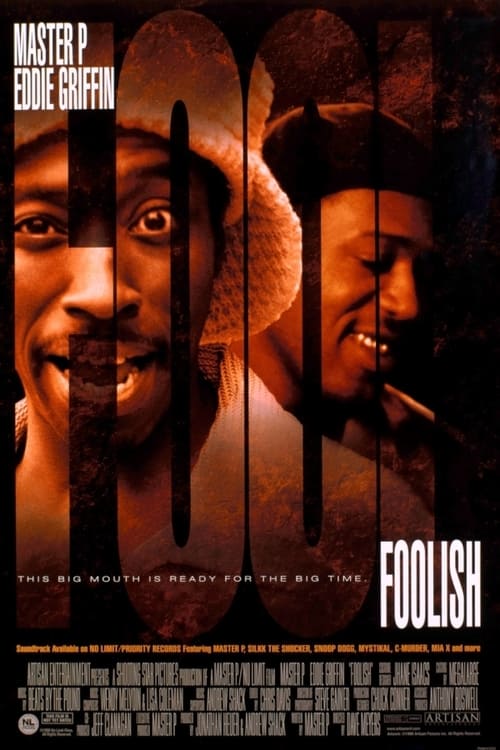
Foolish
'Foolish' Waise is a talented comedian with a hard-edge trying to make it in the comedy clubs in LA while his brother is a hard-nosed gangster trying to make it on the streets. With all the competition they face in their chosen "professions," their biggest battle is with each other over the love of a pretty girl.
The film earned $6.0M at the global box office.
Plot Structure
Story beats plotted across runtime


Narrative Arc
Emotional journey through the story's key moments
Story Circle
Blueprint 15-beat structure
Arcplot Score Breakdown
Weighted: Precision (70%) + Arc (15%) + Theme (15%)
Foolish (1999) showcases carefully calibrated plot construction, characteristic of Dave Meyers's storytelling approach. This structural analysis examines how the film's 15-point plot structure maps to proven narrative frameworks across 1 hour and 24 minutes. With an Arcplot score of 6.7, the film balances conventional beats with creative variation.
Characters
Cast & narrative archetypes

Quentin 'Fifty Dollah' Waise
Dion
Ginger
Michelle
Shermanita
Frank Chase
Main Cast & Characters
Quentin 'Fifty Dollah' Waise
Played by Eddie Griffin
An aspiring comedian struggling to make it in the entertainment industry while supporting his brother's rap career and dealing with their difficult past.
Dion
Played by Master P
Quentin's younger brother, an aspiring rapper who is being groomed for stardom by a record label.
Ginger
Played by Amy Petersen
Quentin's love interest, a woman who sees his potential beyond his current struggles.
Michelle
Played by Amie Borden
A record executive who becomes romantically involved with Dion while managing his career.
Shermanita
Played by Daphnee Duplaix Samuel
Quentin's ex-girlfriend who reappears in his life, creating complications.
Frank Chase
Played by Frank Sivero
A successful entertainment mogul and mentor figure who represents what Quentin aspires to become.
Structural Analysis
The Status Quo at 1 minutes (1% through the runtime) establishes Quentin "Fifty Dollah" performs his stand-up comedy routine in a small club, hustling to make ends meet while his brother Theodis struggles as an actor. Their life is modest but stable.. Of particular interest, this early placement immediately immerses viewers in the story world.
The inciting incident occurs at 10 minutes when Quentin gets an opportunity for a major break in his comedy career - a chance at television exposure that could change everything, but requires commitments that will pull him away from his brother.. At 12% through the film, this Disruption aligns precisely with traditional story structure. This beat shifts the emotional landscape, launching the protagonist into the central conflict.
The First Threshold at 21 minutes marks the transition into Act II, occurring at 25% of the runtime. This demonstrates the protagonist's commitment to Quentin actively chooses to pursue the big opportunity, committing to the path that will take him toward stardom but potentially away from his brother and their established life together., moving from reaction to action.
At 42 minutes, the Midpoint arrives at 50% of the runtime—precisely centered, creating perfect narrative symmetry. Of particular interest, this crucial beat Quentin achieves a significant career victory - a major gig or recognition - appearing to validate his choice. However, this success coincides with Theodis making questionable decisions, revealing the hidden cost of Quentin's absence and raising the stakes., fundamentally raising what's at risk. The emotional intensity shifts, dividing the narrative into clear before-and-after phases.
The Collapse moment at 63 minutes (75% through) represents the emotional nadir. Here, Theodis faces a devastating crisis or Quentin receives terrible news about his brother - a moment of reckoning where the consequences of neglecting family become catastrophically clear. The dream of having both success and brotherhood dies., shows the protagonist at their lowest point. This beat's placement in the final quarter sets up the climactic reversal.
The Second Threshold at 67 minutes initiates the final act resolution at 80% of the runtime. Quentin has a realization combining his comedy skills with renewed family loyalty - understanding that success means nothing without the people you love. He chooses to fight for his brother and their relationship over career advancement., demonstrating the transformation achieved throughout the journey.
Emotional Journey
Foolish's emotional architecture traces a deliberate progression across 15 carefully calibrated beats.
Narrative Framework
This structural analysis employs proven narrative structure principles that track dramatic progression. By mapping Foolish against these established plot points, we can identify how Dave Meyers utilizes or subverts traditional narrative conventions. The plot point approach reveals not only adherence to structural principles but also creative choices that distinguish Foolish within the comedy genre.
Dave Meyers's Structural Approach
Among the 3 Dave Meyers films analyzed on Arcplot, the average structural score is 7.1, reflecting strong command of classical structure. Foolish takes a more unconventional approach compared to the director's typical style. For comparative analysis, explore the complete Dave Meyers filmography.
Comparative Analysis
Additional comedy films include The Bad Guys, Ella Enchanted and The Evening Star. For more Dave Meyers analyses, see This Is Me…Now, The Hitcher.
Plot Points by Act
Act I
SetupStatus Quo
Quentin "Fifty Dollah" performs his stand-up comedy routine in a small club, hustling to make ends meet while his brother Theodis struggles as an actor. Their life is modest but stable.
Theme
A character observes that success means nothing if you lose the people who matter most, foreshadowing the central conflict between ambition and family loyalty.
Worldbuilding
Introduction to the brothers' relationship dynamics, Quentin's comedy career supporting them both, Theodis' acting struggles, their tight bond, and the world of small-time entertainment they navigate together.
Disruption
Quentin gets an opportunity for a major break in his comedy career - a chance at television exposure that could change everything, but requires commitments that will pull him away from his brother.
Resistance
Quentin debates taking the opportunity, wrestling with loyalty to Theodis versus personal ambition. Friends and mentors in the comedy world advise him about the cost of success and the fleeting nature of opportunity.
Act II
ConfrontationFirst Threshold
Quentin actively chooses to pursue the big opportunity, committing to the path that will take him toward stardom but potentially away from his brother and their established life together.
Mirror World
Quentin meets or deepens relationship with a romantic interest who represents the life and values he's been missing - genuine connection beyond the hustle, challenging him to examine what truly matters.
Premise
Quentin navigates the entertainment industry, experiences of rising success in comedy, the excitement and absurdity of newfound opportunities, while Theodis pursues his own dreams with increasing desperation and the brothers' paths begin diverging.
Midpoint
Quentin achieves a significant career victory - a major gig or recognition - appearing to validate his choice. However, this success coincides with Theodis making questionable decisions, revealing the hidden cost of Quentin's absence and raising the stakes.
Opposition
The brothers' relationship strains as Quentin becomes consumed by his career and Theodis spirals into increasingly desperate and dangerous situations. External pressures mount, bad influences close in on Theodis, and Quentin's focus on success blinds him to his brother's deterioration.
Collapse
Theodis faces a devastating crisis or Quentin receives terrible news about his brother - a moment of reckoning where the consequences of neglecting family become catastrophically clear. The dream of having both success and brotherhood dies.
Crisis
Quentin confronts the emptiness of his success without his brother, processing guilt and loss. A dark period of reflection where he must face what he's sacrificed and who he's become in pursuit of fame.
Act III
ResolutionSecond Threshold
Quentin has a realization combining his comedy skills with renewed family loyalty - understanding that success means nothing without the people you love. He chooses to fight for his brother and their relationship over career advancement.
Synthesis
Quentin takes action to help Theodis, confronting whatever crisis or antagonistic forces threaten his brother. He uses both his street smarts and his platform to resolve the situation, proving family comes first and reconciling ambition with loyalty.
Transformation
The brothers are reunited and rebuilt, with Quentin having found a way to balance success with family loyalty. The final image shows them together, transformed by their journey, demonstrating that they're stronger united than pursuing separate dreams.