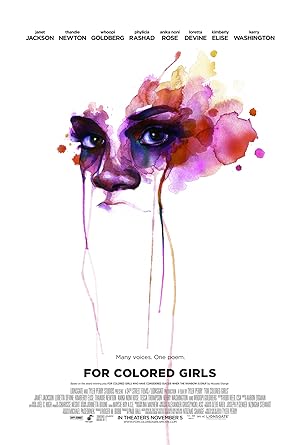
For Colored Girls
The movie is based on Ntozake Shange's play "For Colored Girls Who Have Considered Suicide When the Rainbow Is Enuf." Unlike the original play which featured only 7 women known by colors performing the collection of 20 poems, the movie has given each of the 20 characters names. Each of the poems deal with intense issues that particularly impact women in a thought-provoking commentary on what it means to be a female of color in the world.
Working with a mid-range budget of $21.0M, the film achieved a steady performer with $38.0M in global revenue (+81% profit margin).
14 wins & 17 nominations


Plot Structure
Story beats plotted across runtime


Narrative Arc
Emotional journey through the story's key moments
Story Circle
Blueprint 15-beat structure
Arcplot Score Breakdown
Weighted: Precision (70%) + Arc (15%) + Theme (15%)
For Colored Girls (2010) exhibits carefully calibrated story structure, characteristic of Tyler Perry's storytelling approach. This structural analysis examines how the film's 15-point plot structure maps to proven narrative frameworks across 2 hours and 14 minutes. With an Arcplot score of 6.8, the film balances conventional beats with creative variation.
Characters
Cast & narrative archetypes

Crystal
Jo
Juanita
Tangie
Yasmine
Kelly
Nyla
Alice
Main Cast & Characters
Crystal
Played by Kimberly Elise
A social worker struggling with abuse in her relationship while trying to help others.
Jo
Played by Janet Jackson
A successful magazine editor dealing with a cheating partner and finding self-worth.
Juanita
Played by Loretta Devine
A psychology student working as a bartender, navigating love and self-discovery.
Tangie
Played by Thandiwe Newton
A free-spirited bartender exploring sexuality and struggling with family acceptance.
Yasmine
Played by Anika Noni Rose
A successful dancer facing the trauma of sexual assault and finding her voice.
Kelly
Played by Kerry Washington
A religious woman in an unfaithful marriage questioning her faith and self-worth.
Nyla
Played by Tessa Thompson
A nurturing woman betrayed by her partner, struggling with fertility and abandonment.
Alice
Played by Whoopi Goldberg
Tangie's mother, a religious woman struggling to accept her daughter's choices.
Structural Analysis
The Status Quo at 1 minutes (1% through the runtime) establishes Introduction to the lives of nine women in Harlem, each struggling with their own challenges—Crystal's apartment building serves as the physical and emotional center where these lives intersect.. Structural examination shows that this early placement immediately immerses viewers in the story world.
The inciting incident occurs at 17 minutes when The first major revelation of abuse: Beau's violence toward Crystal intensifies, and Jo discovers Carl's infidelity, beginning the cascade of revelations that will expose each woman's hidden pain.. At 13% through the film, this Disruption is delayed, allowing extended setup of the story world. This beat shifts the emotional landscape, launching the protagonist into the central conflict.
The First Threshold at 34 minutes marks the transition into Act II, occurring at 25% of the runtime. This illustrates the protagonist's commitment to Jo makes the painful choice to investigate Carl's betrayal further, leading her to discover the depth of his lies; simultaneously, the women begin actively seeking truth rather than hiding from their realities., moving from reaction to action.
At 67 minutes, the Midpoint arrives at 50% of the runtime—precisely centered, creating perfect narrative symmetry. Significantly, this crucial beat Jo confronts Carl about his secret life and the revelation that he has HIV, a false defeat that seems to destroy her world and raises the stakes for her survival and identity., fundamentally raising what's at risk. The emotional intensity shifts, dividing the narrative into clear before-and-after phases.
The Collapse moment at 101 minutes (75% through) represents the emotional nadir. Here, Beau drops Crystal's two children out of the window to their deaths—the literal "whiff of death" and the film's darkest moment, shattering any remaining illusions and forcing all the women to face the deadly consequences of silence., illustrates the protagonist at their lowest point. This beat's placement in the final quarter sets up the climactic reversal.
The Second Threshold at 107 minutes initiates the final act resolution at 80% of the runtime. The women gather together and begin to speak their truths aloud through poetry and testimony, choosing to break silence and support one another rather than remain isolated in their individual suffering., demonstrating the transformation achieved throughout the journey.
Emotional Journey
For Colored Girls's emotional architecture traces a deliberate progression across 15 carefully calibrated beats.
Narrative Framework
This structural analysis employs proven narrative structure principles that track dramatic progression. By mapping For Colored Girls against these established plot points, we can identify how Tyler Perry utilizes or subverts traditional narrative conventions. The plot point approach reveals not only adherence to structural principles but also creative choices that distinguish For Colored Girls within the drama genre.
Tyler Perry's Structural Approach
Among the 18 Tyler Perry films analyzed on Arcplot, the average structural score is 7.1, reflecting strong command of classical structure. For Colored Girls takes a more unconventional approach compared to the director's typical style. For comparative analysis, explore the complete Tyler Perry filmography.
Comparative Analysis
Additional drama films include After Thomas, South Pacific and Dirty Dancing: Havana Nights. For more Tyler Perry analyses, see A Madea Christmas, Nobody's Fool and Boo 2! A Madea Halloween.
Plot Points by Act
Act I
SetupStatus Quo
Introduction to the lives of nine women in Harlem, each struggling with their own challenges—Crystal's apartment building serves as the physical and emotional center where these lives intersect.
Theme
A conversation touches on the vulnerability and resilience of Black women, establishing the thematic core: finding strength and voice despite systemic oppression, abuse, and betrayal.
Worldbuilding
Establishment of each woman's world: Jo's magazine career and relationship with Carl, Tangie's bartending and promiscuity, Juanita's education work, Kelly's therapy practice, Yasmine's dance, Crystal's children and abuse, Nyla's religion, and Gilda's wealth and secrets.
Disruption
The first major revelation of abuse: Beau's violence toward Crystal intensifies, and Jo discovers Carl's infidelity, beginning the cascade of revelations that will expose each woman's hidden pain.
Resistance
The women begin to confront their situations but resist full action: Jo debates leaving Carl, Crystal hides her bruises, Kelly struggles with her traumatic past, and connections form between neighbors as they witness each other's struggles.
Act II
ConfrontationFirst Threshold
Jo makes the painful choice to investigate Carl's betrayal further, leading her to discover the depth of his lies; simultaneously, the women begin actively seeking truth rather than hiding from their realities.
Mirror World
The building's community and the relationships between the women begin to serve as a mirror world—particularly Crystal and Gilda's developing connection—showing what sisterhood and mutual support could offer as an alternative to isolation.
Premise
Exploration of each woman's specific struggle: Jo's devastation over Carl's down-low life, Tangie's abortion and self-worth issues, Yasmine's rape trauma, Kelly's childhood sexual abuse by her father, and the deepening layers of pain each carries.
Midpoint
Jo confronts Carl about his secret life and the revelation that he has HIV, a false defeat that seems to destroy her world and raises the stakes for her survival and identity.
Opposition
The women's situations deteriorate: Crystal's abuse escalates, Kelly's confrontation with her mother about the incest fails, Yasmine struggles with PTSD, and the pressure of their unspoken traumas intensifies as denial becomes impossible.
Collapse
Beau drops Crystal's two children out of the window to their deaths—the literal "whiff of death" and the film's darkest moment, shattering any remaining illusions and forcing all the women to face the deadly consequences of silence.
Crisis
Crystal's devastating grief and the community's collective mourning; each woman processes her own trauma in light of this tragedy, confronting the dark reality of what happens when pain remains unspoken and violence goes unchecked.
Act III
ResolutionSecond Threshold
The women gather together and begin to speak their truths aloud through poetry and testimony, choosing to break silence and support one another rather than remain isolated in their individual suffering.
Synthesis
Each woman confronts her abuser or her past: Kelly cuts off her father, Jo finds strength beyond Carl, Tangie begins self-acceptance, Yasmine reports her rape, and the women form a circle of support, embodying collective healing and resilience.
Transformation
The women stand together, having found their voices and strength in sisterhood; the final image shows them transformed from isolation to community, from silence to testimony, embodying survival and the power of speaking truth.