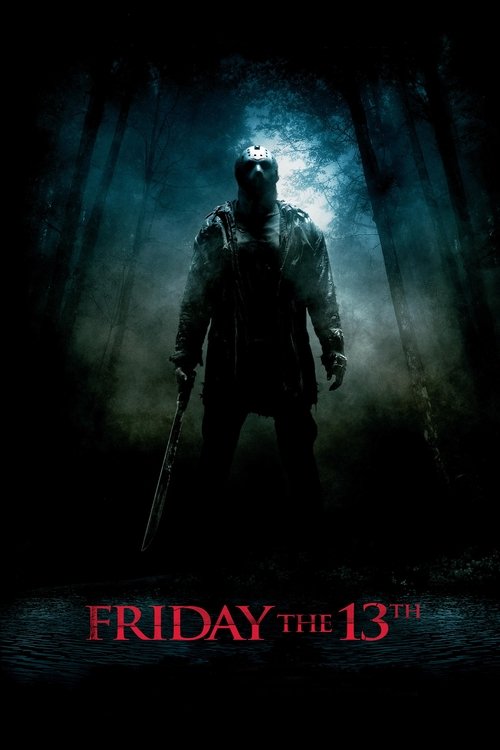
Friday the 13th
A group of young adults visit a boarded up campsite named Crystal Lake where they soon encounter the mysterious Jason Voorhees and his deadly intentions.
Despite a mid-range budget of $19.0M, Friday the 13th became a box office success, earning $91.5M worldwide—a 382% return.
2 wins & 5 nominations


Plot Structure
Story beats plotted across runtime


Narrative Arc
Emotional journey through the story's key moments
Story Circle
Blueprint 15-beat structure
Arcplot Score Breakdown
Weighted: Precision (70%) + Arc (15%) + Theme (15%)
Friday the 13th (2009) demonstrates deliberately positioned narrative design, characteristic of Marcus Nispel's storytelling approach. This structural analysis examines how the film's 15-point plot structure maps to proven narrative frameworks across 1 hour and 37 minutes. With an Arcplot score of 7.3, the film balances conventional beats with creative variation.
Characters
Cast & narrative archetypes

Clay Miller
Whitney Miller
Jenna
Jason Voorhees
Trent
Bree
Chewie
Chelsea
Main Cast & Characters
Clay Miller
Played by Jared Padalecki
Determined brother searching for his missing sister Whitney at Crystal Lake, refuses to give up despite danger.
Whitney Miller
Played by Amanda Righetti
Clay's kidnapped sister held captive by Jason, resembles his mother Pamela Voorhees.
Jenna
Played by Danielle Panabaker
Compassionate local who helps Clay search for Whitney and becomes his ally against Jason.
Jason Voorhees
Played by Derek Mears
Hulking, relentless killer who haunts Crystal Lake and murders anyone who trespasses on his territory.
Trent
Played by Travis Van Winkle
Arrogant, wealthy jock who owns a cabin at Crystal Lake and treats others with contempt.
Bree
Played by Julianna Guill
Trent's girlfriend, superficial and self-absorbed, more concerned with appearance than survival.
Chewie
Played by Aaron Yoo
Overweight, comic relief member of Trent's group who provides marijuana and humor.
Chelsea
Played by Willa Ford
Sensitive and artistic member of the group, dating Nolan, more grounded than her friends.
Structural Analysis
The Status Quo at 1 minutes (1% through the runtime) establishes A group of young adults arrive at Crystal Lake for a weekend camping trip, establishing the world of carefree youth venturing into dangerous territory.. Notably, this early placement immediately immerses viewers in the story world.
The inciting incident occurs at 12 minutes when Jason attacks and kills the first group systematically. Whitney is taken captive. This disrupts the status quo and establishes Jason as an active, deadly threat in present day.. At 12% through the film, this Disruption aligns precisely with traditional story structure. This beat shifts the emotional landscape, launching the protagonist into the central conflict.
The First Threshold at 23 minutes marks the transition into Act II, occurring at 24% of the runtime. This illustrates the protagonist's commitment to Clay makes the active choice to venture into the woods and abandoned camp despite warnings from locals and police. He crosses into Jason's territory, committing to finding his sister., moving from reaction to action.
At 49 minutes, the Midpoint arrives at 50% of the runtime—precisely centered, creating perfect narrative symmetry. Of particular interest, this crucial beat Clay discovers Jason's underground lair and finds evidence that Whitney is alive. The stakes raise dramatically - this isn't just about warning people, his sister is a prisoner. Jason becomes aware of Clay's intrusion., fundamentally raising what's at risk. The emotional intensity shifts, dividing the narrative into clear before-and-after phases.
The Collapse moment at 70 minutes (72% through) represents the emotional nadir. Here, Most of the group is dead. Clay and Jenna are separated and hunted. Clay finds Whitney but she's traumatized and they're trapped in Jason's lair. Hope seems lost as Jason closes in for the kill., reveals the protagonist at their lowest point. This beat's placement in the final quarter sets up the climactic reversal.
The Second Threshold at 76 minutes initiates the final act resolution at 78% of the runtime. Whitney realizes Jason has kept her alive because she resembles his mother. Clay understands they can use this psychological connection as a weapon. They formulate a plan to exploit Jason's weakness., demonstrating the transformation achieved throughout the journey.
Emotional Journey
Friday the 13th's emotional architecture traces a deliberate progression across 15 carefully calibrated beats.
Narrative Framework
This structural analysis employs proven narrative structure principles that track dramatic progression. By mapping Friday the 13th against these established plot points, we can identify how Marcus Nispel utilizes or subverts traditional narrative conventions. The plot point approach reveals not only adherence to structural principles but also creative choices that distinguish Friday the 13th within the horror genre.
Marcus Nispel's Structural Approach
Among the 4 Marcus Nispel films analyzed on Arcplot, the average structural score is 7.3, reflecting strong command of classical structure. Friday the 13th exemplifies the director's characteristic narrative technique. For comparative analysis, explore the complete Marcus Nispel filmography.
Comparative Analysis
Additional horror films include Thinner, A Nightmare on Elm Street and Mary Reilly. For more Marcus Nispel analyses, see Conan the Barbarian, The Texas Chainsaw Massacre and Pathfinder.
Plot Points by Act
Act I
SetupStatus Quo
A group of young adults arrive at Crystal Lake for a weekend camping trip, establishing the world of carefree youth venturing into dangerous territory.
Theme
Wade comments about the legend of Jason Voorhees and Camp Crystal Lake, introducing the theme: the past cannot be escaped and those who ignore warnings face consequences.
Worldbuilding
The first group explores the abandoned camp, searching for marijuana plants. We learn the legend of Jason and his mother, establish the lakeside setting, and meet the doomed characters who represent typical horror archetypes.
Disruption
Jason attacks and kills the first group systematically. Whitney is taken captive. This disrupts the status quo and establishes Jason as an active, deadly threat in present day.
Resistance
Six weeks later, Clay Miller arrives searching for his missing sister Whitney. He meets resistance from locals and prepares to search the area despite warnings. A new group of teens arrives at a nearby cabin.
Act II
ConfrontationFirst Threshold
Clay makes the active choice to venture into the woods and abandoned camp despite warnings from locals and police. He crosses into Jason's territory, committing to finding his sister.
Mirror World
Clay meets Jenna at the cabin. She represents compassion and the willingness to help others, contrasting with her selfish boyfriend Trent. Their connection forms the emotional B-story.
Premise
The group parties at the cabin while Clay and Jenna search for Whitney. Jason stalks and picks off victims one by one. We get the promised slasher thrills: creative kills, chase sequences, and mounting tension.
Midpoint
Clay discovers Jason's underground lair and finds evidence that Whitney is alive. The stakes raise dramatically - this isn't just about warning people, his sister is a prisoner. Jason becomes aware of Clay's intrusion.
Opposition
Jason intensifies his attacks on the remaining group. Clay and Jenna try to convince others of the danger but face disbelief. The body count rises and Jason's net tightens around the survivors.
Collapse
Most of the group is dead. Clay and Jenna are separated and hunted. Clay finds Whitney but she's traumatized and they're trapped in Jason's lair. Hope seems lost as Jason closes in for the kill.
Crisis
Clay, Whitney, and Jenna process their desperate situation. They're outmatched and trapped. Clay must find the will to fight back despite overwhelming odds and the death surrounding them.
Act III
ResolutionSecond Threshold
Whitney realizes Jason has kept her alive because she resembles his mother. Clay understands they can use this psychological connection as a weapon. They formulate a plan to exploit Jason's weakness.
Synthesis
The final confrontation at the camp. Whitney distracts Jason using his mother's memory while Clay attacks. They work together, combining compassion (Whitney's connection) with determination (Clay's persistence) to defeat Jason.
Transformation
Clay, Whitney, and Jenna escape by boat onto Crystal Lake, believing Jason is dead. The closing image mirrors the opening - young people on the lake - but now they're traumatized survivors. Jason emerges for a final scare, showing evil endures.