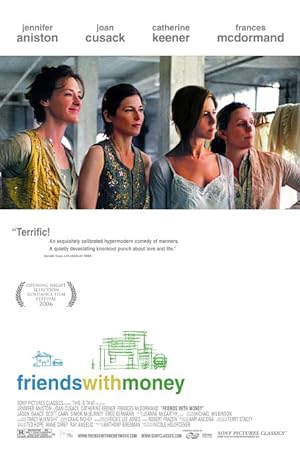
Friends with Money
Four women friends: three are wealthy and married plus there's Olivia, a former teacher who's now a maid. The marriages are in various states of health: Franny and Matt are happy and very rich. Christine and David write screenplays together, are remodeling their house, and argue. Jane is angry all the time and Aaron, who's an attentive husband, strikes everyone as gay. Franny sets up Olivia with a friend of hers, Mike, a personal trainer, and Olivia takes him with her to a couple of housecleaning jobs. A benefit dinner for ALS, an awkward guy named Marty whose place Olivia cleans, and a French maid's outfit figure in the story. Is there more to life than its problems?
Despite its tight budget of $6.5M, Friends with Money became a commercial success, earning $13.4M worldwide—a 106% return.


Plot Structure
Story beats plotted across runtime


Narrative Arc
Emotional journey through the story's key moments
Story Circle
Blueprint 15-beat structure
Arcplot Score Breakdown
Weighted: Precision (70%) + Arc (15%) + Theme (15%)
Friends with Money (2006) exemplifies meticulously timed narrative architecture, characteristic of Nicole Holofcener's storytelling approach. This structural analysis examines how the film's 15-point plot structure maps to proven narrative frameworks across 1 hour and 28 minutes. With an Arcplot score of 7.2, the film balances conventional beats with creative variation.
Characters
Cast & narrative archetypes

Olivia
Jane
Christine
Franny
Aaron
David
Matt
Main Cast & Characters
Olivia
Played by Jennifer Aniston
A former teacher working as a maid, struggling financially and romantically while her wealthy friends move forward in life.
Jane
Played by Frances McDormand
A successful fashion designer married to Aaron, dealing with anger issues and becoming increasingly confrontational about minor injustices.
Christine
Played by Catherine Keener
A wealthy screenwriter married to David, questioning her marriage and career success while maintaining a polished exterior.
Franny
Played by Joan Cusack
A stay-at-home mom married to Matt, insecure about money and her place in the friend group despite her husband's wealth.
Aaron
Played by Simon McBurney
Jane's gentle, patient husband who works in design and tries to understand his wife's growing anger and unhappiness.
David
Played by Jason Isaacs
Christine's husband, a successful writer who seems oblivious to his wife's dissatisfaction and their marital disconnect.
Matt
Played by Greg Germann
Franny's wealthy husband who inherited money, secure and supportive but unaware of his wife's deeper insecurities.
Structural Analysis
The Status Quo at 1 minutes (1% through the runtime) establishes Olivia cleans a wealthy client's house alone, establishing her solitary existence as a housecleaner while her three affluent friends live comfortable lives in Los Angeles.. Significantly, this early placement immediately immerses viewers in the story world.
The inciting incident occurs at 11 minutes when Olivia admits to her friends that she quit teaching because she felt empty, revealing her existential crisis and forcing the group to confront the disparity in their circumstances.. At 12% through the film, this Disruption aligns precisely with traditional story structure. This beat shifts the emotional landscape, launching the protagonist into the central conflict.
The First Threshold at 22 minutes marks the transition into Act II, occurring at 25% of the runtime. This reveals the protagonist's commitment to Olivia agrees to go on a date with Mike the personal trainer, choosing to open herself to possibility despite her insecurities about money and self-worth., moving from reaction to action.
At 43 minutes, the Midpoint arrives at 49% of the runtime—precisely centered, creating perfect narrative symmetry. The analysis reveals that this crucial beat At a charity event, the economic and emotional divisions between the friends become painfully visible. Olivia sleeps with Mike but realizes he's using her, while Jane publicly embarrasses herself by confronting line-cutters., fundamentally raising what's at risk. The emotional intensity shifts, dividing the narrative into clear before-and-after phases.
The Collapse moment at 66 minutes (75% through) represents the emotional nadir. Here, Olivia discovers Mike has been stealing her money and using her for sex without genuine affection. She realizes she's been degrading herself, hitting her lowest emotional point as all her insecurities are confirmed., illustrates the protagonist at their lowest point. This beat's placement in the final quarter sets up the climactic reversal.
The Second Threshold at 71 minutes initiates the final act resolution at 81% of the runtime. Franny gives Olivia money without strings attached, an act of genuine friendship that allows Olivia to see that connection transcends economics. She begins to accept herself regardless of financial status., demonstrating the transformation achieved throughout the journey.
Emotional Journey
Friends with Money's emotional architecture traces a deliberate progression across 15 carefully calibrated beats.
Narrative Framework
This structural analysis employs proven narrative structure principles that track dramatic progression. By mapping Friends with Money against these established plot points, we can identify how Nicole Holofcener utilizes or subverts traditional narrative conventions. The plot point approach reveals not only adherence to structural principles but also creative choices that distinguish Friends with Money within the comedy genre.
Nicole Holofcener's Structural Approach
Among the 3 Nicole Holofcener films analyzed on Arcplot, the average structural score is 7.5, reflecting strong command of classical structure. Friends with Money takes a more unconventional approach compared to the director's typical style. For comparative analysis, explore the complete Nicole Holofcener filmography.
Comparative Analysis
Additional comedy films include The Bad Guys, Ella Enchanted and The Evening Star. For more Nicole Holofcener analyses, see Enough Said, You Hurt My Feelings.
Plot Points by Act
Act I
SetupStatus Quo
Olivia cleans a wealthy client's house alone, establishing her solitary existence as a housecleaner while her three affluent friends live comfortable lives in Los Angeles.
Theme
During lunch, the friends discuss whether money brings happiness. Franny suggests that having money doesn't guarantee contentment, articulating the film's central question about wealth and fulfillment.
Worldbuilding
The four friends' lives are established: Olivia's financial struggles and pot-smoking habits; Christine and David's tense marriage and home addition controversy; Jane's depression and Aaron's ambiguous sexuality rumors; Franny's guilt over her wealth.
Disruption
Olivia admits to her friends that she quit teaching because she felt empty, revealing her existential crisis and forcing the group to confront the disparity in their circumstances.
Resistance
The friends try to help Olivia find direction. Franny sets her up with a personal trainer named Mike while Olivia continues cleaning houses and stealing from clients, uncertain about her path forward.
Act II
ConfrontationFirst Threshold
Olivia agrees to go on a date with Mike the personal trainer, choosing to open herself to possibility despite her insecurities about money and self-worth.
Mirror World
Olivia begins working as Mike's assistant on cleaning jobs, entering a new dynamic where she must confront her feelings about service work and human connection through this unlikely partnership.
Premise
The ensemble navigates their intertwined lives: Olivia and Mike's complicated relationship develops; Jane's depression deepens as she stops washing her hair; Christine and David fight over their addition; Franny navigates her wealthy guilt.
Midpoint
At a charity event, the economic and emotional divisions between the friends become painfully visible. Olivia sleeps with Mike but realizes he's using her, while Jane publicly embarrasses herself by confronting line-cutters.
Opposition
Relationships deteriorate: Mike exploits Olivia financially; Christine and David's marriage reaches a breaking point; Jane's behavior becomes increasingly erratic; the friends struggle to maintain their bonds across class divides.
Collapse
Olivia discovers Mike has been stealing her money and using her for sex without genuine affection. She realizes she's been degrading herself, hitting her lowest emotional point as all her insecurities are confirmed.
Crisis
Olivia processes her humiliation and isolation while the other friends face their own reckonings. Jane finally acknowledges her depression, and Christine confronts the emptiness in her marriage.
Act III
ResolutionSecond Threshold
Franny gives Olivia money without strings attached, an act of genuine friendship that allows Olivia to see that connection transcends economics. She begins to accept herself regardless of financial status.
Synthesis
The friends find their own resolutions: Jane gets help for her depression; Christine and David tentatively reconcile; Olivia meets Marty, a kind, wealthy man at a client's house who sees her genuine worth.
Transformation
Olivia walks with Marty, newly engaged and genuinely happy. Unlike the opening where she cleaned alone, she's now connected and valued—suggesting that money doesn't determine worth, but human connection does.