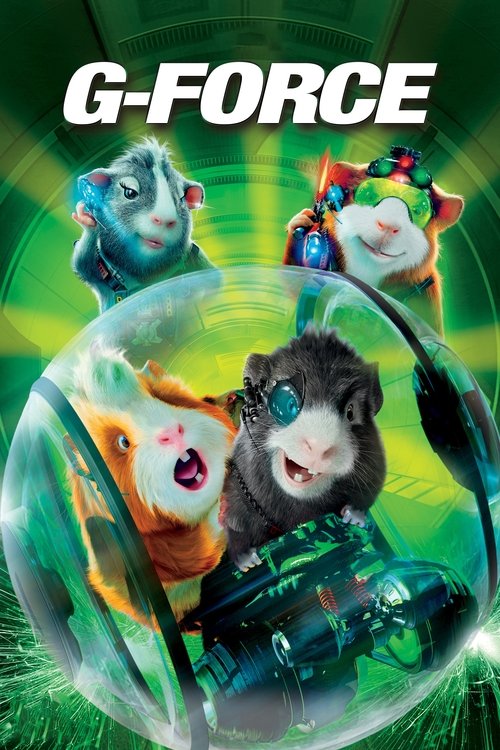
G-Force
A team of trained secret agent animals, guinea pigs Darwin, Hurley, Juarez, Blaster, mole Speckles, and fly Mooch takes on a mission for the US government to stop evil Leonard Saber, who plans to destroy the world with household appliances. But the government shuts them down and they are sentenced to a pet shop. Can they escape to defeat the villain and save the world?
Working with a major studio investment of $150.0M, the film achieved a respectable showing with $292.8M in global revenue (+95% profit margin).
1 win & 1 nomination


Plot Structure
Story beats plotted across runtime


Narrative Arc
Emotional journey through the story's key moments
Story Circle
Blueprint 15-beat structure
Arcplot Score Breakdown
Weighted: Precision (70%) + Arc (15%) + Theme (15%)
G-Force (2009) demonstrates strategically placed narrative design, characteristic of Hoyt Yeatman's storytelling approach. This structural analysis examines how the film's 15-point plot structure maps to proven narrative frameworks across 1 hour and 28 minutes. With an Arcplot score of 7.4, the film balances conventional beats with creative variation.
Characters
Cast & narrative archetypes

Darwin
Blaster
Juarez
Hurley
Speckles
Ben
Mooch
Leonard Saber
Main Cast & Characters
Darwin
Played by Sam Rockwell
The team leader of G-Force, a dedicated and by-the-book guinea pig spy who learns to trust his instincts and team.
Blaster
Played by Tracy Morgan
The tough, weapons-expert guinea pig with a love for action and loyalty to his team.
Juarez
Played by Penélope Cruz
The martial arts expert and sole female member of G-Force, confident and capable in combat.
Hurley
Played by Jon Favreau
An inexperienced pet store guinea pig who joins the team and provides unexpected help despite his lack of training.
Speckles
Played by Nicolas Cage
The mole intelligence specialist and computer expert who is revealed to be the true villain seeking revenge on humans.
Ben
Played by Zach Galifianakis
The FBI agent and creator of the G-Force program who believes in the team's potential.
Mooch
Played by Dee Bradley Baker
A fly and reconnaissance specialist who provides aerial surveillance for the team.
Leonard Saber
Played by Bill Nighy
The billionaire industrialist initially suspected of villainy, but later revealed to be innocent.
Structural Analysis
The Status Quo at 1 minutes (1% through the runtime) establishes Opening image of elite guinea pig spy team G-Force conducting high-tech surveillance mission in their secret FBI facility, showcasing Darwin as confident field leader surrounded by advanced technology and his trusted team.. Of particular interest, this early placement immediately immerses viewers in the story world.
The inciting incident occurs at 10 minutes when FBI Director shuts down the G-Force program after their unauthorized break-in at Saberling Technologies, despite discovering evidence of Clusterstorm. The team is ordered to be destroyed as lab animals.. At 11% through the film, this Disruption aligns precisely with traditional story structure. This beat shifts the emotional landscape, launching the protagonist into the central conflict.
The First Threshold at 21 minutes marks the transition into Act II, occurring at 24% of the runtime. This reveals the protagonist's commitment to Darwin makes the active choice to escape the pet store and launch an independent mission to stop Clusterstorm and prove G-Force's worth, taking the team into the field without FBI authorization., moving from reaction to action.
At 42 minutes, the Midpoint arrives at 48% of the runtime—precisely centered, creating perfect narrative symmetry. Of particular interest, this crucial beat False defeat: The team discovers that Speckles, not Saber, is the true mastermind behind Clusterstorm. Their trusted friend and tech expert betrays them, revealing he plans to use the appliances to destroy humanity for what they did to his family., fundamentally raising what's at risk. The emotional intensity shifts, dividing the narrative into clear before-and-after phases.
The Collapse moment at 64 minutes (72% through) represents the emotional nadir. Here, G-Force is locked in maximum security cages at FBI headquarters, completely powerless as Clusterstorm begins worldwide. Darwin admits his leadership failed and the team seems defeated. Their dream of being heroes appears dead., reveals the protagonist at their lowest point. This beat's placement in the final quarter sets up the climactic reversal.
The Second Threshold at 69 minutes initiates the final act resolution at 78% of the runtime. Darwin synthesizes the theme: true strength comes from trusting your team completely. They escape using teamwork (each member's unique skills) and race to Speckles' lair to stop Clusterstorm, now united as a real family., demonstrating the transformation achieved throughout the journey.
Emotional Journey
G-Force's emotional architecture traces a deliberate progression across 15 carefully calibrated beats.
Narrative Framework
This structural analysis employs proven narrative structure principles that track dramatic progression. By mapping G-Force against these established plot points, we can identify how Hoyt Yeatman utilizes or subverts traditional narrative conventions. The plot point approach reveals not only adherence to structural principles but also creative choices that distinguish G-Force within the family genre.
Comparative Analysis
Additional family films include The Black Stallion, The Bad Guys and Ella Enchanted.
Plot Points by Act
Act I
SetupStatus Quo
Opening image of elite guinea pig spy team G-Force conducting high-tech surveillance mission in their secret FBI facility, showcasing Darwin as confident field leader surrounded by advanced technology and his trusted team.
Theme
Agent Ben tells Darwin that being part of a team means trusting others and that "you're only as strong as your weakest link" - establishing the theme of teamwork versus individual heroism.
Worldbuilding
Establishment of G-Force team dynamics: Darwin the leader, Blaster the weapons expert, Juarez the martial artist; their handler Ben; the mission to investigate Leonard Saber's electronics company; the FBI's skepticism of using trained rodents as agents.
Disruption
FBI Director shuts down the G-Force program after their unauthorized break-in at Saberling Technologies, despite discovering evidence of Clusterstorm. The team is ordered to be destroyed as lab animals.
Resistance
Ben tries to save the team but they're captured and sent to a pet store. Darwin debates whether to escape and clear their names or accept their fate. The team meets Hurley and Speckles helps plan their escape from the pet store.
Act II
ConfrontationFirst Threshold
Darwin makes the active choice to escape the pet store and launch an independent mission to stop Clusterstorm and prove G-Force's worth, taking the team into the field without FBI authorization.
Mirror World
Hurley joins the team as the reluctant everyman who represents the value of ordinary courage. His relationship with Darwin will teach the leader that heroism isn't about elite training but heart and loyalty.
Premise
The fun spy adventure the audience came for: guinea pigs infiltrating Saberling headquarters, using gadgets, conducting surveillance, discovering Clusterstorm is real, navigating human world obstacles, and piecing together the conspiracy while evading capture.
Midpoint
False defeat: The team discovers that Speckles, not Saber, is the true mastermind behind Clusterstorm. Their trusted friend and tech expert betrays them, revealing he plans to use the appliances to destroy humanity for what they did to his family.
Opposition
G-Force pursues Speckles while trying to convince the FBI of the real threat. Darwin's leadership is questioned by the team. They're recaptured, Saber is arrested for their crimes, and Speckles activates Clusterstorm while the team is imprisoned.
Collapse
G-Force is locked in maximum security cages at FBI headquarters, completely powerless as Clusterstorm begins worldwide. Darwin admits his leadership failed and the team seems defeated. Their dream of being heroes appears dead.
Crisis
Dark night as Darwin processes failure and realizes he pushed away his team by trying to be a lone hero. Hurley gives a speech about believing in each other. The team reconciles and finds new determination together.
Act III
ResolutionSecond Threshold
Darwin synthesizes the theme: true strength comes from trusting your team completely. They escape using teamwork (each member's unique skills) and race to Speckles' lair to stop Clusterstorm, now united as a real family.
Synthesis
Finale: Infiltrating Speckles' command center, fighting through defenses, Darwin confronting Speckles about revenge versus family, the team working in perfect sync to disable Clusterstorm, rescuing Speckles from his own destructive path, and saving the world together.
Transformation
G-Force is reinstated as official FBI agents with Ben as director of special ops. Darwin, once a lone wolf leader, now stands with his true family - the team - having learned that together they're unstoppable. Final image mirrors opening but shows transformed relationships.