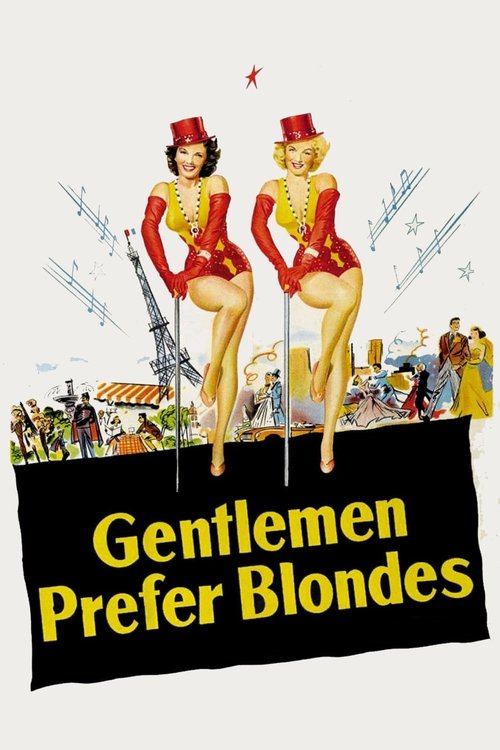
Gentlemen Prefer Blondes
Lorelei Lee is a beautiful showgirl engaged to be married to the wealthy Gus Esmond, much to the disapproval of Gus' rich father, Esmond Sr., who thinks that Lorelei is just after his money. When Lorelei goes on a cruise accompanied only by her best friend, Dorothy Shaw, Esmond Sr. hires Ernie Malone, a private detective, to follow her and report any questionable behavior that would disqualify her from the marriage.
Despite its modest budget of $2.3M, Gentlemen Prefer Blondes became a financial success, earning $5.3M worldwide—a 130% return.


Plot Structure
Story beats plotted across runtime


Narrative Arc
Emotional journey through the story's key moments
Story Circle
Blueprint 15-beat structure
Arcplot Score Breakdown
Weighted: Precision (70%) + Arc (15%) + Theme (15%)
Gentlemen Prefer Blondes (1953) reveals deliberately positioned plot construction, characteristic of Howard Hawks's storytelling approach. This structural analysis examines how the film's 15-point plot structure maps to proven narrative frameworks across 1 hour and 31 minutes. With an Arcplot score of 7.4, the film balances conventional beats with creative variation.
Characters
Cast & narrative archetypes

Lorelei Lee
Dorothy Shaw
Gus Esmond
Ernie Malone
Sir Francis Beekman
Main Cast & Characters
Lorelei Lee
Played by Marilyn Monroe
A glamorous blonde showgirl who believes diamonds are a girl's best friend and seeks financial security through marriage.
Dorothy Shaw
Played by Jane Russell
Lorelei's brunette best friend and fellow showgirl who is more cynical about money and seeks genuine love.
Gus Esmond
Played by Tommy Noonan
Lorelei's naive, wealthy fiancé who is devoted to her but controlled by his disapproving father.
Ernie Malone
Played by Elliott Reid
A private detective hired to spy on Lorelei who develops romantic feelings for Dorothy.
Sir Francis Beekman
Played by Charles Coburn
A wealthy, pompous British diamond mine owner who becomes infatuated with Lorelei on the cruise.
Structural Analysis
The Status Quo at 1 minutes (1% through the runtime) establishes Lorelei Lee and Dorothy Shaw perform "Two Little Girls from Little Rock" in a nightclub, establishing them as glamorous showgirls with different philosophies: Lorelei seeks wealthy men while Dorothy seeks love.. Of particular interest, this early placement immediately immerses viewers in the story world.
The inciting incident occurs at 10 minutes when The girls board the luxury liner Ile de France, leaving their ordinary world behind for an ocean voyage that will test Lorelei's engagement and both women's values.. At 11% through the film, this Disruption aligns precisely with traditional story structure. This beat shifts the emotional landscape, launching the protagonist into the central conflict.
The First Threshold at 22 minutes marks the transition into Act II, occurring at 25% of the runtime. This demonstrates the protagonist's commitment to Lorelei actively pursues Sir Francis Beekman for his diamond tiara, performing "Diamonds Are a Girl's Best Friend" in her mind. She commits fully to her materialistic philosophy despite the risk to her engagement., moving from reaction to action.
At 45 minutes, the Midpoint arrives at 49% of the runtime—precisely centered, creating perfect narrative symmetry. Significantly, this crucial beat Malone reveals he's a detective hired by Gus's father and has photographs of Lorelei with Sir Francis. The fun is over - Lorelei's scheme is exposed, threatening her engagement and future security., fundamentally raising what's at risk. The emotional intensity shifts, dividing the narrative into clear before-and-after phases.
The Collapse moment at 66 minutes (73% through) represents the emotional nadir. Here, Lorelei is served a subpoena to appear in court over the missing tiara. Her dream of marrying Gus dies - she faces potential criminal charges and has lost everything she's worked for. Her philosophy has failed her., indicates the protagonist at their lowest point. This beat's placement in the final quarter sets up the climactic reversal.
The Second Threshold at 72 minutes initiates the final act resolution at 79% of the runtime. Dorothy impersonates Lorelei in court, using both her loyalty (Mirror World lesson) and cleverness (original skills) to defend her friend. The synthesis of love and wit provides the path forward., demonstrating the transformation achieved throughout the journey.
Emotional Journey
Gentlemen Prefer Blondes's emotional architecture traces a deliberate progression across 15 carefully calibrated beats.
Narrative Framework
This structural analysis employs a 15-point narrative structure framework that maps key story moments. By mapping Gentlemen Prefer Blondes against these established plot points, we can identify how Howard Hawks utilizes or subverts traditional narrative conventions. The plot point approach reveals not only adherence to structural principles but also creative choices that distinguish Gentlemen Prefer Blondes within the comedy genre.
Howard Hawks's Structural Approach
Among the 7 Howard Hawks films analyzed on Arcplot, the average structural score is 7.0, reflecting strong command of classical structure. Gentlemen Prefer Blondes represents one of the director's most structurally precise works. For comparative analysis, explore the complete Howard Hawks filmography.
Comparative Analysis
Additional comedy films include The Bad Guys, Ella Enchanted and The Evening Star. For more Howard Hawks analyses, see Man's Favorite Sport?, Bringing Up Baby and Rio Bravo.
Plot Points by Act
Act I
SetupStatus Quo
Lorelei Lee and Dorothy Shaw perform "Two Little Girls from Little Rock" in a nightclub, establishing them as glamorous showgirls with different philosophies: Lorelei seeks wealthy men while Dorothy seeks love.
Theme
Dorothy tells Lorelei: "Don't you know that a man being rich is like a girl being pretty? You wouldn't marry a girl just because she's pretty, but my goodness, doesn't it help?" The theme of love versus material security is established.
Worldbuilding
Lorelei's engagement to Gus Esmond is revealed. Gus's father disapproves and hires detective Malone to follow her. The girls prepare to sail to Paris on the Ile de France, where Lorelei will meet Gus to marry.
Disruption
The girls board the luxury liner Ile de France, leaving their ordinary world behind for an ocean voyage that will test Lorelei's engagement and both women's values.
Resistance
On the ship, Lorelei meets wealthy Sir Francis Beekman and his wife. Dorothy meets Ernie Malone (the detective in disguise as a passenger). Both relationships develop as the women navigate the social world of the ship.
Act II
ConfrontationFirst Threshold
Lorelei actively pursues Sir Francis Beekman for his diamond tiara, performing "Diamonds Are a Girl's Best Friend" in her mind. She commits fully to her materialistic philosophy despite the risk to her engagement.
Mirror World
Dorothy's romance with Ernie Malone deepens, representing the thematic counterpoint: genuine love without calculation. Their relationship will teach both women about authentic connection.
Premise
The fun of the premise: shipboard romance, musical numbers including the iconic "Diamonds Are a Girl's Best Friend," Lorelei manipulating Sir Francis, Dorothy falling for Malone, and comic misunderstandings aboard the luxury liner.
Midpoint
Malone reveals he's a detective hired by Gus's father and has photographs of Lorelei with Sir Francis. The fun is over - Lorelei's scheme is exposed, threatening her engagement and future security.
Opposition
In Paris, pressure mounts: Lorelei loses the tiara (hidden in her purse by Sir Francis's wife), Gus arrives but won't marry her without his father's approval, Malone has turned evidence over to Esmond Sr., and both women face potential ruin.
Collapse
Lorelei is served a subpoena to appear in court over the missing tiara. Her dream of marrying Gus dies - she faces potential criminal charges and has lost everything she's worked for. Her philosophy has failed her.
Crisis
Lorelei faces her dark night, realizing her materialism has cost her love. Dorothy stands by her friend, and together they scheme to recover the tiara and Lorelei's reputation.
Act III
ResolutionSecond Threshold
Dorothy impersonates Lorelei in court, using both her loyalty (Mirror World lesson) and cleverness (original skills) to defend her friend. The synthesis of love and wit provides the path forward.
Synthesis
The courtroom finale: Dorothy's performance charms the judge, Lorelei gives an impassioned speech defending her right to marry for money, Esmond Sr. is won over by her honesty, and both couples reconcile. Double wedding preparation ensues.
Transformation
The double wedding: Lorelei marries Gus (wealthy but also genuinely caring), having learned that security and affection can coexist. Dorothy marries Malone for love. Both women get what they need, not just what they wanted.