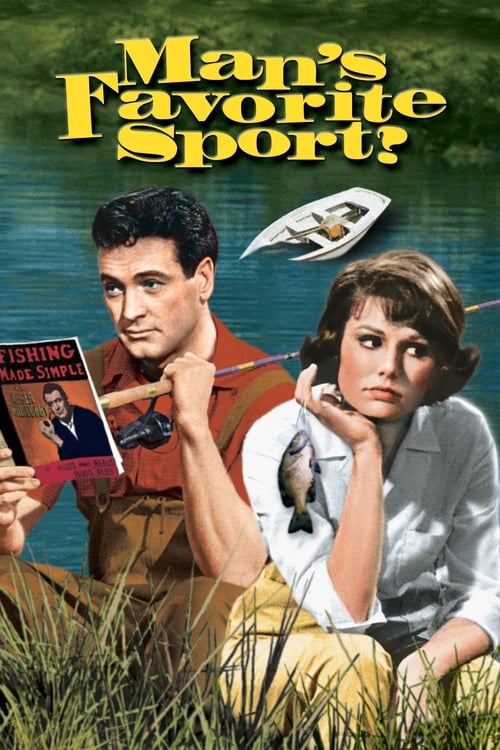
Man's Favorite Sport?
Roger Willoughby is a renowned fishing expert, who, unbeknownst to his friends, co-workers, or boss, has never cast a line in his life. One day, he crosses paths with Abigail Paige, a sweetly annoying girl who has just badgered his boss into signing Roger up for an annual fishing tournament.
The film earned $6.0M at the global box office.


Plot Structure
Story beats plotted across runtime


Narrative Arc
Emotional journey through the story's key moments
Story Circle
Blueprint 15-beat structure
Arcplot Score Breakdown
Weighted: Precision (70%) + Arc (15%) + Theme (15%)
Man's Favorite Sport? (1964) exemplifies carefully calibrated narrative architecture, characteristic of Howard Hawks's storytelling approach. This structural analysis examines how the film's 15-point plot structure maps to proven narrative frameworks across 2 hours. With an Arcplot score of 7.4, the film balances conventional beats with creative variation.
Characters
Cast & narrative archetypes

Roger Willoughby
Abigail Page
Easy Mueller
Main Cast & Characters
Roger Willoughby
Played by Rock Hudson
A fishing equipment salesman who has never actually fished but is forced to enter a major fishing tournament to maintain his expert reputation.
Abigail Page
Played by Paula Prentiss
A spirited and manipulative publicist who tricks Roger into entering the tournament and helps him learn to fish while falling for him.
Easy Mueller
Played by Maria Perschy
A glamorous outdoorswoman and past acquaintance of Roger who complicates his romantic situation at the tournament.
Structural Analysis
The Status Quo at 2 minutes (1% through the runtime) establishes Roger Willoughby, celebrated fishing expert and sporting goods salesman, holds court in his department advising customers with absolute authority about fishing equipment and techniques - appearing successful and confident in his world.. Significantly, this early placement immediately immerses viewers in the story world.
The inciting incident occurs at 14 minutes when Abigail Page, a publicist, and Isolde "Easy" Mueller arrive with a plan: they've entered Roger into a prestigious fishing tournament at a lakeside lodge to promote the store. Roger's carefully constructed facade is suddenly threatened with exposure.. At 11% through the film, this Disruption aligns precisely with traditional story structure. This beat shifts the emotional landscape, launching the protagonist into the central conflict.
The First Threshold at 29 minutes marks the transition into Act II, occurring at 24% of the runtime. This shows the protagonist's commitment to Roger reluctantly agrees to enter the tournament and travels to the lakeside lodge, crossing into the world where his expertise will be tested. He makes the active choice to maintain his lie rather than confess, committing to the charade., moving from reaction to action.
At 61 minutes, the Midpoint arrives at 50% of the runtime—precisely centered, creating perfect narrative symmetry. The analysis reveals that this crucial beat False victory: Roger actually catches a significant fish (with Easy's covert assistance), gaining confidence and status in the tournament. He appears to be succeeding at the charade, and his romance with Easy deepens, but the stakes also raise - he's in too deep to back out now., fundamentally raising what's at risk. The emotional intensity shifts, dividing the narrative into clear before-and-after phases.
The Collapse moment at 90 minutes (75% through) represents the emotional nadir. Here, Roger's deception is exposed or nearly exposed in a humiliating fashion. His fraud threatens to become public, his relationship with Easy appears ruined, and his career and reputation face destruction. The charade collapses - metaphorical death of his false identity., illustrates the protagonist at their lowest point. This beat's placement in the final quarter sets up the climactic reversal.
The Second Threshold at 95 minutes initiates the final act resolution at 79% of the runtime. Roger has a realization: he must stop pretending and be honest, applying what Easy actually taught him (both about fishing and about authenticity). He decides to face the truth, synthesizing his newfound real skills with genuine honesty about his limitations., demonstrating the transformation achieved throughout the journey.
Emotional Journey
Man's Favorite Sport?'s emotional architecture traces a deliberate progression across 15 carefully calibrated beats.
Narrative Framework
This structural analysis employs structural analysis methodology used to understand storytelling architecture. By mapping Man's Favorite Sport? against these established plot points, we can identify how Howard Hawks utilizes or subverts traditional narrative conventions. The plot point approach reveals not only adherence to structural principles but also creative choices that distinguish Man's Favorite Sport? within the comedy genre.
Howard Hawks's Structural Approach
Among the 7 Howard Hawks films analyzed on Arcplot, the average structural score is 7.0, reflecting strong command of classical structure. Man's Favorite Sport? represents one of the director's most structurally precise works. For comparative analysis, explore the complete Howard Hawks filmography.
Comparative Analysis
Additional comedy films include The Bad Guys, Ella Enchanted and The Evening Star. For more Howard Hawks analyses, see Bringing Up Baby, Rio Bravo and El Dorado.
Plot Points by Act
Act I
SetupStatus Quo
Roger Willoughby, celebrated fishing expert and sporting goods salesman, holds court in his department advising customers with absolute authority about fishing equipment and techniques - appearing successful and confident in his world.
Theme
Someone remarks about the difference between what people appear to be and what they really are, or questions the authenticity of expertise versus real experience - foreshadowing Roger's central conflict between his facade and reality.
Worldbuilding
Establishment of Roger's double life: he's written books and articles about fishing, appears on the cover of magazines, and is the go-to expert - but has never actually fished in his life. We see his comfortable routine, his relationship with his boss, and his reputation built entirely on research and bluffing.
Disruption
Abigail Page, a publicist, and Isolde "Easy" Mueller arrive with a plan: they've entered Roger into a prestigious fishing tournament at a lakeside lodge to promote the store. Roger's carefully constructed facade is suddenly threatened with exposure.
Resistance
Roger desperately tries to get out of the tournament, making excuses and attempting to reveal the truth. His boss pressures him to go. Abigail and Easy manipulate the situation. Roger debates whether to confess his fraud or attempt to pull off the charade. He researches frantically, trying to prepare.
Act II
ConfrontationFirst Threshold
Roger reluctantly agrees to enter the tournament and travels to the lakeside lodge, crossing into the world where his expertise will be tested. He makes the active choice to maintain his lie rather than confess, committing to the charade.
Mirror World
Easy begins actively helping Roger, teaching him to fish while pretending to be taught by him. Their relationship develops as she becomes both his secret tutor and romantic interest - embodying the theme of authenticity versus deception and genuine connection.
Premise
The fun and games of the romantic comedy: Roger's increasingly elaborate attempts to fake his way through fishing while Easy secretly helps him. Comic mishaps on the lake, close calls with exposure, Roger's growing attraction to Easy despite his predicament, and the mounting tension of maintaining the lie while learning to fish.
Midpoint
False victory: Roger actually catches a significant fish (with Easy's covert assistance), gaining confidence and status in the tournament. He appears to be succeeding at the charade, and his romance with Easy deepens, but the stakes also raise - he's in too deep to back out now.
Opposition
Complications mount: other tournament participants become suspicious, jealousies arise, Abigail's interference increases, and the pressure to maintain the deception intensifies. Roger's relationship with Easy becomes strained as the lies pile up. The tournament advances, raising the stakes for exposure.
Collapse
Roger's deception is exposed or nearly exposed in a humiliating fashion. His fraud threatens to become public, his relationship with Easy appears ruined, and his career and reputation face destruction. The charade collapses - metaphorical death of his false identity.
Crisis
Roger hits emotional bottom, confronting the consequences of his deception and the emptiness of his inauthentic life. He processes the loss of Easy's respect and trust, and faces the choice of continuing to fake his way through life or becoming genuine.
Act III
ResolutionSecond Threshold
Roger has a realization: he must stop pretending and be honest, applying what Easy actually taught him (both about fishing and about authenticity). He decides to face the truth, synthesizing his newfound real skills with genuine honesty about his limitations.
Synthesis
The finale: Roger confronts the situation honestly, perhaps completes the tournament with genuine effort (win or lose), reconciles with Easy through authentic connection rather than deception, and resolves the conflicts. The climax involves choosing honesty over reputation.
Transformation
Closing image mirrors the opening but transformed: Roger is shown in a genuine relationship with Easy, perhaps actually fishing (competently or incompetently, but honestly), having embraced authenticity over the need to maintain a false expert image. He's found real connection through honesty.