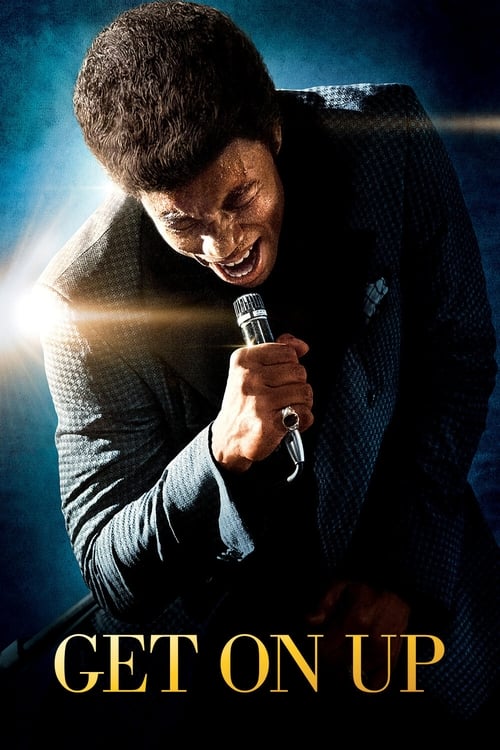
Get on Up
A chronicle of James Brown's rise from extreme poverty to become one of the most influential musicians in history.
Working with a respectable budget of $30.0M, the film achieved a respectable showing with $33.4M in global revenue (+11% profit margin).
4 wins & 19 nominations


Plot Structure
Story beats plotted across runtime


Narrative Arc
Emotional journey through the story's key moments
Story Circle
Blueprint 15-beat structure
Arcplot Score Breakdown
Weighted: Precision (70%) + Arc (15%) + Theme (15%)
Get on Up (2014) exemplifies precise dramatic framework, characteristic of Tate Taylor's storytelling approach. This structural analysis examines how the film's 15-point plot structure maps to proven narrative frameworks across 2 hours and 19 minutes. With an Arcplot score of 7.6, the film showcases strong structural fundamentals.
Characters
Cast & narrative archetypes

James Brown
Bobby Byrd
Ben Bart
DeeDee Brown
Velma Warren
Joe Brown
Susie Brown
Main Cast & Characters
James Brown
Played by Chadwick Boseman
The Godfather of Soul, a driven musical genius who rises from poverty to become one of the most influential performers in music history.
Bobby Byrd
Played by Nelsan Ellis
James Brown's best friend and bandmate who discovers him in prison and becomes his musical partner and conscience throughout his career.
Ben Bart
Played by Dan Aykroyd
James Brown's manager and mentor who helps guide his career and navigate the music industry.
DeeDee Brown
Played by Jill Scott
James Brown's second wife who struggles with his controlling behavior and infidelity.
Velma Warren
Played by Viola Davis
James Brown's first wife who endures his early struggles and volatile personality.
Joe Brown
Played by Lennie James
James Brown's abusive father who abandoned him as a child, leaving deep emotional scars.
Susie Brown
Played by Viola Davis
James Brown's mother who left him when he was young, creating abandonment issues that haunted him.
Structural Analysis
The Status Quo at 1 minutes (1% through the runtime) establishes 1988: James Brown, armed and paranoid, confronts people using his bathroom at his strip mall office. This opening establishes Brown at his most isolated and erratic - the "King of Soul" reduced to a man who trusts no one, showing us what his journey has cost him before we see how he got there.. The analysis reveals that this early placement immediately immerses viewers in the story world.
The inciting incident occurs at 16 minutes when 1950s: Bobby Byrd visits James in prison and offers him a way out - join his gospel group. This external event disrupts James' path toward becoming a hardened criminal and offers him salvation through music. James doesn't seek this opportunity; it comes to him.. At 12% through the film, this Disruption aligns precisely with traditional story structure. This beat shifts the emotional landscape, launching the protagonist into the central conflict.
The First Threshold at 34 minutes marks the transition into Act II, occurring at 24% of the runtime. This illustrates the protagonist's commitment to James makes the active choice to pursue music professionally and transforms the gospel group into a rhythm and blues act. He takes full control, insisting on his vision even over Bobby's objections. This is his irreversible commitment to becoming James Brown the performer, not just James the kid from Georgia., moving from reaction to action.
At 68 minutes, the Midpoint arrives at 49% of the runtime—precisely centered, creating perfect narrative symmetry. Significantly, this crucial beat 1968: False victory - James Brown performs "Say It Loud - I'm Black and I'm Proud" on national television after MLK's assassination, becoming a cultural icon and the voice of Black pride. He's at the height of his powers and influence. But this peak moment masks the personal isolation growing beneath the success., fundamentally raising what's at risk. The emotional intensity shifts, dividing the narrative into clear before-and-after phases.
The Collapse moment at 103 minutes (74% through) represents the emotional nadir. Here, The complete breakdown of James' life: DeeDee leaves with their children, Bobby is gone, his band members despise him, he's alone with only yes-men and drug dealers. The "whiff of death" is metaphorical - the death of all his relationships, the death of his ability to connect. He's achieved everything and has no one, exactly as he started., reveals the protagonist at their lowest point. This beat's placement in the final quarter sets up the climactic reversal.
The Second Threshold at 111 minutes initiates the final act resolution at 80% of the runtime. Bobby Byrd visits James, offering reconciliation. This reunion provides James a moment of clarity - he finally sees that Bobby was always there, that loyalty and love were offered, but his trauma wouldn't let him accept it. The synthesis: James can acknowledge his need for others without losing his sense of self., demonstrating the transformation achieved throughout the journey.
Emotional Journey
Get on Up's emotional architecture traces a deliberate progression across 15 carefully calibrated beats.
Narrative Framework
This structural analysis employs a 15-point narrative structure framework that maps key story moments. By mapping Get on Up against these established plot points, we can identify how Tate Taylor utilizes or subverts traditional narrative conventions. The plot point approach reveals not only adherence to structural principles but also creative choices that distinguish Get on Up within the drama genre.
Tate Taylor's Structural Approach
Among the 4 Tate Taylor films analyzed on Arcplot, the average structural score is 7.2, reflecting strong command of classical structure. Get on Up represents one of the director's most structurally precise works. For comparative analysis, explore the complete Tate Taylor filmography.
Comparative Analysis
Additional drama films include After Thomas, South Pacific and Dirty Dancing: Havana Nights. For more Tate Taylor analyses, see The Help, The Girl on the Train and Ma.
Plot Points by Act
Act I
SetupStatus Quo
1988: James Brown, armed and paranoid, confronts people using his bathroom at his strip mall office. This opening establishes Brown at his most isolated and erratic - the "King of Soul" reduced to a man who trusts no one, showing us what his journey has cost him before we see how he got there.
Theme
Young James, abandoned by his mother in 1930s Georgia, is told by his father: "You on your own." This brutally stated abandonment becomes the film's central theme: self-reliance born from trauma, and the cost of never learning to trust or depend on others.
Worldbuilding
The film establishes its nonlinear structure, jumping between 1988, 1939, and the 1950s. We see young James' extreme poverty in Georgia, his time in Aunt Honey's brothel, his imprisonment, and his early discovery of music. The narrative establishes Brown's genius, his trauma, and his complete inability to trust anyone - all while building the world of Jim Crow South and the chitlin circuit.
Disruption
1950s: Bobby Byrd visits James in prison and offers him a way out - join his gospel group. This external event disrupts James' path toward becoming a hardened criminal and offers him salvation through music. James doesn't seek this opportunity; it comes to him.
Resistance
James debates whether to embrace music fully. Bobby Byrd becomes his guide and closest thing to family. We see James' natural talent and charisma emerging, but also his need to control everything. The Famous Flames form. James resists fully committing, still hustling on the side, until he realizes music is his true path.
Act II
ConfrontationFirst Threshold
James makes the active choice to pursue music professionally and transforms the gospel group into a rhythm and blues act. He takes full control, insisting on his vision even over Bobby's objections. This is his irreversible commitment to becoming James Brown the performer, not just James the kid from Georgia.
Mirror World
DeeDee (Jill Scott), who becomes James' wife, enters as the thematic mirror - representing the possibility of genuine human connection, family, and trust that James' trauma won't let him accept. She sees both his genius and his wounds, offering unconditional love that terrifies him.
Premise
The "promise of the premise" - we see James Brown becoming JAMES BROWN. Electrifying performances, the creation of funk, "Please Please Please," the Apollo Theater triumph, the cape routine, innovation after innovation. This is the fun of watching genius at work, Brown's absolute command of the stage, and his rise to fame. But we also see his controlling behavior and inability to share credit.
Midpoint
1968: False victory - James Brown performs "Say It Loud - I'm Black and I'm Proud" on national television after MLK's assassination, becoming a cultural icon and the voice of Black pride. He's at the height of his powers and influence. But this peak moment masks the personal isolation growing beneath the success.
Opposition
Everything gets harder. James' controlling nature alienates everyone: Bobby leaves the band after years of abuse, his marriage to DeeDee crumbles, band members revolt over fines and mistreatment, the music industry changes around him. His paranoia and inability to trust anyone leads to complete isolation. The man who created funk becomes trapped by his own trauma-driven need for control.
Collapse
The complete breakdown of James' life: DeeDee leaves with their children, Bobby is gone, his band members despise him, he's alone with only yes-men and drug dealers. The "whiff of death" is metaphorical - the death of all his relationships, the death of his ability to connect. He's achieved everything and has no one, exactly as he started.
Crisis
James spirals into drug abuse and paranoia through the 1980s. The dark night continues with the 1988 incident (from the opening) where his isolation has become total madness. He sits in darkness, processing the reality that his self-reliance philosophy - born from childhood abandonment - has recreated that abandonment in every relationship.
Act III
ResolutionSecond Threshold
Bobby Byrd visits James, offering reconciliation. This reunion provides James a moment of clarity - he finally sees that Bobby was always there, that loyalty and love were offered, but his trauma wouldn't let him accept it. The synthesis: James can acknowledge his need for others without losing his sense of self.
Synthesis
James and Bobby perform together one final time. The finale intercuts this performance with flashbacks showing the full arc of their relationship. James finally performs not as the controlling perfectionist, but as a man grateful for friendship. He faces the consequences of his actions (legal troubles) but does so having finally learned the lesson his trauma taught him to resist.
Transformation
Final image: James Brown performing with joy and connection, the screen filling with his accomplishments and legacy. Unlike the paranoid, isolated man in the opening, we see Brown transformed by acceptance - not of others' control, but of their love. The boy told "you on your own" learned he never had to be, even if he learned it too late.