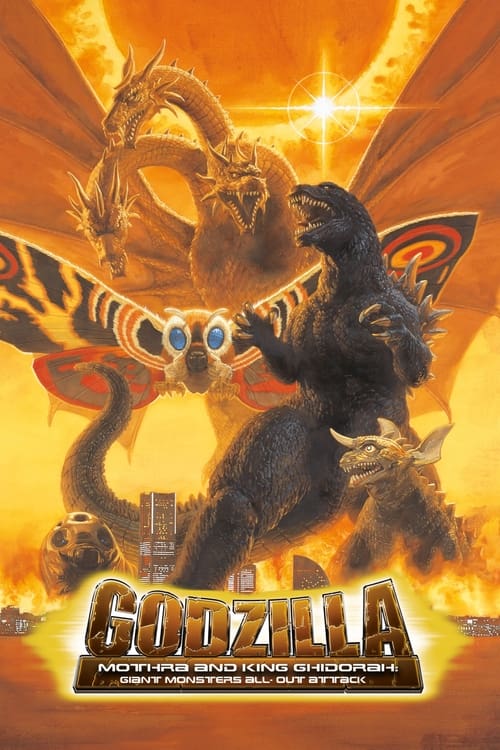
Godzilla, Mothra and King Ghidorah: Giant Monsters All-Out Attack
Godzilla has become a distant memory for Japan when the destruction of a US submarine raises alarms for Admiral Tachibana. His estranged daughter Yuri investigates the legend of the guardian monsters, who must rise to protect Japan against the vengeful spirits within Godzilla that seek to destroy both the nation and its people for the suffering they inflicted in the Pacific conflict.
Despite its limited budget of $9.4M, Godzilla, Mothra and King Ghidorah: Giant Monsters All-Out Attack became a box office success, earning $20.0M worldwide—a 113% return.


Plot Structure
Story beats plotted across runtime


Narrative Arc
Emotional journey through the story's key moments
Story Circle
Blueprint 15-beat structure
Arcplot Score Breakdown
Weighted: Precision (70%) + Arc (15%) + Theme (15%)
Godzilla, Mothra and King Ghidorah: Giant Monsters All-Out Attack (2001) exhibits strategically placed plot construction, characteristic of Shusuke Kaneko's storytelling approach. This structural analysis examines how the film's 15-point plot structure maps to proven narrative frameworks across 1 hour and 45 minutes. With an Arcplot score of 7.0, the film balances conventional beats with creative variation.
Characters
Cast & narrative archetypes

Yuri Tachibana
Admiral Taizo Tachibana
Teruaki Takeda
Professor Hirotoshi Isayama
Kadokura
Mothra (Guardian)
King Ghidorah (Guardian)
Baragon
Godzilla
Main Cast & Characters
Yuri Tachibana
Played by Chiharu Niiyama
A determined SDF officer and documentary filmmaker seeking to understand Godzilla's true nature and her father's legacy.
Admiral Taizo Tachibana
Played by Ryudo Uzaki
Yuri's father, a retired admiral haunted by his encounter with the original Godzilla in 1954.
Teruaki Takeda
Played by Masahiro Kobayashi
A tabloid reporter and monster enthusiast who believes in the guardian monsters and assists Yuri.
Professor Hirotoshi Isayama
Played by Hideyo Amamoto
A historian and prophet who warns that Godzilla embodies the vengeful souls of those killed in the Pacific War.
Kadokura
Played by Shiro Sano
Yuri's colleague and cameraman at BS Digital Q who accompanies her on assignments.
Mothra (Guardian)
Played by N/A
The divine moth deity, one of the three guardian monsters awakened to protect Japan from Godzilla.
King Ghidorah (Guardian)
Played by N/A
The ancient three-headed dragon, reimagined as a guardian monster who battles Godzilla.
Baragon
Played by N/A
The first guardian monster to confront Godzilla, a burrowing dinosaur-like creature.
Godzilla
Played by N/A
A destructive force of nature embodying the souls of those who died in the Pacific War, seeking revenge on Japan.
Structural Analysis
The Status Quo at 1 minutes (1% through the runtime) establishes A nuclear submarine mysteriously disappears in the Pacific Ocean, and Japan is shown living in relative peace fifty years after the original Godzilla attack, with the Defense Force maintaining vigilance.. Of particular interest, this early placement immediately immerses viewers in the story world.
The inciting incident occurs at 13 minutes when Godzilla makes landfall in Japan, destroying a coastal village with terrifying fury. His white, lifeless eyes mark him as something unnatural—a vessel of rage rather than a mere animal. The peace Japan has known is shattered.. At 12% through the film, this Disruption aligns precisely with traditional story structure. This beat shifts the emotional landscape, launching the protagonist into the central conflict.
The First Threshold at 26 minutes marks the transition into Act II, occurring at 25% of the runtime. This indicates the protagonist's commitment to Baragon, the first Guardian Monster, emerges from underground to confront Godzilla. Yuri commits to documenting the truth about the Guardian legend while her father commits his forces to battle. Japan's fight against Godzilla truly begins., moving from reaction to action.
At 53 minutes, the Midpoint arrives at 50% of the runtime—precisely centered, creating perfect narrative symmetry. Significantly, this crucial beat King Ghidorah finally awakens but in an immature, three-headed but wingless form. Mothra attacks Godzilla but is destroyed, her essence absorbed by Ghidorah. The false defeat: Japan's best hope seems to be failing as their guardians fall one by one., fundamentally raising what's at risk. The emotional intensity shifts, dividing the narrative into clear before-and-after phases.
The Collapse moment at 79 minutes (75% through) represents the emotional nadir. Here, King Ghidorah is defeated and killed by Godzilla's atomic breath. All three Guardian Monsters have fallen. Yuri is trapped in collapsing ruins. Japan's supernatural protectors are gone, and Godzilla remains unstoppable., illustrates the protagonist at their lowest point. This beat's placement in the final quarter sets up the climactic reversal.
The Second Threshold at 84 minutes initiates the final act resolution at 80% of the runtime. Admiral Tachibana pilots a submersible directly into Godzilla's mouth, carrying a D-03 drilling missile. The spirits of the fallen Guardian Monsters imbue him with their power, creating a wound in Godzilla from within., demonstrating the transformation achieved throughout the journey.
Emotional Journey
Godzilla, Mothra and King Ghidorah: Giant Monsters All-Out Attack's emotional architecture traces a deliberate progression across 15 carefully calibrated beats.
Narrative Framework
This structural analysis employs proven narrative structure principles that track dramatic progression. By mapping Godzilla, Mothra and King Ghidorah: Giant Monsters All-Out Attack against these established plot points, we can identify how Shusuke Kaneko utilizes or subverts traditional narrative conventions. The plot point approach reveals not only adherence to structural principles but also creative choices that distinguish Godzilla, Mothra and King Ghidorah: Giant Monsters All-Out Attack within the action genre.
Shusuke Kaneko's Structural Approach
Among the 5 Shusuke Kaneko films analyzed on Arcplot, the average structural score is 6.8, demonstrating varied approaches to story architecture. Godzilla, Mothra and King Ghidorah: Giant Monsters All-Out Attack represents one of the director's most structurally precise works. For comparative analysis, explore the complete Shusuke Kaneko filmography.
Comparative Analysis
Additional action films include The Bad Guys, Puss in Boots and Venom: The Last Dance. For more Shusuke Kaneko analyses, see Death Note: The Last Name, Death Note and Gamera 3: Revenge of Iris.
Plot Points by Act
Act I
SetupStatus Quo
A nuclear submarine mysteriously disappears in the Pacific Ocean, and Japan is shown living in relative peace fifty years after the original Godzilla attack, with the Defense Force maintaining vigilance.
Theme
The mysterious old man Isayama speaks of the Guardian Monsters and warns that Godzilla represents the vengeful souls of those who died in the Pacific War, forgotten by modern Japan. "Those who forget the past are doomed to repeat it."
Worldbuilding
Yuri Tachibana works as a reporter for a low-budget documentary crew while her father Admiral Taizo Tachibana commands Japan's defense forces. We see the strained father-daughter relationship and learn of strange earthquakes occurring across Japan.
Disruption
Godzilla makes landfall in Japan, destroying a coastal village with terrifying fury. His white, lifeless eyes mark him as something unnatural—a vessel of rage rather than a mere animal. The peace Japan has known is shattered.
Resistance
Yuri investigates the legend of the Guardian Monsters while the old prophet Isayama guides her understanding. Admiral Tachibana prepares military countermeasures while wrestling with whether conventional weapons can stop a supernatural force.
Act II
ConfrontationFirst Threshold
Baragon, the first Guardian Monster, emerges from underground to confront Godzilla. Yuri commits to documenting the truth about the Guardian legend while her father commits his forces to battle. Japan's fight against Godzilla truly begins.
Mirror World
Yuri's investigation brings her closer to understanding the spiritual nature of Godzilla and the Guardians, reflecting the film's theme of remembrance. Her journey parallels Japan's need to confront its past rather than forget it.
Premise
Monster battles escalate as Baragon fights Godzilla and is killed. Mothra awakens and joins the fight. The military launches attacks while Yuri continues reporting from dangerous proximity to the battles, driven to expose the truth.
Midpoint
King Ghidorah finally awakens but in an immature, three-headed but wingless form. Mothra attacks Godzilla but is destroyed, her essence absorbed by Ghidorah. The false defeat: Japan's best hope seems to be failing as their guardians fall one by one.
Opposition
Godzilla proves nearly unstoppable, shrugging off military assaults. King Ghidorah achieves full power with Mothra's energy and battles Godzilla in Yokohama. Admiral Tachibana prepares a desperate deep-sea drilling missile attack.
Collapse
King Ghidorah is defeated and killed by Godzilla's atomic breath. All three Guardian Monsters have fallen. Yuri is trapped in collapsing ruins. Japan's supernatural protectors are gone, and Godzilla remains unstoppable.
Crisis
With all guardians dead and conventional weapons useless, Admiral Tachibana realizes he must take matters into his own hands. Yuri escapes the rubble and watches helplessly as her father prepares for what seems like a suicide mission.
Act III
ResolutionSecond Threshold
Admiral Tachibana pilots a submersible directly into Godzilla's mouth, carrying a D-03 drilling missile. The spirits of the fallen Guardian Monsters imbue him with their power, creating a wound in Godzilla from within.
Synthesis
Tachibana's missile creates an internal wound in Godzilla. When Godzilla attempts to use his atomic breath, the energy escapes through the wound, causing him to explode from within. Tachibana survives and is rescued. Japan is saved.
Transformation
Yuri reunites with her father, their relationship healed through shared sacrifice. However, in the ocean depths, Godzilla's heart continues to beat—the souls of the war dead remain restless. Japan must never forget its past.