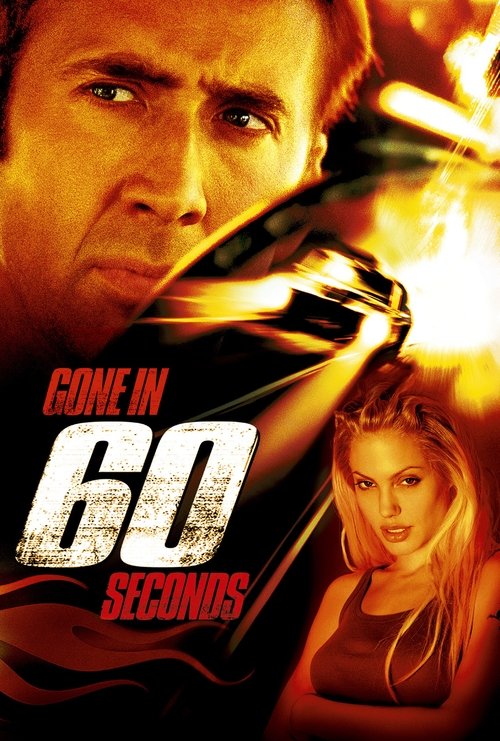
Gone in Sixty Seconds
Upon learning that he has to come out of retirement to steal 50 cars in one night to save his brother Kip's life, former car thief Randall "Memphis" Raines enlists help from a few "boost happy" pals to accomplish a seemingly impossible feat. From countless car chases to relentless cops, the high-octane excitement builds as Randall swerves around more than a few roadblocks to keep Kip alive.
Despite a substantial budget of $90.0M, Gone in Sixty Seconds became a commercial success, earning $237.2M worldwide—a 164% return.
9 wins & 6 nominations


Plot Structure
Story beats plotted across runtime


Narrative Arc
Emotional journey through the story's key moments
Story Circle
Blueprint 15-beat structure
Arcplot Score Breakdown
Weighted: Precision (70%) + Arc (15%) + Theme (15%)
Gone in Sixty Seconds (2000) reveals precise narrative design, characteristic of Dominic Sena's storytelling approach. This structural analysis examines how the film's 15-point plot structure maps to proven narrative frameworks across 1 hour and 58 minutes. With an Arcplot score of 7.2, the film balances conventional beats with creative variation.
Characters
Cast & narrative archetypes

Randall "Memphis" Raines
Sara "Sway" Wayland
Raymond "The Sphinx" Calitri
Kip Raines
Detective Roland Castlebeck
Raymond Calitri
Donny "Astroglide" Astricky
Otto Halliwell
Main Cast & Characters
Randall "Memphis" Raines
Played by Nicolas Cage
A retired master car thief forced back into the life to save his brother by stealing 50 cars in one night.
Sara "Sway" Wayland
Played by Angelina Jolie
Memphis's former girlfriend and a skilled car mechanic who helps with the heist.
Raymond "The Sphinx" Calitri
Played by Vinnie Jones
A mysterious, philosophical member of the crew known for his silence and wisdom.
Kip Raines
Played by Giovanni Ribisi
Memphis's younger brother who botched a car theft job and now owes a crime boss 50 cars.
Detective Roland Castlebeck
Played by Delroy Lindo
A relentless police detective determined to catch Memphis and his crew.
Raymond Calitri
Played by Christopher Eccleston
A ruthless British crime boss who threatens to kill Kip unless 50 cars are delivered.
Donny "Astroglide" Astricky
Played by Chi McBride
A nervous, hyperactive member of Memphis's crew who provides comic relief.
Otto Halliwell
Played by Robert Duvall
Memphis's mentor and father figure who runs a garage and helps plan the heist.
Structural Analysis
The Status Quo at 1 minutes (1% through the runtime) establishes Memphis Raines teaches kids about cars at a go-kart track in Long Beach, living a quiet, reformed life after leaving his legendary car-theft career behind.. Notably, this early placement immediately immerses viewers in the story world.
The inciting incident occurs at 12 minutes when Raymond Calitri's men find Memphis and tell him that Kip botched a job and now owes Calitri 50 cars in 72 hours, or Kip dies. Memphis's peaceful life is shattered.. At 10% through the film, this Disruption aligns precisely with traditional story structure. This beat shifts the emotional landscape, launching the protagonist into the central conflict.
The First Threshold at 28 minutes marks the transition into Act II, occurring at 23% of the runtime. This demonstrates the protagonist's commitment to Memphis actively chooses to reassemble his old crew and return to car theft. He commits to the impossible heist, crossing back into the criminal world he swore he'd left behind., moving from reaction to action.
At 56 minutes, the Midpoint arrives at 48% of the runtime—precisely centered, creating perfect narrative symmetry. Notably, this crucial beat Detective Castlebeck recognizes Memphis's signature style and begins closing in. The police pressure intensifies just as the crew hits their stride, raising the stakes dramatically., fundamentally raising what's at risk. The emotional intensity shifts, dividing the narrative into clear before-and-after phases.
The Collapse moment at 86 minutes (73% through) represents the emotional nadir. Here, Calitri murders the Sphinx when he's injured during a theft, showing his ruthlessness. Memphis realizes people will die—the "whiff of death" is literal, and the human cost becomes devastatingly real., illustrates the protagonist at their lowest point. This beat's placement in the final quarter sets up the climactic reversal.
The Second Threshold at 92 minutes initiates the final act resolution at 78% of the runtime. Memphis commits to finishing the job perfectly—not just to save Kip, but to honor the Sphinx. He synthesizes his legendary skills with his reformed conscience, choosing to do this one last job right., demonstrating the transformation achieved throughout the journey.
Emotional Journey
Gone in Sixty Seconds's emotional architecture traces a deliberate progression across 15 carefully calibrated beats.
Narrative Framework
This structural analysis employs proven narrative structure principles that track dramatic progression. By mapping Gone in Sixty Seconds against these established plot points, we can identify how Dominic Sena utilizes or subverts traditional narrative conventions. The plot point approach reveals not only adherence to structural principles but also creative choices that distinguish Gone in Sixty Seconds within the action genre.
Dominic Sena's Structural Approach
Among the 4 Dominic Sena films analyzed on Arcplot, the average structural score is 7.2, reflecting strong command of classical structure. Gone in Sixty Seconds takes a more unconventional approach compared to the director's typical style. For comparative analysis, explore the complete Dominic Sena filmography.
Comparative Analysis
Additional action films include The Bad Guys, Puss in Boots and Venom: The Last Dance. For more Dominic Sena analyses, see Season of the Witch, Swordfish and Whiteout.
Plot Points by Act
Act I
SetupStatus Quo
Memphis Raines teaches kids about cars at a go-kart track in Long Beach, living a quiet, reformed life after leaving his legendary car-theft career behind.
Theme
Otto tells Memphis: "You can't run from your past forever." The theme of redemption vs. legacy and whether someone can truly escape who they were.
Worldbuilding
Establishing Memphis's reformed life, his younger brother Kip's amateur car theft crew, and the dangerous criminal underworld of high-end car theft in Los Angeles.
Disruption
Raymond Calitri's men find Memphis and tell him that Kip botched a job and now owes Calitri 50 cars in 72 hours, or Kip dies. Memphis's peaceful life is shattered.
Resistance
Memphis debates whether to return to his criminal life, meets with the menacing Calitri who makes the stakes clear, and reluctantly decides he must save his brother despite the cost to his soul.
Act II
ConfrontationFirst Threshold
Memphis actively chooses to reassemble his old crew and return to car theft. He commits to the impossible heist, crossing back into the criminal world he swore he'd left behind.
Mirror World
Sway (Sara Wayland) rejoins Memphis. Their rekindled relationship represents the human cost of his lifestyle and the possibility of genuine connection beyond crime.
Premise
The "fun and games" of assembling the legendary crew, planning the elaborate 50-car heist, scouting targets, and executing the first wave of thefts with style and expertise.
Midpoint
Detective Castlebeck recognizes Memphis's signature style and begins closing in. The police pressure intensifies just as the crew hits their stride, raising the stakes dramatically.
Opposition
Police surveillance tightens, crew members face close calls, internal tensions rise, and Calitri's men apply brutal pressure. The net closes from both law enforcement and the criminal underworld.
Collapse
Calitri murders the Sphinx when he's injured during a theft, showing his ruthlessness. Memphis realizes people will die—the "whiff of death" is literal, and the human cost becomes devastatingly real.
Crisis
Memphis processes the loss and horror, questioning whether any of this is worth it. The crew grieves but must push forward with only hours remaining.
Act III
ResolutionSecond Threshold
Memphis commits to finishing the job perfectly—not just to save Kip, but to honor the Sphinx. He synthesizes his legendary skills with his reformed conscience, choosing to do this one last job right.
Synthesis
The final cars are stolen, culminating in the iconic Eleanor chase sequence. Memphis confronts Calitri, saves Kip, and completes the impossible job while evading Castlebeck in an epic finale.
Transformation
Memphis and Sway drive away together as Castlebeck lets him go. Memphis has transformed: he's still the master thief, but now tempered by wisdom, sacrifice, and human connection.