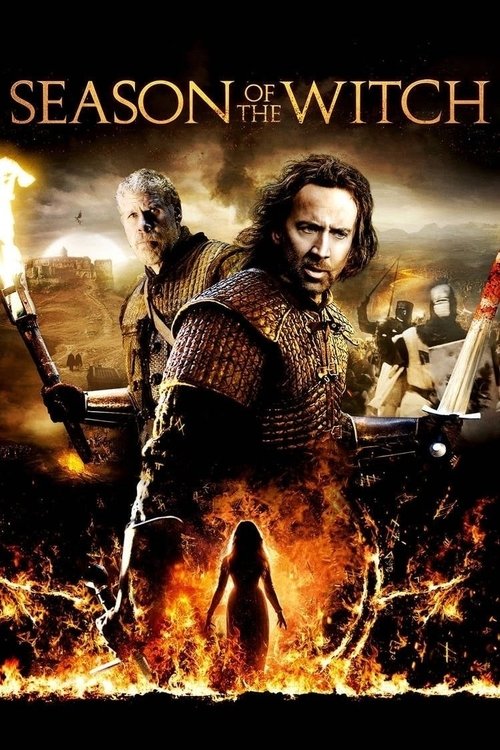
Season of the Witch
A 14th century Crusader returns with his comrade to a homeland devastated by the Black Plague. The Church commands the two knights to transport a witch to a remote abbey, where monks will perform a ritual in hopes of ending the pestilence.
Despite a moderate budget of $40.0M, Season of the Witch became a box office success, earning $91.6M worldwide—a 129% return.


Plot Structure
Story beats plotted across runtime


Narrative Arc
Emotional journey through the story's key moments
Story Circle
Blueprint 15-beat structure
Arcplot Score Breakdown
Weighted: Precision (70%) + Arc (15%) + Theme (15%)
Season of the Witch (2011) demonstrates carefully calibrated plot construction, characteristic of Dominic Sena's storytelling approach. This structural analysis examines how the film's 15-point plot structure maps to proven narrative frameworks across 1 hour and 35 minutes. With an Arcplot score of 7.1, the film balances conventional beats with creative variation.
Characters
Cast & narrative archetypes

Behmen von Bleibruck
Felson
The Girl
Debelzaq
Eckhardt
Hagamar
Kay von Wollenbarth
Main Cast & Characters
Behmen von Bleibruck
Played by Nicolas Cage
A disillusioned Crusader knight who deserts after witnessing atrocities, tasked with transporting a suspected witch to trial.
Felson
Played by Ron Perlman
Behmen's loyal companion and fellow deserter, a pragmatic knight who accompanies him on the dangerous mission.
The Girl
Played by Claire Foy
A young woman accused of witchcraft and blamed for the Black Plague, whose true nature is revealed during the journey.
Debelzaq
Played by Stephen Graham
A corrupt, plague-stricken priest who orders the knights to transport the witch and accompanies them on the journey.
Eckhardt
Played by Ulrich Thomsen
An aging knight eager to prove himself one last time, who joins the mission despite his advanced years.
Hagamar
Played by Stephen Campbell Moore
A swindler and conman posing as a knight, who joins the group as their guide through dangerous territory.
Kay von Wollenbarth
Played by Robert Sheehan
A young altar boy who insists on joining the mission to prove his faith and courage.
Structural Analysis
The Status Quo at 1 minutes (1% through the runtime) establishes Behmen and Felson fight as loyal Crusader knights, brotherhood forged in battle across multiple campaigns.. The analysis reveals that this early placement immediately immerses viewers in the story world.
The inciting incident occurs at 11 minutes when Behmen and Felson are captured by soldiers in a plague-stricken town and brought before Cardinal D'Ambroise, who recognizes them as deserters.. At 11% through the film, this Disruption aligns precisely with traditional story structure. This beat shifts the emotional landscape, launching the protagonist into the central conflict.
The First Threshold at 23 minutes marks the transition into Act II, occurring at 24% of the runtime. This demonstrates the protagonist's commitment to Behmen agrees to transport the girl Anna, actively choosing to enter the mission despite his loss of faith. The journey to the monastery begins., moving from reaction to action.
At 48 minutes, the Midpoint arrives at 50% of the runtime—precisely centered, creating perfect narrative symmetry. The analysis reveals that this crucial beat The bridge collapse kills Debelzaq and nearly destroys the group. The stakes escalate—Anna's powers are undeniable, but so is the mortal danger. The "fun" of the journey ends; survival becomes desperate., fundamentally raising what's at risk. The emotional intensity shifts, dividing the narrative into clear before-and-after phases.
The Collapse moment at 70 minutes (73% through) represents the emotional nadir. Here, Anna is revealed to be possessed by the demon Baal. Felson is mortally wounded. The girl they came to save never existed—only a demon using her corpse. All seems lost., shows the protagonist at their lowest point. This beat's placement in the final quarter sets up the climactic reversal.
The Second Threshold at 76 minutes initiates the final act resolution at 80% of the runtime. Behmen chooses to complete the exorcism ritual, not from blind faith but from moral conviction—to save Anna's soul and stop the demon. He reclaims purpose through choice, not obedience., demonstrating the transformation achieved throughout the journey.
Emotional Journey
Season of the Witch's emotional architecture traces a deliberate progression across 15 carefully calibrated beats.
Narrative Framework
This structural analysis employs proven narrative structure principles that track dramatic progression. By mapping Season of the Witch against these established plot points, we can identify how Dominic Sena utilizes or subverts traditional narrative conventions. The plot point approach reveals not only adherence to structural principles but also creative choices that distinguish Season of the Witch within the adventure genre.
Dominic Sena's Structural Approach
Among the 4 Dominic Sena films analyzed on Arcplot, the average structural score is 7.2, reflecting strong command of classical structure. Season of the Witch takes a more unconventional approach compared to the director's typical style. For comparative analysis, explore the complete Dominic Sena filmography.
Comparative Analysis
Additional adventure films include The Black Stallion, The Bad Guys and Puss in Boots. For more Dominic Sena analyses, see Swordfish, Whiteout and Gone in Sixty Seconds.
Plot Points by Act
Act I
SetupStatus Quo
Behmen and Felson fight as loyal Crusader knights, brotherhood forged in battle across multiple campaigns.
Theme
A priest declares the killing is "God's will," establishing the theme of questioning blind faith versus moral conscience.
Worldbuilding
The Crusades montage shows years of warfare. Behmen witnesses the massacre of innocents and loses faith, deserting with Felson. They travel plague-ravaged Europe as wanted men.
Disruption
Behmen and Felson are captured by soldiers in a plague-stricken town and brought before Cardinal D'Ambroise, who recognizes them as deserters.
Resistance
The dying Cardinal offers clemency if they transport an accused witch to a monastery for trial. Behmen resists, debating whether to accept. He negotiates that the girl receive a fair trial.
Act II
ConfrontationFirst Threshold
Behmen agrees to transport the girl Anna, actively choosing to enter the mission despite his loss of faith. The journey to the monastery begins.
Mirror World
Anna, the accused witch, engages Behmen in conversation. She represents the central question: is faith justified when it condemns the innocent? Her humanity challenges his cynicism.
Premise
The group journeys through supernatural dangers: the bridge collapse, wolves, possession of Debelzaq. Anna displays both innocence and disturbing powers. Behmen grows protective while questioning what she truly is.
Midpoint
The bridge collapse kills Debelzaq and nearly destroys the group. The stakes escalate—Anna's powers are undeniable, but so is the mortal danger. The "fun" of the journey ends; survival becomes desperate.
Opposition
The group reaches the monastery only to find all monks dead from plague. Anna's demonic nature increasingly reveals itself. Behmen's doubt intensifies as Kay dies. The mission seems doomed.
Collapse
Anna is revealed to be possessed by the demon Baal. Felson is mortally wounded. The girl they came to save never existed—only a demon using her corpse. All seems lost.
Crisis
Behmen watches Felson dying and confronts his crisis of faith. He failed to save innocents in the Crusades, failed to save his companions. Debelzaq reveals the ritual that can destroy the demon.
Act III
ResolutionSecond Threshold
Behmen chooses to complete the exorcism ritual, not from blind faith but from moral conviction—to save Anna's soul and stop the demon. He reclaims purpose through choice, not obedience.
Synthesis
Behmen and Debelzaq battle the demon through the exorcism. Behmen is mortally wounded but completes the ritual, freeing Anna's soul. The demon is destroyed; the plague's supernatural source ends.
Transformation
Dying Behmen sees Anna's freed soul thank him. Unlike the opening where he killed for others' faith, he dies having acted on his own moral conviction. Debelzaq becomes a knight, spreading the saved books to end the plague.