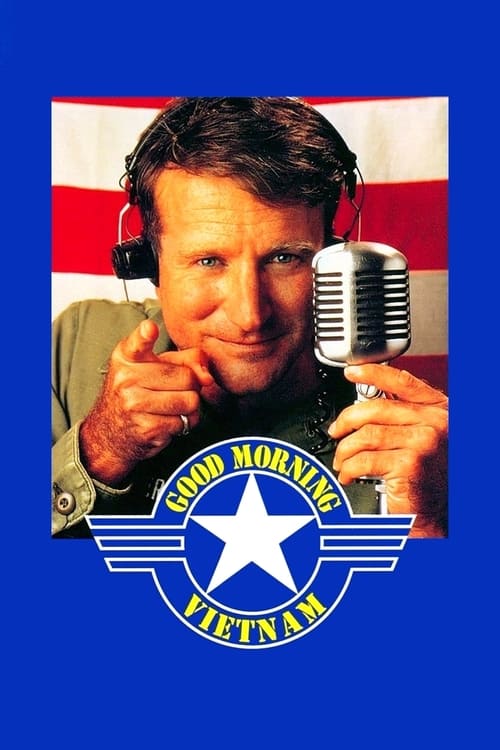
Good Morning, Vietnam
A disk jockey goes to Vietnam to work for the Armed Forces Radio Service. While he becomes popular among the troops, his superiors disapprove of his humor.
Despite its small-scale budget of $13.0M, Good Morning, Vietnam became a massive hit, earning $123.9M worldwide—a remarkable 853% return. The film's fresh perspective engaged audiences, demonstrating that strong storytelling can transcend budget limitations.
Nominated for 1 Oscar. 7 wins & 4 nominations


Plot Structure
Story beats plotted across runtime


Narrative Arc
Emotional journey through the story's key moments
Story Circle
Blueprint 15-beat structure
Arcplot Score Breakdown
Weighted: Precision (70%) + Arc (15%) + Theme (15%)
Good Morning, Vietnam (1987) exemplifies deliberately positioned dramatic framework, characteristic of Barry Levinson's storytelling approach. This structural analysis examines how the film's 15-point plot structure maps to proven narrative frameworks across 2 hours and 1 minutes. With an Arcplot score of 7.2, the film balances conventional beats with creative variation.
Characters
Cast & narrative archetypes

Adrian Cronauer
Trinh
Edward Garlick
Sgt. Major Dickerson
Lt. Steven Hauk
Tuan
Gen. Taylor
Main Cast & Characters
Adrian Cronauer
Played by Robin Williams
Irreverent, fast-talking radio DJ who brings humor and humanity to Armed Forces Radio in Vietnam while challenging military protocol.
Trinh
Played by Chintara Sukapatana
Vietnamese student who becomes the object of Cronauer's affection and connects him to local culture and the harsh realities of war.
Edward Garlick
Played by Forest Whitaker
Eager young private who idolizes Cronauer and becomes his loyal assistant at the radio station.
Sgt. Major Dickerson
Played by J.T. Walsh
By-the-book, humorless NCO who represents military rigidity and constantly tries to shut down Cronauer's unconventional broadcasts.
Lt. Steven Hauk
Played by Bruno Kirby
Uptight lieutenant and aspiring radio host whose stilted attempts at humor contrast sharply with Cronauer's natural charisma.
Tuan
Played by Tung Thanh Tran
Trinh's brother and seemingly friendly Vietnamese man who harbors a dangerous secret about his Viet Cong affiliations.
Gen. Taylor
Played by Noble Willingham
High-ranking officer who appreciates Cronauer's talent for boosting troop morale but must balance this with military discipline.
Structural Analysis
The Status Quo at 1 minutes (1% through the runtime) establishes Cronauer arrives in Saigon, full of energy and irreverence, treating Vietnam as just another gig. His comedy is his armor, keeping everything at surface level.. The analysis reveals that this early placement immediately immerses viewers in the story world.
The inciting incident occurs at 14 minutes when Cronauer's first broadcast - "Goooood Morning, Vietnam!" - electrifies the troops. His uncensored energy disrupts the controlled military information machine. He becomes an instant sensation.. At 12% through the film, this Disruption aligns precisely with traditional story structure. This beat shifts the emotional landscape, launching the protagonist into the central conflict.
The First Threshold at 31 minutes marks the transition into Act II, occurring at 25% of the runtime. This reveals the protagonist's commitment to Cronauer commits to teaching the English class and pursuing connection with Trinh. He chooses to engage with Vietnamese people as humans, not props, stepping beyond the safe American bubble into the real Vietnam., moving from reaction to action.
At 62 minutes, the Midpoint arrives at 51% of the runtime—precisely centered, creating perfect narrative symmetry. Notably, this crucial beat The Jimmy Wah's bar bombing. Cronauer witnesses the explosion, sees wounded soldiers - people he entertains. The war becomes viscerally real. He rushes to report it on air but is censored, revealing the false victory of his popularity., fundamentally raising what's at risk. The emotional intensity shifts, dividing the narrative into clear before-and-after phases.
The Collapse moment at 90 minutes (75% through) represents the emotional nadir. Here, Cronauer discovers Tuan is Viet Cong. His student, his friend - the human connection he built - is the enemy. Everything he thought he understood about Vietnam shatters. He's pulled off the air and sent home., shows the protagonist at their lowest point. This beat's placement in the final quarter sets up the climactic reversal.
The Second Threshold at 98 minutes initiates the final act resolution at 81% of the runtime. Tuan comes to say goodbye, explains his position. Cronauer synthesizes understanding: people are complex, the war is morally ambiguous, and humor doesn't erase truth - but truth doesn't erase humanity either., demonstrating the transformation achieved throughout the journey.
Emotional Journey
Good Morning, Vietnam's emotional architecture traces a deliberate progression across 15 carefully calibrated beats.
Narrative Framework
This structural analysis employs structural analysis methodology used to understand storytelling architecture. By mapping Good Morning, Vietnam against these established plot points, we can identify how Barry Levinson utilizes or subverts traditional narrative conventions. The plot point approach reveals not only adherence to structural principles but also creative choices that distinguish Good Morning, Vietnam within the comedy genre.
Barry Levinson's Structural Approach
Among the 14 Barry Levinson films analyzed on Arcplot, the average structural score is 7.0, reflecting strong command of classical structure. Good Morning, Vietnam represents one of the director's most structurally precise works. For comparative analysis, explore the complete Barry Levinson filmography.
Comparative Analysis
Additional comedy films include The Bad Guys, Ella Enchanted and The Evening Star. For more Barry Levinson analyses, see Envy, Wag the Dog and Diner.
Plot Points by Act
Act I
SetupStatus Quo
Cronauer arrives in Saigon, full of energy and irreverence, treating Vietnam as just another gig. His comedy is his armor, keeping everything at surface level.
Theme
Garlick tells Cronauer about the previous DJ who "couldn't handle the truth" of Vietnam. Sets up the central question: can humor coexist with acknowledging hard realities?
Worldbuilding
Establishment of the radio station dynamics, military hierarchy, Cronauer's irreverent style clashing with Hauk's by-the-book approach. Introduction of censored news and sanitized Armed Forces Radio format.
Disruption
Cronauer's first broadcast - "Goooood Morning, Vietnam!" - electrifies the troops. His uncensored energy disrupts the controlled military information machine. He becomes an instant sensation.
Resistance
Cronauer navigates the tension between his popularity with troops and resistance from superiors. He meets Trinh, begins teaching English class. Debates whether to stay surface-level or engage with Vietnam's reality.
Act II
ConfrontationFirst Threshold
Cronauer commits to teaching the English class and pursuing connection with Trinh. He chooses to engage with Vietnamese people as humans, not props, stepping beyond the safe American bubble into the real Vietnam.
Mirror World
English class scenes with Vietnamese students, particularly Tuan (Trinh's brother). These relationships represent the human connection and cultural bridge that will teach Cronauer what he truly needs to learn.
Premise
The fun of the premise: Cronauer's wild broadcasts, his comedic teaching methods, growing friendship with students, attempts to woo Trinh. Balancing irreverent humor with increasing awareness of war's presence.
Midpoint
The Jimmy Wah's bar bombing. Cronauer witnesses the explosion, sees wounded soldiers - people he entertains. The war becomes viscerally real. He rushes to report it on air but is censored, revealing the false victory of his popularity.
Opposition
Cronauer fights to report real news, clashing intensely with Hauk and Dickerson. Censorship tightens. His relationship with students deepens even as military pressure mounts. The gap between his comedy and reality widens dangerously.
Collapse
Cronauer discovers Tuan is Viet Cong. His student, his friend - the human connection he built - is the enemy. Everything he thought he understood about Vietnam shatters. He's pulled off the air and sent home.
Crisis
Cronauer processes the betrayal and his own naivety. Final broadcast where his humor is hollow. Packs to leave. Garlick and others try to reach him but he's emotionally shut down, humor finally failing as defense.
Act III
ResolutionSecond Threshold
Tuan comes to say goodbye, explains his position. Cronauer synthesizes understanding: people are complex, the war is morally ambiguous, and humor doesn't erase truth - but truth doesn't erase humanity either.
Synthesis
Cronauer's departure. Students and troops come to see him off. He gives final goodbyes carrying both the weight of what he's learned and the value of the laughter he brought. Integration of both truths.
Transformation
Cronauer's jeep leaves surrounded by his students running alongside, laughing and shouting phrases he taught them. His humor mattered AND the painful truth matters - he leaves changed, no longer hiding behind jokes.