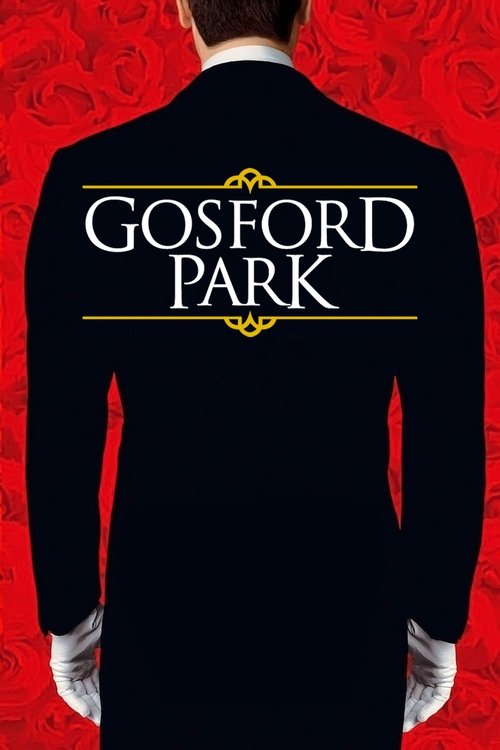
Gosford Park
In 1930s England, a group of pretentious rich and famous gather together for a weekend of relaxation at a hunting resort. But when a murder occurs, each one of these interesting characters becomes a suspect.
Despite a respectable budget of $19.8M, Gosford Park became a commercial success, earning $87.8M worldwide—a 343% return.
1 Oscar. 36 wins & 74 nominations


Plot Structure
Story beats plotted across runtime


Narrative Arc
Emotional journey through the story's key moments
Story Circle
Blueprint 15-beat structure
Arcplot Score Breakdown
Weighted: Precision (70%) + Arc (15%) + Theme (15%)
Gosford Park (2001) reveals carefully calibrated dramatic framework, characteristic of Robert Altman's storytelling approach. This structural analysis examines how the film's 15-point plot structure maps to proven narrative frameworks across 2 hours and 17 minutes. With an Arcplot score of 7.4, the film balances conventional beats with creative variation.
Characters
Cast & narrative archetypes

Mary Maceachran
Robert Parks
Elsie
Mrs. Wilson
Mrs. Croft
Jennings
Sir William McCordle
Constance Trentham
Sylvia McCordle
Isobel McCordle
Henry Denton
Main Cast & Characters
Mary Maceachran
Played by Kelly Macdonald
A lady's maid observing the complex social dynamics of both upstairs and downstairs worlds with keen intelligence.
Robert Parks
Played by Clive Owen
A mysterious valet to Lord Stockbridge concealing his true identity and past connection to the household.
Elsie
Played by Emily Watson
The head housemaid managing the servant hierarchy with strict adherence to propriety and tradition.
Mrs. Wilson
Played by Helen Mirren
The housekeeper harboring a devastating secret about her past and connection to the master of the house.
Mrs. Croft
Played by Eileen Atkins
The efficient cook managing the kitchen with precision while navigating servant politics.
Jennings
Played by Alan Bates
The footman who serves as a bridge between upstairs and downstairs, observing all with sardonic wit.
Sir William McCordle
Played by Michael Gambon
The wealthy industrialist host whose past indiscretions come back to haunt him fatally.
Constance Trentham
Played by Maggie Smith
An impoverished countess desperately trying to maintain appearances while financially dependent on her nephew.
Sylvia McCordle
Played by Kristin Scott Thomas
Sir William's wife who tolerates his infidelities while maintaining her position as lady of the house.
Isobel McCordle
Played by Camilla Rutherford
The sharp-tongued daughter navigating marriage expectations and family politics.
Henry Denton
Played by Ryan Phillippe
A Scottish valet who is actually an American actor researching a role, bringing an outsider's perspective.
Structural Analysis
The Status Quo at 2 minutes (2% through the runtime) establishes Mary Maceachran rides in a car toward Gosford Park with her employer, Countess Trentham. The opening establishes the rigid class structure - servants must know their place, speak when spoken to, and remain invisible. Mary is inexperienced, anxious about her first major house party.. Structural examination shows that this early placement immediately immerses viewers in the story world.
The inciting incident occurs at 18 minutes when The arrival is complete and the household is sealed for the weekend. Multiple tensions emerge: Constance Trentham's financial dependence on Sir William, marital infidelities upstairs, and below stairs the revelation that several servants have deep personal connections to Sir William. The catalyst is not a single event but the gathering itself - trapping all players in proximity where secrets will emerge and old grudges will surface.. At 13% through the film, this Disruption is delayed, allowing extended setup of the story world. This beat shifts the emotional landscape, launching the protagonist into the central conflict.
The First Threshold at 35 minutes marks the transition into Act II, occurring at 26% of the runtime. This demonstrates the protagonist's commitment to Mary makes the choice to observe and understand rather than remain the "perfect invisible servant." She begins actively watching the dynamics upstairs and downstairs, particularly noticing the strange behavior of Robert Parks and the tensions around Sir William. This shifts her from passive participant to active observer - entering the investigation world before there is even a crime., moving from reaction to action.
At 69 minutes, the Midpoint arrives at 50% of the runtime—precisely centered, creating perfect narrative symmetry. Significantly, this crucial beat Sir William McCordle is found murdered in the library - stabbed and poisoned. This is a false defeat midpoint - the murder raises stakes enormously and changes everything. The weekend party becomes a locked-room mystery. The investigation begins, but it also means secrets will be exposed, and both worlds (upstairs and downstairs) are now in jeopardy. The perfect facade shatters., fundamentally raising what's at risk. The emotional intensity shifts, dividing the narrative into clear before-and-after phases.
The Collapse moment at 103 minutes (75% through) represents the emotional nadir. Here, The revelation of the true killer(s) emerges - Mrs. Wilson poisoned Sir William (her rapist and father of her son Robert Parks), but Robert had already fatally stabbed him. The "whiff of death" is literal (the murder) but also metaphorical: the death of illusions, the death of the old order, the death of the invisible servant myth. Mary witnesses Robert's breakdown and Mrs. Wilson's confession. The perfect servant was driven to murder., indicates the protagonist at their lowest point. This beat's placement in the final quarter sets up the climactic reversal.
The Second Threshold at 110 minutes initiates the final act resolution at 80% of the runtime. Mary makes the synthesis decision: she will not expose Mrs. Wilson or Robert. She understands now what the theme meant - they are all servants, all trapped, all invisible, but they have their own code and their own justice. The breakthrough is choosing loyalty to the servants' world over abstract legal justice. She has moved from naïve outsider to full participant in the downstairs world., demonstrating the transformation achieved throughout the journey.
Emotional Journey
Gosford Park's emotional architecture traces a deliberate progression across 15 carefully calibrated beats.
Narrative Framework
This structural analysis employs systematic plot point analysis that identifies crucial turning points. By mapping Gosford Park against these established plot points, we can identify how Robert Altman utilizes or subverts traditional narrative conventions. The plot point approach reveals not only adherence to structural principles but also creative choices that distinguish Gosford Park within the drama genre.
Robert Altman's Structural Approach
Among the 10 Robert Altman films analyzed on Arcplot, the average structural score is 6.9, demonstrating varied approaches to story architecture. Gosford Park represents one of the director's most structurally precise works. For comparative analysis, explore the complete Robert Altman filmography.
Comparative Analysis
Additional drama films include After Thomas, South Pacific and Dirty Dancing: Havana Nights. For more Robert Altman analyses, see Cookie's Fortune, Dr. T & the Women and Nashville.
Plot Points by Act
Act I
SetupStatus Quo
Mary Maceachran rides in a car toward Gosford Park with her employer, Countess Trentham. The opening establishes the rigid class structure - servants must know their place, speak when spoken to, and remain invisible. Mary is inexperienced, anxious about her first major house party.
Theme
In the servants' hall, the rigid hierarchy below stairs is explained to Mary: "What gift do you think a perfect servant has? The gift of anticipation. And I'm a good servant; I'm better than good, I'm the best; I'm the perfect servant. I know when they'll be hungry, and the food is ready. I know when they'll be tired, and the bed is turned down." Theme stated: service, invisibility, and the symbiotic relationship between masters and servants.
Worldbuilding
Guests and their servants arrive at Gosford Park for the shooting weekend. The dual-world structure is established - aristocrats upstairs pursuing leisure and social maneuvering, servants downstairs maintaining the elaborate facade. Characters introduced include the McCordles (hosts), various titled guests, Hollywood producer Morris Weissman, actor Ivor Novello, and the complex web of servants who already know each other's secrets. Financial desperation and dependency on Sir William McCordle becomes apparent.
Disruption
The arrival is complete and the household is sealed for the weekend. Multiple tensions emerge: Constance Trentham's financial dependence on Sir William, marital infidelities upstairs, and below stairs the revelation that several servants have deep personal connections to Sir William. The catalyst is not a single event but the gathering itself - trapping all players in proximity where secrets will emerge and old grudges will surface.
Resistance
Mary navigates the complex rules of the servant hierarchy, learning from other servants about the hidden relationships and tensions. The shooting party proceeds upstairs while servants gossip and work below. Critical information emerges: Robert Parks has a mysterious connection to Sir William; Mrs. Wilson the housekeeper maintains iron control; multiple people have motives to hate the master. Mary debates whether to stay invisible or pay attention to what's really happening.
Act II
ConfrontationFirst Threshold
Mary makes the choice to observe and understand rather than remain the "perfect invisible servant." She begins actively watching the dynamics upstairs and downstairs, particularly noticing the strange behavior of Robert Parks and the tensions around Sir William. This shifts her from passive participant to active observer - entering the investigation world before there is even a crime.
Mirror World
Mary's developing relationship with Robert Parks (Clive Owen) represents the mirror world. He is mysterious, handsome, and clearly hiding something. Their connection carries the thematic truth - servants are not invisible, they have their own lives, loves, and secrets that the masters never see. This relationship will ultimately reveal the central mystery.
Premise
The "promise of the premise" - Altman's signature overlapping ensemble storytelling reveals the intricate social dance of a country house weekend. Upstairs: shooting party, dinner party, sexual liaisons, social humiliations. Downstairs: parallel world of gossip, hierarchy, and servants who know everything. Secrets accumulate: affairs, illegitimate children, financial ruin, blackmail. Multiple characters have motives to harm Sir William. The fun is watching the complex mechanism of the two worlds operate.
Midpoint
Sir William McCordle is found murdered in the library - stabbed and poisoned. This is a false defeat midpoint - the murder raises stakes enormously and changes everything. The weekend party becomes a locked-room mystery. The investigation begins, but it also means secrets will be exposed, and both worlds (upstairs and downstairs) are now in jeopardy. The perfect facade shatters.
Opposition
Inspector Thompson and Constable Dexter conduct an incompetent investigation, focusing on upstairs suspects while missing the real story. The opposition comes from multiple directions: the bumbling police threaten to expose everyone's secrets indiscriminately; the rigid class system prevents truth from emerging (servants can't speak freely); characters close ranks to protect themselves. Tensions escalate as multiple confessions and revelations occur - but the inspector misses the truth. Mary continues observing, getting closer to understanding.
Collapse
The revelation of the true killer(s) emerges - Mrs. Wilson poisoned Sir William (her rapist and father of her son Robert Parks), but Robert had already fatally stabbed him. The "whiff of death" is literal (the murder) but also metaphorical: the death of illusions, the death of the old order, the death of the invisible servant myth. Mary witnesses Robert's breakdown and Mrs. Wilson's confession. The perfect servant was driven to murder.
Crisis
Mary processes what she's learned - that servants are human beings with unbearable pain, that the class system destroys people, that justice is not the same as law. Mrs. Wilson and Robert will not be caught; the inspector is too incompetent and class-blinded to see the truth. Mary must decide whether to speak or maintain the servants' code of silence. The darkness: there will be no legal justice, only moral understanding.
Act III
ResolutionSecond Threshold
Mary makes the synthesis decision: she will not expose Mrs. Wilson or Robert. She understands now what the theme meant - they are all servants, all trapped, all invisible, but they have their own code and their own justice. The breakthrough is choosing loyalty to the servants' world over abstract legal justice. She has moved from naïve outsider to full participant in the downstairs world.
Synthesis
The weekend concludes. Inspector Thompson leaves without solving the case (he arrests the wrong person briefly then releases them). Guests depart. Servants clean up and return to normal routines. The upstairs world remains oblivious to the real story. Mary and Mrs. Wilson share a final understanding moment - the knowledge of what really happened will remain in the servants' hall. The old order continues, but those who were invisible have been revealed (to the audience and each other) as fully human.
Transformation
Mary departs Gosford Park in the car with Countess Trentham, mirroring the opening image. But Mary is transformed - no longer anxious and uncertain, she now understands the dual world completely. She is silent, knowing, complicit. The perfect servant is not invisible; she simply chooses what to reveal. The closing image affirms the thematic resolution: the servants hold the real power because they hold the truth.