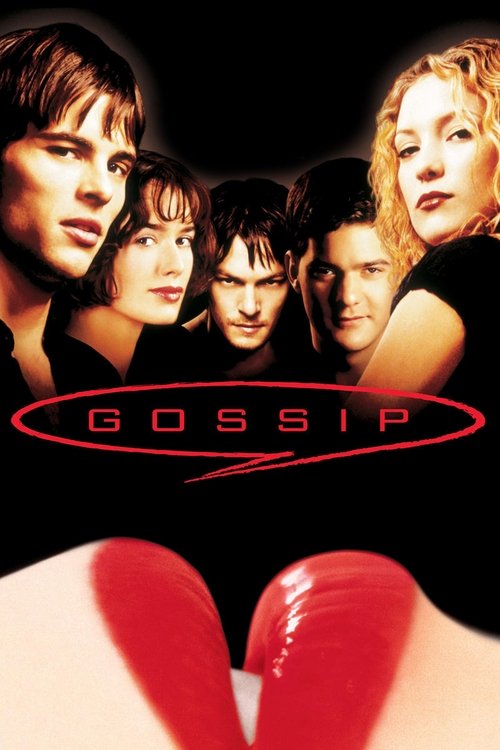
Gossip
For a class project, three college students decide to invent an unfounded rumor about the most popular girl on campus. But as the rumor spreads, it begins to spiral out of control.
The film commercial failure against its limited budget of $14.0M, earning $5.1M globally (-64% loss). While initial box office returns were modest, the film has gained appreciation for its unconventional structure within the mystery genre.


Plot Structure
Story beats plotted across runtime


Narrative Arc
Emotional journey through the story's key moments
Story Circle
Blueprint 15-beat structure
Arcplot Score Breakdown
Weighted: Precision (70%) + Arc (15%) + Theme (15%)
Gossip (2000) exemplifies strategically placed story structure, characteristic of Davis Guggenheim's storytelling approach. This structural analysis examines how the film's 15-point plot structure maps to proven narrative frameworks across 1 hour and 30 minutes. With an Arcplot score of 7.1, the film balances conventional beats with creative variation.
Characters
Cast & narrative archetypes

Derrick Webb
Jones
Travis
Naomi Preston
Beau Edson
Detective Curtis
Main Cast & Characters
Derrick Webb
Played by James Marsden
Charming journalism student who initiates a dangerous gossip experiment that spirals out of control.
Jones
Played by Lena Headey
Derrick's artistic roommate and best friend who documents their gossip experiment with photographs.
Travis
Played by Norman Reedus
The third member of the trio, computer-savvy and eager to participate in spreading the rumor.
Naomi Preston
Played by Kate Hudson
The victim of the gossip experiment whose life is devastated by false rumors of sexual assault.
Beau Edson
Played by Joshua Jackson
Naomi's boyfriend who becomes implicated in the rumor about what happened at a party.
Detective Curtis
Played by Eric Bogosian
The investigator who pursues the truth behind the sexual assault allegations.
Structural Analysis
The Status Quo at 1 minutes (1% through the runtime) establishes Three college roommates - Derrick, Jones, and Travis - live together in a loft, studying communication and the power of rumors. Their world is one of academic cynicism and social manipulation.. Structural examination shows that this early placement immediately immerses viewers in the story world.
The inciting incident occurs at 11 minutes when Derrick proposes starting a rumor as a class project experiment: spreading the lie that Naomi and Beau had sex at a party when they were both drunk, even though nothing happened.. At 12% through the film, this Disruption aligns precisely with traditional story structure. This beat shifts the emotional landscape, launching the protagonist into the central conflict.
The First Threshold at 22 minutes marks the transition into Act II, occurring at 25% of the runtime. This shows the protagonist's commitment to The rumor escalates beyond their control when Naomi confronts Beau, and Beau is accused of rape. The harmless experiment becomes a criminal investigation, crossing into dangerous territory., moving from reaction to action.
At 46 minutes, the Midpoint arrives at 51% of the runtime—precisely centered, creating perfect narrative symmetry. Notably, this crucial beat Beau is arrested for rape. What started as a game has destroyed someone's life. The stakes become real and irreversible. The false defeat: they've gone too far to turn back., fundamentally raising what's at risk. The emotional intensity shifts, dividing the narrative into clear before-and-after phases.
The Collapse moment at 67 minutes (74% through) represents the emotional nadir. Here, Travis is killed in a confrontation. The "whiff of death" is literal. The game has led to actual death, and the roommates' world completely collapses. Guilt and fear overwhelm them., shows the protagonist at their lowest point. This beat's placement in the final quarter sets up the climactic reversal.
The Second Threshold at 72 minutes initiates the final act resolution at 80% of the runtime. Jones discovers the truth: Derrick orchestrated everything from the beginning, including using a real assault. The revelation that the entire situation was Derrick's elaborate revenge scheme, not a random experiment., demonstrating the transformation achieved throughout the journey.
Emotional Journey
Gossip's emotional architecture traces a deliberate progression across 15 carefully calibrated beats.
Narrative Framework
This structural analysis employs systematic plot point analysis that identifies crucial turning points. By mapping Gossip against these established plot points, we can identify how Davis Guggenheim utilizes or subverts traditional narrative conventions. The plot point approach reveals not only adherence to structural principles but also creative choices that distinguish Gossip within the mystery genre.
Comparative Analysis
Additional mystery films include Lone Star, The Wicker Man and A Soldier's Story.
Plot Points by Act
Act I
SetupStatus Quo
Three college roommates - Derrick, Jones, and Travis - live together in a loft, studying communication and the power of rumors. Their world is one of academic cynicism and social manipulation.
Theme
In communications class, the professor discusses how gossip and rumors can take on a life of their own, becoming indistinguishable from truth. The theme: the dangerous power of lies and their uncontrollable spread.
Worldbuilding
Establishing the college setting, the three roommates' dynamic, and their fascination with social experiments. Introduction of Naomi and Beau, the popular couple who become the targets of interest.
Disruption
Derrick proposes starting a rumor as a class project experiment: spreading the lie that Naomi and Beau had sex at a party when they were both drunk, even though nothing happened.
Resistance
The trio debates the ethics of the experiment. Jones is hesitant, but Travis and Derrick convince themselves it's harmless. They plant the rumor strategically and watch it begin to spread across campus.
Act II
ConfrontationFirst Threshold
The rumor escalates beyond their control when Naomi confronts Beau, and Beau is accused of rape. The harmless experiment becomes a criminal investigation, crossing into dangerous territory.
Mirror World
Jones, the moral center, develops feelings of guilt and wants to confess. Her relationship with the truth becomes the thematic counterpoint to Derrick's manipulation.
Premise
The investigation intensifies. The three roommates try to cover their tracks while the rumor mutates and grows. Beau's life falls apart as he faces expulsion and criminal charges. The "fun" of watching their social experiment spiral.
Midpoint
Beau is arrested for rape. What started as a game has destroyed someone's life. The stakes become real and irreversible. The false defeat: they've gone too far to turn back.
Opposition
Detective Curtis begins investigating the origin of the rumor. The pressure mounts as he gets closer to the truth. Jones wants to confess but Derrick manipulates her into silence. Their friendship fractures under guilt and fear.
Collapse
Travis is killed in a confrontation. The "whiff of death" is literal. The game has led to actual death, and the roommates' world completely collapses. Guilt and fear overwhelm them.
Crisis
Jones grieves and processes the horror of what they've done. Derrick reveals darker depths of manipulation. The emotional low point where the consequences of lies become devastatingly clear.
Act III
ResolutionSecond Threshold
Jones discovers the truth: Derrick orchestrated everything from the beginning, including using a real assault. The revelation that the entire situation was Derrick's elaborate revenge scheme, not a random experiment.
Synthesis
Jones works to expose Derrick and clear Beau's name. The final confrontation where she must reveal the truth and face consequences, using the same tools of communication to undo the damage.
Transformation
Derrick is arrested, but the damage is permanent. Travis is dead, lives are ruined, and innocence is lost. Jones has learned the devastating cost of lies, transformed from observer to someone who understands truth's weight.