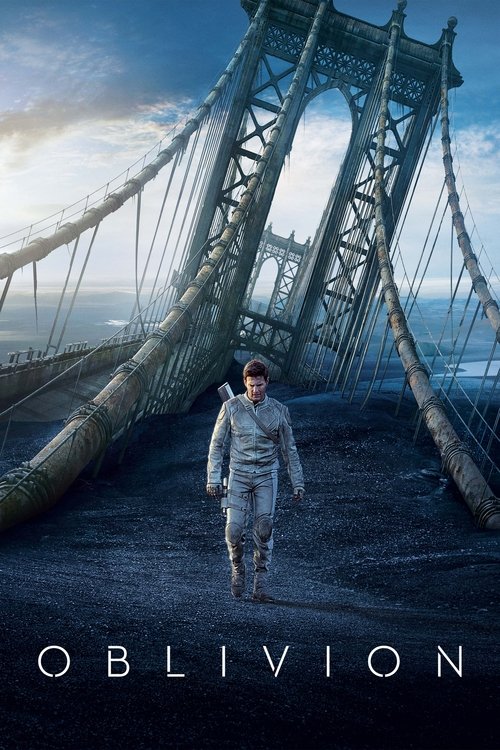
Oblivion
Jack Harper is one of the last few drone repairmen stationed on Earth. Part of a massive operation to extract vital resources after decades of war with a terrifying threat known as the Scavs, Jack’s mission is nearly complete. His existence is brought crashing down when he rescues a beautiful stranger from a downed spacecraft. Her arrival triggers a chain of events that forces him to question everything he knows and puts the fate of humanity in his hands.
Despite a significant budget of $120.0M, Oblivion became a solid performer, earning $286.2M worldwide—a 138% return.
1 win & 17 nominations


Plot Structure
Story beats plotted across runtime


Narrative Arc
Emotional journey through the story's key moments
Story Circle
Blueprint 15-beat structure
Arcplot Score Breakdown
Weighted: Precision (70%) + Arc (15%) + Theme (15%)
Oblivion (2013) exemplifies precise plot construction, characteristic of Joseph Kosinski's storytelling approach. This structural analysis examines how the film's 15-point plot structure maps to proven narrative frameworks across 2 hours and 4 minutes. With an Arcplot score of 6.3, the film takes an unconventional approach to traditional narrative frameworks.
Characters
Cast & narrative archetypes

Jack Harper
Victoria Olsen
Julia Rusakova
Malcolm Beech
Sally
Sykes
Main Cast & Characters
Jack Harper
Played by Tom Cruise
Tech 49, a drone repairman stationed on post-apocalyptic Earth who begins questioning his reality and true identity after encountering a mysterious woman from his dreams.
Victoria Olsen
Played by Andrea Riseborough
Jack's communications officer and partner who maintains contact with mission control and is deeply committed to their assigned mission and protocols.
Julia Rusakova
Played by Olga Kurylenko
A mysterious astronaut from the Odyssey mission who crashes on Earth and shares a profound connection with Jack that challenges everything he believes.
Malcolm Beech
Played by Morgan Freeman
The battle-hardened leader of the human resistance who knows the truth about the alien invasion and recruits Jack to help save humanity.
Sally
Played by Melissa Leo
The mission director who communicates with Jack and Victoria from the orbiting Tet station, later revealed to be an AI manifestation of the alien machine.
Sykes
Played by Nikolaj Coster-Waldau
Malcolm Beech's trusted second-in-command in the human resistance, a skilled soldier dedicated to the fight against the machines.
Structural Analysis
The Status Quo at 1 minutes (1% through the runtime) establishes Jack Harper lives a solitary existence on post-apocalyptic Earth as Tech 49, maintaining drones and water extraction rigs with his partner Victoria, believing they are two weeks away from joining the rest of humanity on Titan.. The analysis reveals that this early placement immediately immerses viewers in the story world.
The inciting incident occurs at 15 minutes when A mysterious spacecraft crashes to Earth, and Jack discovers human survivors in sleep pods - one of whom is the woman from his dreams, Julia. When drones arrive and kill the other survivors, Jack must save her, disrupting his mission and forcing questions about his reality.. At 12% through the film, this Disruption aligns precisely with traditional story structure. This beat shifts the emotional landscape, launching the protagonist into the central conflict.
The First Threshold at 30 minutes marks the transition into Act II, occurring at 24% of the runtime. This illustrates the protagonist's commitment to Jack makes the active choice to take Julia back to the crash site to recover the flight recorder against Mission Control's orders, crossing into forbidden territory and choosing truth over obedience, knowing it may cost him everything., moving from reaction to action.
At 62 minutes, the Midpoint arrives at 50% of the runtime—precisely centered, creating perfect narrative symmetry. Of particular interest, this crucial beat Jack enters the radiation zone and discovers Tech 52 - another version of himself, with another Victoria, in an identical tower. The false victory of finding truth becomes false defeat: Jack himself is not unique, just one of many clones. His entire identity shatters., fundamentally raising what's at risk. The emotional intensity shifts, dividing the narrative into clear before-and-after phases.
The Collapse moment at 93 minutes (75% through) represents the emotional nadir. Here, Julia is critically injured by a drone attack while defending the human survivors. Jack must bring her to the Tet for medical attention, seemingly surrendering to the enemy and abandoning the resistance. All hope of victory appears lost., illustrates the protagonist at their lowest point. This beat's placement in the final quarter sets up the climactic reversal.
The Second Threshold at 98 minutes initiates the final act resolution at 79% of the runtime. Jack remembers the truth: his proposal to Julia on the Empire State Building, their love, the original mission. He realizes that even as a clone, his memories and choices make him human. He decides to become the weapon himself, formulating the plan to swap Julia for Beech and the bomb., demonstrating the transformation achieved throughout the journey.
Emotional Journey
Oblivion's emotional architecture traces a deliberate progression across 15 carefully calibrated beats.
Narrative Framework
This structural analysis employs a 15-point narrative structure framework that maps key story moments. By mapping Oblivion against these established plot points, we can identify how Joseph Kosinski utilizes or subverts traditional narrative conventions. The plot point approach reveals not only adherence to structural principles but also creative choices that distinguish Oblivion within the action genre.
Joseph Kosinski's Structural Approach
Among the 4 Joseph Kosinski films analyzed on Arcplot, the average structural score is 6.0, demonstrating varied approaches to story architecture. Oblivion represents one of the director's most structurally precise works. For comparative analysis, explore the complete Joseph Kosinski filmography.
Comparative Analysis
Additional action films include The Bad Guys, Puss in Boots and Venom: The Last Dance. For more Joseph Kosinski analyses, see Only the Brave, Top Gun: Maverick and TRON: Legacy.
Plot Points by Act
Act I
SetupStatus Quo
Jack Harper lives a solitary existence on post-apocalyptic Earth as Tech 49, maintaining drones and water extraction rigs with his partner Victoria, believing they are two weeks away from joining the rest of humanity on Titan.
Theme
Sally from Mission Control reminds Jack to stay "effective" - the film's exploration of what makes us human versus merely functional begins, questioning whether memories and individuality matter more than efficient mission completion.
Worldbuilding
Establishment of Jack's routine on devastated Earth: repairing drones, avoiding Scavs (alien remnants), his secret lakeside cabin filled with salvaged artifacts, his recurring dreams of a mysterious woman on the Empire State Building, and his strained relationship with by-the-book Victoria who wants to follow protocol and leave Earth.
Disruption
A mysterious spacecraft crashes to Earth, and Jack discovers human survivors in sleep pods - one of whom is the woman from his dreams, Julia. When drones arrive and kill the other survivors, Jack must save her, disrupting his mission and forcing questions about his reality.
Resistance
Jack rescues Julia and brings her to Tower 49, where Victoria is hostile and Mission Control demands her return. Julia knows Jack's name and shares his memories despite his memory wipe. Jack debates whether to follow orders or investigate the impossible connection, while Victoria reports his erratic behavior.
Act II
ConfrontationFirst Threshold
Jack makes the active choice to take Julia back to the crash site to recover the flight recorder against Mission Control's orders, crossing into forbidden territory and choosing truth over obedience, knowing it may cost him everything.
Mirror World
Jack brings Julia to his secret lakeside cabin, the one place that represents his individuality and suppressed humanity. Julia recognizes it from before the war, and their connection deepens - she represents the emotional, authentic life he's been denied.
Premise
Jack and Julia explore the truth together: visiting the crash site, recovering the recorder, being captured by the Scavengers who turn out to be human resistance fighters led by Beech. Jack learns impossible truths - the war story is a lie, the Scavs are human, and he must confront what he really is.
Midpoint
Jack enters the radiation zone and discovers Tech 52 - another version of himself, with another Victoria, in an identical tower. The false victory of finding truth becomes false defeat: Jack himself is not unique, just one of many clones. His entire identity shatters.
Opposition
Jack struggles with his clone identity while Victoria (who witnessed Tech 52) is killed by drones from Mission Control. Jack and Julia go on the run, hunted by drones. Beech reveals the mission: use Jack to deliver a bomb to the Tet (the alien AI harvesting Earth). Pressure mounts as Jack's purpose and humanity are questioned.
Collapse
Julia is critically injured by a drone attack while defending the human survivors. Jack must bring her to the Tet for medical attention, seemingly surrendering to the enemy and abandoning the resistance. All hope of victory appears lost.
Crisis
Jack brings Julia to the Tet in desperation. Inside, he discovers the truth: Sally is the Tet's AI interface, thousands of Jack clones exist, and the original astronaut Jack was captured 60 years ago. He faces the dark reality of his existence as a tool of Earth's destruction.
Act III
ResolutionSecond Threshold
Jack remembers the truth: his proposal to Julia on the Empire State Building, their love, the original mission. He realizes that even as a clone, his memories and choices make him human. He decides to become the weapon himself, formulating the plan to swap Julia for Beech and the bomb.
Synthesis
Jack executes the plan: he tells Julia he's taking her to the Tet for healing, but smuggles Beech and the nuclear device instead. He flies to the Tet, confronts Sally/the alien AI with his humanity and his choice, and detonates the bomb, destroying the Tet and sacrificing himself to save Earth and Julia.
Transformation
Three years later, Julia and her daughter live at Jack's cabin in a recovering world. Another Jack clone (Tech 52) arrives, drawn by the same memories and love. The closing image mirrors the opening but transforms it: Jack has found his humanity through choice and sacrifice, and love persists even across death and cloning.