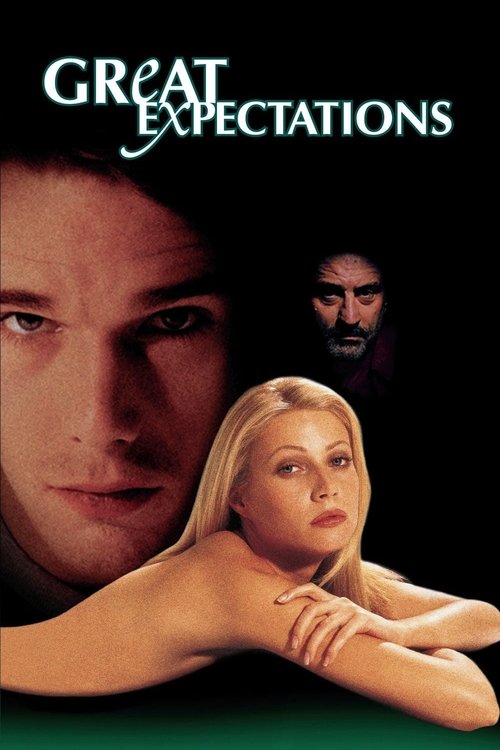
Great Expectations
Loosely based on the Charles Dickens' classic novel, "Great Expectations" is a sensual tale of a young man's unforgettable passage into manhood, and the three individuals who will undeniably change his life forever. Through the surprising interactions of these vivid characters, "Great Expectations" takes a unique and contemporary look at life's great coincidences.
Despite a moderate budget of $25.0M, Great Expectations became a solid performer, earning $55.5M worldwide—a 122% return.
1 win & 3 nominations


Plot Structure
Story beats plotted across runtime


Narrative Arc
Emotional journey through the story's key moments
Story Circle
Blueprint 15-beat structure
Arcplot Score Breakdown
Weighted: Precision (70%) + Arc (15%) + Theme (15%)
Great Expectations (1998) exhibits deliberately positioned narrative architecture, characteristic of Alfonso Cuarón's storytelling approach. This structural analysis examines how the film's 15-point plot structure maps to proven narrative frameworks across 1 hour and 51 minutes. With an Arcplot score of 6.5, the film balances conventional beats with creative variation.
Characters
Cast & narrative archetypes

Finn
Estella
Ms. Dinsmoor
Joe
Arthur Lustig
Walter Plane
Lustig Prisoner
Main Cast & Characters
Finn
Played by Ethan Hawke
A talented young artist from Florida who becomes obsessed with his childhood love Estella
Estella
Played by Gwyneth Paltrow
A beautiful but emotionally damaged woman raised to break men's hearts
Ms. Dinsmoor
Played by Anne Bancroft
A wealthy, eccentric woman jilted on her wedding day who raises Estella as an instrument of revenge
Joe
Played by Chris Cooper
Finn's kind-hearted uncle who raises him with love and encourages his artistic talent
Arthur Lustig
Played by Hank Azaria
A successful lawyer who becomes Finn's mysterious benefactor and helps launch his art career
Walter Plane
Played by Josh Mostel
Estella's wealthy fiancé, representing the upper-class world she inhabits
Lustig Prisoner
Played by Robert De Niro
The escaped convict Finn helps as a child, later revealed to be connected to his benefactor
Structural Analysis
The Status Quo at 1 minutes (1% through the runtime) establishes Young Finn draws alone on a Florida pier, a poor boy with artistic talent living a simple life with his sister and her boyfriend Joe.. Structural examination shows that this early placement immediately immerses viewers in the story world.
The inciting incident occurs at 14 minutes when Estella coldly dismisses Finn and leaves for Paris without warning, breaking his heart and ending their childhood connection.. At 13% through the film, this Disruption is delayed, allowing extended setup of the story world. This beat shifts the emotional landscape, launching the protagonist into the central conflict.
The First Threshold at 28 minutes marks the transition into Act II, occurring at 25% of the runtime. This indicates the protagonist's commitment to Finn receives a mysterious offer from a benefactor to come to New York and launch his art career, and he chooses to leave his old life behind., moving from reaction to action.
At 56 minutes, the Midpoint arrives at 50% of the runtime—precisely centered, creating perfect narrative symmetry. Of particular interest, this crucial beat Finn and Estella finally consummate their relationship at his art exhibition opening, a false victory as she remains emotionally unavailable and he's blind to the cost of his transformation., fundamentally raising what's at risk. The emotional intensity shifts, dividing the narrative into clear before-and-after phases.
The Collapse moment at 84 minutes (76% through) represents the emotional nadir. Here, Ms. Dinsmoor dies in a fire at her mansion, and Finn realizes he's lost everything authentic in his pursuit of wealth and Estella, whom he never truly had., reveals the protagonist at their lowest point. This beat's placement in the final quarter sets up the climactic reversal.
The Second Threshold at 89 minutes initiates the final act resolution at 80% of the runtime. Finn realizes he must reclaim his authentic self and artistic voice, understanding that his worth isn't defined by wealth, status, or Estella's love., demonstrating the transformation achieved throughout the journey.
Emotional Journey
Great Expectations's emotional architecture traces a deliberate progression across 15 carefully calibrated beats.
Narrative Framework
This structural analysis employs systematic plot point analysis that identifies crucial turning points. By mapping Great Expectations against these established plot points, we can identify how Alfonso Cuarón utilizes or subverts traditional narrative conventions. The plot point approach reveals not only adherence to structural principles but also creative choices that distinguish Great Expectations within the comedy genre.
Alfonso Cuarón's Structural Approach
Among the 4 Alfonso Cuarón films analyzed on Arcplot, the average structural score is 7.0, reflecting strong command of classical structure. Great Expectations takes a more unconventional approach compared to the director's typical style. For comparative analysis, explore the complete Alfonso Cuarón filmography.
Comparative Analysis
Additional comedy films include The Bad Guys, Ella Enchanted and The Evening Star. For more Alfonso Cuarón analyses, see Gravity, Children of Men and A Little Princess.
Plot Points by Act
Act I
SetupStatus Quo
Young Finn draws alone on a Florida pier, a poor boy with artistic talent living a simple life with his sister and her boyfriend Joe.
Theme
Ms. Dinsmoor tells young Finn that love and art are about pain and suffering, foreshadowing his journey of learning what truly matters.
Worldbuilding
Finn helps a convict, is summoned to Ms. Dinsmoor's decaying mansion, meets the enchanting Estella, and begins visiting regularly to draw her, developing an obsessive first love.
Disruption
Estella coldly dismisses Finn and leaves for Paris without warning, breaking his heart and ending their childhood connection.
Resistance
Years pass. Adult Finn works as a fisherman with Joe, still drawing but resigned to his simple life, haunted by memories of Estella.
Act II
ConfrontationFirst Threshold
Finn receives a mysterious offer from a benefactor to come to New York and launch his art career, and he chooses to leave his old life behind.
Mirror World
Finn reunites with the now-sophisticated Estella in New York, rekindling his obsession and beginning a complex romantic relationship that will test his identity.
Premise
Finn becomes a celebrated artist in New York's elite society, pursuing Estella romantically while transforming into someone he doesn't recognize, losing touch with his authentic self.
Midpoint
Finn and Estella finally consummate their relationship at his art exhibition opening, a false victory as she remains emotionally unavailable and he's blind to the cost of his transformation.
Opposition
Estella pulls away emotionally, becomes engaged to another man. Finn learns his benefactor wasn't Ms. Dinsmoor but the convict he helped as a child, shattering his illusions about his new identity.
Collapse
Ms. Dinsmoor dies in a fire at her mansion, and Finn realizes he's lost everything authentic in his pursuit of wealth and Estella, whom he never truly had.
Crisis
Finn struggles with the death of Ms. Dinsmoor, his broken heart over Estella, and the emptiness of his manufactured success.
Act III
ResolutionSecond Threshold
Finn realizes he must reclaim his authentic self and artistic voice, understanding that his worth isn't defined by wealth, status, or Estella's love.
Synthesis
Finn returns to his roots, reconnects with Joe, and creates art from genuine feeling. Estella, finally free from her own chains, seeks him out.
Transformation
Finn and Estella meet again as transformed individuals, both freed from their illusions, suggesting the possibility of authentic connection built on who they truly are.