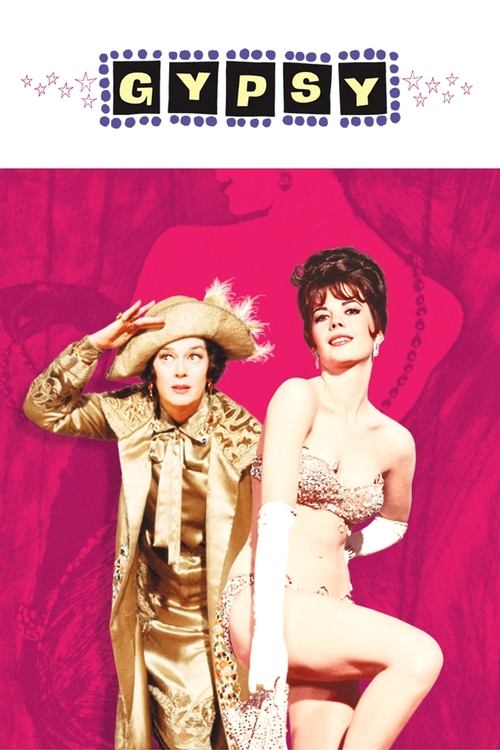
Gypsy
Gypsy's mother Rose dreams of a life in show business for her daughters, but Louise becomes a huge burlesque star. Stage musical loosely based on the memoirs of Gypsy Rose Lee.
Despite its modest budget of $4.0M, Gypsy became a solid performer, earning $11.1M worldwide—a 177% return.
Nominated for 3 Oscars. 1 win & 12 nominations


Plot Structure
Story beats plotted across runtime


Narrative Arc
Emotional journey through the story's key moments
Story Circle
Blueprint 15-beat structure
Arcplot Score Breakdown
Weighted: Precision (70%) + Arc (15%) + Theme (15%)
Gypsy (1962) demonstrates strategically placed story structure, characteristic of Mervyn LeRoy's storytelling approach. This structural analysis examines how the film's 15-point plot structure maps to proven narrative frameworks across 2 hours and 23 minutes. With an Arcplot score of 7.6, the film showcases strong structural fundamentals.
Characters
Cast & narrative archetypes

Mama Rose Hovick
Louise Hovick / Gypsy Rose Lee
Herbie Sommers
June Hovick
Main Cast & Characters
Mama Rose Hovick
Played by Rosalind Russell
Fiercely ambitious stage mother who drives her daughters to perform, relentlessly pursuing fame and living vicariously through their success.
Louise Hovick / Gypsy Rose Lee
Played by Natalie Wood
Shy, overlooked daughter who transforms into the famous burlesque star Gypsy Rose Lee, finding her own identity and strength.
Herbie Sommers
Played by Karl Malden
Rose's patient, long-suffering romantic partner and manager who supports the family's vaudeville dreams despite Rose's domineering nature.
June Hovick
Played by Ann Jillian
The talented, favored daughter whose vaudeville act Baby June is the focus of Rose's ambitions until she rebels and elopes.
Structural Analysis
The Status Quo at 2 minutes (1% through the runtime) establishes Rose pushes young June and Louise into vaudeville, establishing her relentless stage mother persona and the girls' unfulfilled childhoods in service of Mama Rose's dream.. Notably, this early placement immediately immerses viewers in the story world.
The inciting incident occurs at 18 minutes when June elopes and abandons the act, destroying Rose's carefully constructed dreams of stardom for her daughter and leaving the act without its star.. At 12% through the film, this Disruption aligns precisely with traditional story structure. This beat shifts the emotional landscape, launching the protagonist into the central conflict.
The First Threshold at 36 minutes marks the transition into Act II, occurring at 25% of the runtime. This reveals the protagonist's commitment to Rose makes the active choice to reinvent the act with Louise as the centerpiece, moving from children's vaudeville toward adult entertainment, launching them into a new theatrical world., moving from reaction to action.
At 72 minutes, the Midpoint arrives at 50% of the runtime—precisely centered, creating perfect narrative symmetry. The analysis reveals that this crucial beat Stranded without work, Rose accepts a burlesque booking out of desperation. This false defeat marks the end of her vaudeville dreams but opens the door to Louise's transformation into Gypsy Rose Lee., fundamentally raising what's at risk. The emotional intensity shifts, dividing the narrative into clear before-and-after phases.
The Collapse moment at 107 minutes (75% through) represents the emotional nadir. Here, Herbie leaves Rose after she refuses to marry him and acknowledge that Louise has her own life. Rose loses her romantic relationship and faces the death of her role as the irreplaceable manager., indicates the protagonist at their lowest point. This beat's placement in the final quarter sets up the climactic reversal.
The Second Threshold at 114 minutes initiates the final act resolution at 80% of the runtime. Rose performs "Rose's Turn," a hallucinatory breakdown where she finally confronts her own failed dreams and realizes she was living through her daughters, achieving cathartic self-awareness., demonstrating the transformation achieved throughout the journey.
Emotional Journey
Gypsy's emotional architecture traces a deliberate progression across 15 carefully calibrated beats.
Narrative Framework
This structural analysis employs proven narrative structure principles that track dramatic progression. By mapping Gypsy against these established plot points, we can identify how Mervyn LeRoy utilizes or subverts traditional narrative conventions. The plot point approach reveals not only adherence to structural principles but also creative choices that distinguish Gypsy within the comedy genre.
Mervyn LeRoy's Structural Approach
Among the 4 Mervyn LeRoy films analyzed on Arcplot, the average structural score is 7.4, reflecting strong command of classical structure. Gypsy represents one of the director's most structurally precise works. For comparative analysis, explore the complete Mervyn LeRoy filmography.
Comparative Analysis
Additional comedy films include The Bad Guys, Ella Enchanted and The Evening Star. For more Mervyn LeRoy analyses, see Quo Vadis, Little Women and Random Harvest.
Plot Points by Act
Act I
SetupStatus Quo
Rose pushes young June and Louise into vaudeville, establishing her relentless stage mother persona and the girls' unfulfilled childhoods in service of Mama Rose's dream.
Theme
Herbie warns Rose that you can't force people into your dreams - they have to have their own. This statement captures the central conflict between Rose's ambition and her daughters' autonomy.
Worldbuilding
The world of small-time vaudeville is established: constant travel, cheesy acts, Rose's manipulation of bookers, her exploitation of the girls, and the strained family dynamics as Louise lives in June's shadow.
Disruption
June elopes and abandons the act, destroying Rose's carefully constructed dreams of stardom for her daughter and leaving the act without its star.
Resistance
Rose struggles with June's departure and debates whether to continue. Herbie suggests giving up show business and settling down, but Rose refuses to accept defeat and begins rebuilding around Louise.
Act II
ConfrontationFirst Threshold
Rose makes the active choice to reinvent the act with Louise as the centerpiece, moving from children's vaudeville toward adult entertainment, launching them into a new theatrical world.
Mirror World
Louise begins developing her own identity separate from her mother's vision, exploring her own desires and relationship potential with Tulsa and later discovering her own appeal as a performer.
Premise
The promise of the premise plays out: Louise awkwardly becomes the star, vaudeville dies around them, and they struggle through increasingly desperate bookings as Rose refuses to acknowledge changing times.
Midpoint
Stranded without work, Rose accepts a burlesque booking out of desperation. This false defeat marks the end of her vaudeville dreams but opens the door to Louise's transformation into Gypsy Rose Lee.
Opposition
Louise becomes a burlesque star, developing her own sophisticated persona and gaining independence. Rose's control slips as Louise finds success on her own terms, creating escalating tension between them.
Collapse
Herbie leaves Rose after she refuses to marry him and acknowledge that Louise has her own life. Rose loses her romantic relationship and faces the death of her role as the irreplaceable manager.
Crisis
Rose spirals in her dark night, confronting her loneliness and obsolescence. The emotional confrontation with Louise builds as Rose refuses to let go of control.
Act III
ResolutionSecond Threshold
Rose performs "Rose's Turn," a hallucinatory breakdown where she finally confronts her own failed dreams and realizes she was living through her daughters, achieving cathartic self-awareness.
Synthesis
Rose and Louise have their final confrontation, achieving painful but necessary honesty. Rose begins to accept Louise's independence and her own identity separate from her children.
Transformation
Rose and Louise achieve tentative reconciliation, with Rose finally seeing her daughter as an autonomous person. Rose walks into an uncertain future, no longer defined solely by her children's success.