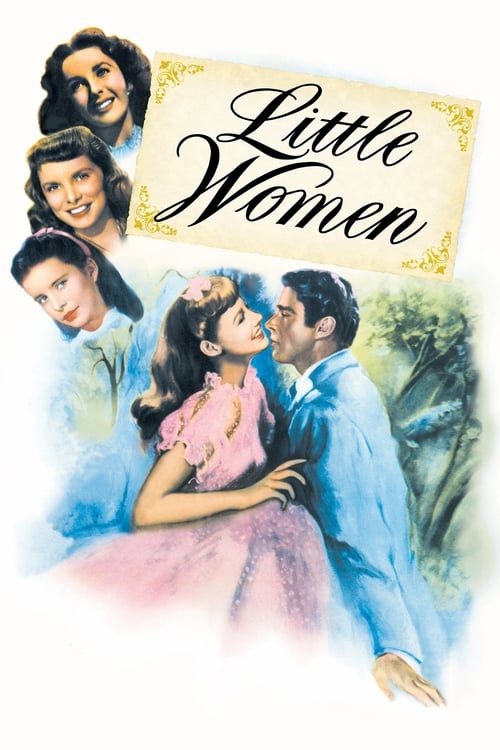
Little Women
Four sisters come of age in America in the aftermath of the Civil War.
Despite its tight budget of $2.8M, Little Women became a box office success, earning $5.9M worldwide—a 113% return.
1 Oscar. 1 win & 1 nomination


Plot Structure
Story beats plotted across runtime


Narrative Arc
Emotional journey through the story's key moments
Story Circle
Blueprint 15-beat structure
Arcplot Score Breakdown
Weighted: Precision (70%) + Arc (15%) + Theme (15%)
Little Women (1949) exemplifies carefully calibrated narrative architecture, characteristic of Mervyn LeRoy's storytelling approach. This structural analysis examines how the film's 15-point plot structure maps to proven narrative frameworks across 2 hours and 1 minutes. With an Arcplot score of 7.4, the film balances conventional beats with creative variation.
Characters
Cast & narrative archetypes

Jo March
Amy March
Meg March
Beth March
Theodore "Laurie" Laurence
Marmee March
Professor Friedrich Bhaer
Aunt March
Main Cast & Characters
Jo March
Played by June Allyson
The spirited, tomboyish second-oldest March sister who dreams of becoming a writer and resists traditional expectations for women.
Amy March
Played by Elizabeth Taylor
The youngest March sister, artistically talented and initially vain, who matures through the story and eventually wins Laurie's heart.
Meg March
Played by Janet Leigh
The eldest and most traditional March sister who dreams of domestic bliss and marries John Brooke.
Beth March
Played by Margaret O'Brien
The gentle, music-loving third sister whose sweet nature and fragile health make her the emotional heart of the family.
Theodore "Laurie" Laurence
Played by Peter Lawford
The wealthy, charming boy next door who becomes close friends with the March sisters and eventually marries Amy.
Marmee March
Played by Mary Astor
The wise, compassionate mother of the March sisters who guides them with moral wisdom while her husband serves in the Civil War.
Professor Friedrich Bhaer
Played by Rossano Brazzi
A kind, intellectual German professor who becomes Jo's mentor and eventual romantic partner, valuing her mind and spirit.
Aunt March
Played by Lucile Watson
The wealthy, stern aunt who provides financial support but also traditional expectations and criticism.
Structural Analysis
The Status Quo at 2 minutes (2% through the runtime) establishes The four March sisters gather around the piano in their modest home, singing together while Father is away at war. Establishes their close bond, gentle poverty, and the warmth of their family life despite hardship.. Notably, this early placement immediately immerses viewers in the story world.
The inciting incident occurs at 14 minutes when Jo meets Laurie at the dance. This encounter disrupts the insular world of the March sisters and introduces the catalyst for Jo's growth beyond her family circle. Laurie represents adventure, opportunity, and connection to the wider world.. At 12% through the film, this Disruption aligns precisely with traditional story structure. This beat shifts the emotional landscape, launching the protagonist into the central conflict.
The First Threshold at 30 minutes marks the transition into Act II, occurring at 25% of the runtime. This indicates the protagonist's commitment to Jo chooses to actively pursue her writing career by selling her first story. This represents her conscious decision to step into the world of ambition and self-determination, moving beyond the role of dutiful daughter., moving from reaction to action.
At 59 minutes, the Midpoint arrives at 49% of the runtime—precisely centered, creating perfect narrative symmetry. Of particular interest, this crucial beat Beth falls seriously ill with scarlet fever. This false defeat raises the stakes dramatically - the carefree exploration phase ends as the family confronts mortality. The sisters must face that their childhood world is fragile and finite., fundamentally raising what's at risk. The emotional intensity shifts, dividing the narrative into clear before-and-after phases.
The Collapse moment at 89 minutes (74% through) represents the emotional nadir. Here, Beth dies peacefully, surrounded by her family. The literal "whiff of death" - the gentle sister who embodied home and innocence is gone. This represents the death of childhood and the March family's prelapsarian unity., demonstrates the protagonist at their lowest point. This beat's placement in the final quarter sets up the climactic reversal.
The Second Threshold at 96 minutes initiates the final act resolution at 79% of the runtime. Jo realizes that Professor Bhaer represents the synthesis she needs: a partner who respects her mind and work but also offers love and companionship. She recognizes that accepting love doesn't mean sacrificing independence. She gains clarity about her true path., demonstrating the transformation achieved throughout the journey.
Emotional Journey
Little Women's emotional architecture traces a deliberate progression across 15 carefully calibrated beats.
Narrative Framework
This structural analysis employs proven narrative structure principles that track dramatic progression. By mapping Little Women against these established plot points, we can identify how Mervyn LeRoy utilizes or subverts traditional narrative conventions. The plot point approach reveals not only adherence to structural principles but also creative choices that distinguish Little Women within the romance genre.
Mervyn LeRoy's Structural Approach
Among the 4 Mervyn LeRoy films analyzed on Arcplot, the average structural score is 7.4, reflecting strong command of classical structure. Little Women represents one of the director's most structurally precise works. For comparative analysis, explore the complete Mervyn LeRoy filmography.
Comparative Analysis
Additional romance films include South Pacific, Dirty Dancing: Havana Nights and The Evening Star. For more Mervyn LeRoy analyses, see Gypsy, Quo Vadis and Random Harvest.
Plot Points by Act
Act I
SetupStatus Quo
The four March sisters gather around the piano in their modest home, singing together while Father is away at war. Establishes their close bond, gentle poverty, and the warmth of their family life despite hardship.
Theme
Marmee tells the girls: "I want my daughters to be beautiful, accomplished, and good; to be admired, loved, and respected; to have a happy youth, to be well and wisely married, and to lead useful, pleasant lives." The theme of balancing personal ambition with traditional expectations is stated.
Worldbuilding
Introduction to each sister's personality: Jo's tomboyish ambition to be a writer, Meg's vanity and desire for elegance, Beth's shyness and musical talent, Amy's artistic pretensions. Their relationship with Marmee, their charitable work, and the wealthy Laurence family next door are established.
Disruption
Jo meets Laurie at the dance. This encounter disrupts the insular world of the March sisters and introduces the catalyst for Jo's growth beyond her family circle. Laurie represents adventure, opportunity, and connection to the wider world.
Resistance
The sisters navigate their relationship with the Laurence household. Jo befriends Laurie and Mr. Laurence. Beth overcomes her shyness regarding the piano. Meg experiences temptation at the Moffats' home. Each sister tests the boundaries between their humble values and worldly desires.
Act II
ConfrontationFirst Threshold
Jo chooses to actively pursue her writing career by selling her first story. This represents her conscious decision to step into the world of ambition and self-determination, moving beyond the role of dutiful daughter.
Mirror World
Professor Bhaer is introduced as Jo's intellectual equal and moral compass in New York. He represents the thematic counterpoint: a life of meaningful work and modest contentment versus worldly ambition and wealth. He will teach Jo what she truly needs.
Premise
The "fun and games" of the March sisters' young adulthood: Meg's courtship and marriage to John Brooke, Jo's adventures in New York as a writer, Amy's artistic pursuits in Europe, Beth's quiet contentment at home. Each explores her path while maintaining family bonds.
Midpoint
Beth falls seriously ill with scarlet fever. This false defeat raises the stakes dramatically - the carefree exploration phase ends as the family confronts mortality. The sisters must face that their childhood world is fragile and finite.
Opposition
The pressures of adult life intensify: Meg struggles with poverty in marriage, Jo faces rejection of her sensational writing and Laurie's unwanted proposal, Amy competes with Jo for Laurie's affection in Europe, Beth's health remains precarious. Each sister's flaws and the consequences of their choices mount.
Collapse
Beth dies peacefully, surrounded by her family. The literal "whiff of death" - the gentle sister who embodied home and innocence is gone. This represents the death of childhood and the March family's prelapsarian unity.
Crisis
Jo grieves deeply, questioning her choices and ambitions. She realizes she rejected Laurie out of pride and fear, and now he's married to Amy. She faces the darkness of loneliness and the cost of her fierce independence. She must decide what kind of life she truly wants.
Act III
ResolutionSecond Threshold
Jo realizes that Professor Bhaer represents the synthesis she needs: a partner who respects her mind and work but also offers love and companionship. She recognizes that accepting love doesn't mean sacrificing independence. She gains clarity about her true path.
Synthesis
Jo acts on her new understanding: she welcomes Professor Bhaer's return and accepts his proposal. She opens her home as a school for boys, combining her independence, her writing, her teaching, and her capacity for love. Each sister finds her own version of fulfillment within the constraints of their era.
Transformation
The March family gathers again, now expanded to include husbands and Professor Bhaer. Jo, once the rebellious girl who rejected domesticity, presides over her school and family with joy - having found a way to be both true to herself and connected to others. The closing image mirrors the opening but shows growth and integration.