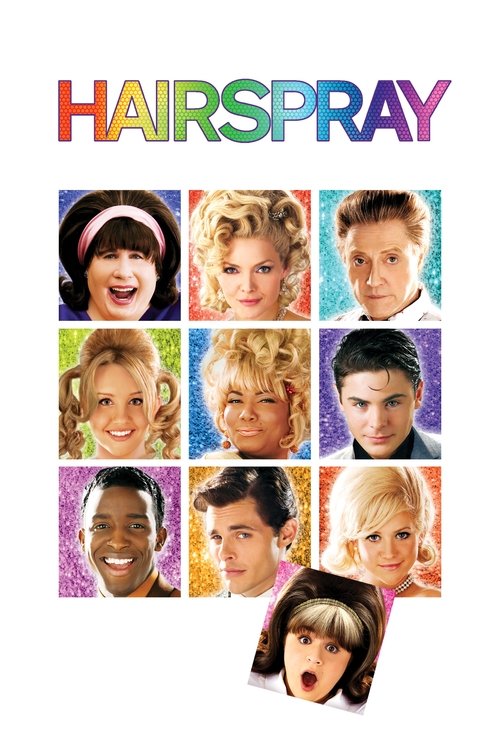
Hairspray
Pleasantly plump teenager Tracy Turnblad auditions to be on Baltimore's most popular dance show - The Corny Collins Show - and lands a prime spot. Through her newfound fame, she becomes determined to help her friends and end the racial segregation that has been a staple of the show.
Working with a substantial budget of $75.0M, the film achieved a modest success with $90.5M in global revenue (+21% profit margin).
Nominated for 1 BAFTA Award21 wins & 45 nominations


Plot Structure
Story beats plotted across runtime


Narrative Arc
Emotional journey through the story's key moments
Story Circle
Blueprint 15-beat structure
Arcplot Score Breakdown
Weighted: Precision (70%) + Arc (15%) + Theme (15%)
Hairspray (2007) exhibits carefully calibrated story structure, characteristic of Adam Shankman's storytelling approach. This structural analysis examines how the film's 15-point plot structure maps to proven narrative frameworks across 1 hour and 57 minutes. With an Arcplot score of 7.6, the film showcases strong structural fundamentals.
Characters
Cast & narrative archetypes

Tracy Turnblad
Link Larkin
Penny Pingleton
Seaweed J. Stubbs
Edna Turnblad
Wilbur Turnblad
Velma Von Tussle
Amber Von Tussle
Motormouth Maybelle
Corny Collins
Main Cast & Characters
Tracy Turnblad
Played by Nikki Blonsky
An optimistic, plus-sized teenager with big dreams who fights to integrate a local dance show in 1960s Baltimore.
Link Larkin
Played by Zac Efron
The handsome teen heartthrob and star dancer on The Corny Collins Show who becomes Tracy's love interest.
Penny Pingleton
Played by Amanda Bynes
Tracy's timid best friend who finds courage through love and the civil rights movement.
Seaweed J. Stubbs
Played by Elijah Kelley
A charismatic dancer and activist who introduces Tracy to rhythm and blues culture and becomes Penny's boyfriend.
Edna Turnblad
Played by John Travolta
Tracy's loving but insecure mother who runs a laundry business and learns to embrace herself and support her daughter.
Wilbur Turnblad
Played by Christopher Walken
Tracy's jovial father who runs a joke shop and adores his wife unconditionally.
Velma Von Tussle
Played by Michelle Pfeiffer
The racist, status-obsessed producer of The Corny Collins Show who tries to sabotage Tracy.
Amber Von Tussle
Played by Brittany Snow
Velma's spoiled daughter and reigning teen queen who feels threatened by Tracy's popularity.
Motormouth Maybelle
Played by Queen Latifah
The bold, empowering host of Negro Day on the TV station and a champion of integration.
Corny Collins
Played by James Marsden
The affable host of The Corny Collins Show who secretly supports integration.
Structural Analysis
The Status Quo at 1 minutes (1% through the runtime) establishes Tracy Turnblad wakes up in 1962 Baltimore, exuberantly singing "Good Morning Baltimore" about her dreams of dancing on TV. She's a plus-sized teen who loves the Corny Collins Show and refuses to let her size dampen her spirit.. Structural examination shows that this early placement immediately immerses viewers in the story world.
The inciting incident occurs at 14 minutes when The Corny Collins Show announces auditions to replace a dancer, Brenda. Tracy sees this as her chance to achieve her dream of dancing on television despite everyone's doubts about her size.. At 12% through the film, this Disruption aligns precisely with traditional story structure. This beat shifts the emotional landscape, launching the protagonist into the central conflict.
The First Threshold at 29 minutes marks the transition into Act II, occurring at 25% of the runtime. This demonstrates the protagonist's commitment to Tracy crashes the audition and dances with such joy and skill that Corny Collins hires her on the spot, despite Velma's objections. Tracy makes the active choice to perform, defying expectations and entering the world of television., moving from reaction to action.
At 59 minutes, the Midpoint arrives at 50% of the runtime—precisely centered, creating perfect narrative symmetry. Significantly, this crucial beat Tracy wins "Miss Teenage Hairspray" and uses the platform to publicly advocate for integrating the Corny Collins Show daily. This is a false victory - she thinks she's won, but this public stance makes her a target for Velma Von Tussle, raising the stakes considerably., fundamentally raising what's at risk. The emotional intensity shifts, dividing the narrative into clear before-and-after phases.
The Collapse moment at 88 minutes (75% through) represents the emotional nadir. Here, The peaceful protest is broken up by police. Tracy and the others are arrested and face serious consequences. Tracy becomes a fugitive, separated from her friends and family, unable to dance or see Link. Her dream appears dead and her cause seems lost., reveals the protagonist at their lowest point. This beat's placement in the final quarter sets up the climactic reversal.
The Second Threshold at 94 minutes initiates the final act resolution at 80% of the runtime. Tracy realizes she must integrate the Miss Teenage Hairspray finale on live TV - combining her original dream (dancing on TV) with her new purpose (integration). Edna overcomes her fears to help. Maybelle provides the plan. Tracy synthesizes personal ambition with social justice., demonstrating the transformation achieved throughout the journey.
Emotional Journey
Hairspray's emotional architecture traces a deliberate progression across 15 carefully calibrated beats.
Narrative Framework
This structural analysis employs structural analysis methodology used to understand storytelling architecture. By mapping Hairspray against these established plot points, we can identify how Adam Shankman utilizes or subverts traditional narrative conventions. The plot point approach reveals not only adherence to structural principles but also creative choices that distinguish Hairspray within the comedy genre.
Adam Shankman's Structural Approach
Among the 9 Adam Shankman films analyzed on Arcplot, the average structural score is 7.1, reflecting strong command of classical structure. Hairspray represents one of the director's most structurally precise works. For comparative analysis, explore the complete Adam Shankman filmography.
Comparative Analysis
Additional comedy films include The Bad Guys, Ella Enchanted and The Evening Star. For more Adam Shankman analyses, see Cheaper by the Dozen 2, The Wedding Planner and Bringing Down the House.
Plot Points by Act
Act I
SetupStatus Quo
Tracy Turnblad wakes up in 1962 Baltimore, exuberantly singing "Good Morning Baltimore" about her dreams of dancing on TV. She's a plus-sized teen who loves the Corny Collins Show and refuses to let her size dampen her spirit.
Theme
Motormouth Maybelle tells Tracy at her record shop: "You can't stop the beat" - establishing the film's theme about inevitable change, acceptance, and the unstoppable force of progress and inclusivity.
Worldbuilding
Tracy navigates her world: school where she's bullied for her size, detention where she meets Seaweed and the Black kids, her parents' ironing business, and her obsession with the Corny Collins Show. We meet Amber Von Tussle (antagonist), Link Larkin (crush), and Penny (best friend).
Disruption
The Corny Collins Show announces auditions to replace a dancer, Brenda. Tracy sees this as her chance to achieve her dream of dancing on television despite everyone's doubts about her size.
Resistance
Tracy debates whether to audition. Her mother Edna discourages her, worried she'll be hurt. Tracy practices dancing, gets encouragement from her father Wilbur, and finally decides to skip school to attend the audition. At the audition, Velma Von Tussle tries to dismiss her.
Act II
ConfrontationFirst Threshold
Tracy crashes the audition and dances with such joy and skill that Corny Collins hires her on the spot, despite Velma's objections. Tracy makes the active choice to perform, defying expectations and entering the world of television.
Mirror World
Tracy's friendship with Seaweed deepens and she becomes aware of "Negro Day" - the one day a month Black teens can dance on the show. This relationship represents the thematic heart: integration, equality, and challenging the status quo.
Premise
The promise of the premise: Tracy dances on TV, becomes famous, catches Link's attention (making Amber jealous), learns new moves from Seaweed and the Black kids, and starts advocating for integration of the show. Tracy experiences the fun of being a TV star.
Midpoint
Tracy wins "Miss Teenage Hairspray" and uses the platform to publicly advocate for integrating the Corny Collins Show daily. This is a false victory - she thinks she's won, but this public stance makes her a target for Velma Von Tussle, raising the stakes considerably.
Opposition
Velma and Amber plot to destroy Tracy. Tracy is banned from the show for missing a day (when she was on Negro Day). Velma schemes to rig the next competition. The protest movement grows but faces increasing resistance. Tracy's parents worry about her safety. Tensions escalate.
Collapse
The peaceful protest is broken up by police. Tracy and the others are arrested and face serious consequences. Tracy becomes a fugitive, separated from her friends and family, unable to dance or see Link. Her dream appears dead and her cause seems lost.
Crisis
Tracy hides while her friends and family face the fallout. Edna must confront her own fears about going out in public. Tracy processes the cost of her activism - has she made things worse? The dark night before the final push.
Act III
ResolutionSecond Threshold
Tracy realizes she must integrate the Miss Teenage Hairspray finale on live TV - combining her original dream (dancing on TV) with her new purpose (integration). Edna overcomes her fears to help. Maybelle provides the plan. Tracy synthesizes personal ambition with social justice.
Synthesis
The finale sequence: Tracy and the integrated dancers storm the television studio, perform on live TV, expose Velma's vote-rigging scheme, win over the audience and the governor, and achieve full integration of the show. Link chooses Tracy over Amber. Justice prevails.
Transformation
Everyone dances together - Black and white, big and small - on the fully integrated Corny Collins Show. Tracy, now confident in both her body and her values, dances with Link while her mother Edna dances proudly. The beat couldn't be stopped.