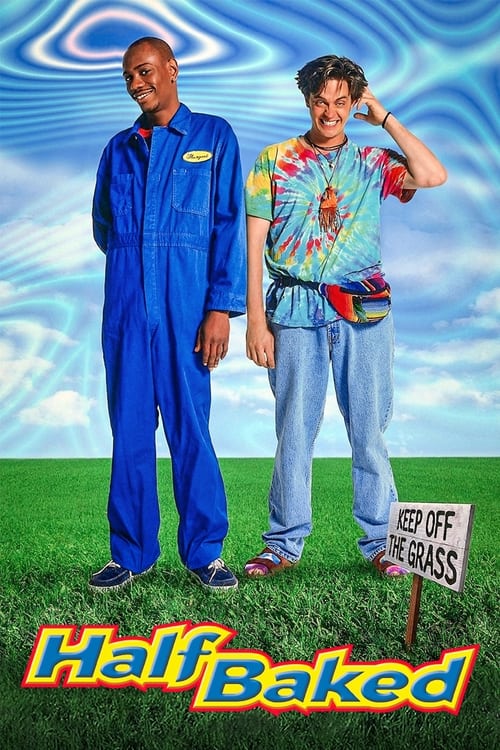
Half Baked
Three lovable party buds try to bail their friend out of jail. But just when the guys have mastered a plan, everything comes dangerously close to going up in smoke.
Despite its tight budget of $8.0M, Half Baked became a financial success, earning $17.5M worldwide—a 118% return.


Plot Structure
Story beats plotted across runtime


Narrative Arc
Emotional journey through the story's key moments
Story Circle
Blueprint 15-beat structure
Arcplot Score Breakdown
Weighted: Precision (70%) + Arc (15%) + Theme (15%)
Half Baked (1998) showcases carefully calibrated dramatic framework, characteristic of Tamra Davis's storytelling approach. This structural analysis examines how the film's 15-point plot structure maps to proven narrative frameworks across 1 hour and 22 minutes. With an Arcplot score of 6.4, the film takes an unconventional approach to traditional narrative frameworks.
Characters
Cast & narrative archetypes

Thurgood Jenkins
Brian
Scarface
Kenny Davis
Mary Jane Potman
Samson Simpson
Main Cast & Characters
Thurgood Jenkins
Played by Dave Chappelle
A janitor at a pharmaceutical lab who becomes a marijuana dealer to bail out his imprisoned friend Kenny.
Brian
Played by Jim Breuer
An easygoing teacher and one of Thurgood's best friends who helps with the weed-selling scheme.
Scarface
Played by Guillermo Díaz
An aggressive, confrontational friend who works in a record store and participates in the drug-selling operation.
Kenny Davis
Played by Harland Williams
The gentle, animal-loving friend who accidentally kills a diabetic police horse and gets arrested, setting the plot in motion.
Mary Jane Potman
Played by Rachel True
Thurgood's love interest who works at a rehab center and opposes drug use, creating romantic conflict.
Samson Simpson
Played by Clarence Williams III
A dangerous drug dealer who becomes the primary antagonist when Thurgood encroaches on his territory.
Structural Analysis
The Status Quo at 1 minutes (1% through the runtime) establishes Four lifelong friends - Thurgood, Scarface, Brian, and Kenny - living carefree lives in New York, getting high and working dead-end jobs with no real ambitions or responsibilities.. Of particular interest, this early placement immediately immerses viewers in the story world.
The inciting incident occurs at 10 minutes when Kenny accidentally kills Buttercup, a diabetic police horse, by feeding it junk food while high. He's arrested and sent to jail, facing serious charges that could mean years in prison.. At 12% through the film, this Disruption aligns precisely with traditional story structure. This beat shifts the emotional landscape, launching the protagonist into the central conflict.
The First Threshold at 21 minutes marks the transition into Act II, occurring at 25% of the runtime. This demonstrates the protagonist's commitment to Thurgood makes the active choice to steal marijuana from the pharmaceutical lab and the friends decide to become weed dealers to raise Kenny's bail money, crossing into the criminal world., moving from reaction to action.
At 41 minutes, the Midpoint arrives at 50% of the runtime—precisely centered, creating perfect narrative symmetry. Significantly, this crucial beat Samson Simpson, a dangerous drug lord, discovers the friends are cutting into his business and confronts them with threats. The stakes raise dramatically as they realize they're in over their heads and now have a violent criminal targeting them., fundamentally raising what's at risk. The emotional intensity shifts, dividing the narrative into clear before-and-after phases.
The Collapse moment at 62 minutes (75% through) represents the emotional nadir. Here, Mary Jane discovers Thurgood is a smoker and dealer, feeling completely betrayed. She breaks up with him, saying "I can't be with a drug dealer." Thurgood loses the girl he loves, realizing his lifestyle has cost him something truly valuable., shows the protagonist at their lowest point. This beat's placement in the final quarter sets up the climactic reversal.
The Second Threshold at 66 minutes initiates the final act resolution at 80% of the runtime. Thurgood decides to quit smoking and dealing, choosing to be honest and fight for Kenny's freedom the right way. He realizes that real friendship means being your best self, not enabling destructive habits, synthesizing Mary Jane's influence with his loyalty to Kenny., demonstrating the transformation achieved throughout the journey.
Emotional Journey
Half Baked's emotional architecture traces a deliberate progression across 15 carefully calibrated beats.
Narrative Framework
This structural analysis employs systematic plot point analysis that identifies crucial turning points. By mapping Half Baked against these established plot points, we can identify how Tamra Davis utilizes or subverts traditional narrative conventions. The plot point approach reveals not only adherence to structural principles but also creative choices that distinguish Half Baked within the comedy genre.
Tamra Davis's Structural Approach
Among the 4 Tamra Davis films analyzed on Arcplot, the average structural score is 6.8, demonstrating varied approaches to story architecture. Half Baked takes a more unconventional approach compared to the director's typical style. For comparative analysis, explore the complete Tamra Davis filmography.
Comparative Analysis
Additional comedy films include The Bad Guys, Ella Enchanted and The Evening Star. For more Tamra Davis analyses, see CB4, Crossroads and Billy Madison.
Plot Points by Act
Act I
SetupStatus Quo
Four lifelong friends - Thurgood, Scarface, Brian, and Kenny - living carefree lives in New York, getting high and working dead-end jobs with no real ambitions or responsibilities.
Theme
Kenny says "I'm gonna get you some munchies" before his fateful trip to the store, establishing the theme of friendship, loyalty, and how far you'll go for the people you love - even when stoned decisions lead to serious consequences.
Worldbuilding
Introduction to the four friends' daily routines: Thurgood as a janitor at a pharmaceutical lab, Scarface working at a music store, Brian as a kindergarten teacher, and Kenny at the restaurant. Their bond through marijuana use and their simple, aimless existence is established.
Disruption
Kenny accidentally kills Buttercup, a diabetic police horse, by feeding it junk food while high. He's arrested and sent to jail, facing serious charges that could mean years in prison.
Resistance
The friends visit Kenny in jail and learn he needs $1 million bail. They debate how to raise the money, initially trying legitimate jobs and schemes. Thurgood discovers he has access to medical-grade marijuana at his lab job, leading to their plan.
Act II
ConfrontationFirst Threshold
Thurgood makes the active choice to steal marijuana from the pharmaceutical lab and the friends decide to become weed dealers to raise Kenny's bail money, crossing into the criminal world.
Mirror World
Thurgood meets Mary Jane at the clinic where she works. She represents a straight-edge life and genuine romance, contrasting with his stoner existence and forcing him to confront what kind of person he wants to be.
Premise
The friends become successful weed dealers, meeting colorful customers and enjoying their newfound income. Thurgood pursues Mary Jane while hiding his smoking habit. The business thrives as they sell premium product and become popular in the neighborhood.
Midpoint
Samson Simpson, a dangerous drug lord, discovers the friends are cutting into his business and confronts them with threats. The stakes raise dramatically as they realize they're in over their heads and now have a violent criminal targeting them.
Opposition
Pressure mounts from all sides: Samson escalates his threats, Thurgood's boss Sir Smoke-A-Lot becomes demanding, and maintaining the lie to Mary Jane becomes increasingly difficult. The friends argue about the risks they're taking.
Collapse
Mary Jane discovers Thurgood is a smoker and dealer, feeling completely betrayed. She breaks up with him, saying "I can't be with a drug dealer." Thurgood loses the girl he loves, realizing his lifestyle has cost him something truly valuable.
Crisis
Thurgood spirals emotionally, realizing he's lost Mary Jane and that the dealing lifestyle is destroying what matters. He contemplates giving up both weed and the scheme, processing the loss and what he truly values in life.
Act III
ResolutionSecond Threshold
Thurgood decides to quit smoking and dealing, choosing to be honest and fight for Kenny's freedom the right way. He realizes that real friendship means being your best self, not enabling destructive habits, synthesizing Mary Jane's influence with his loyalty to Kenny.
Synthesis
Thurgood confronts Samson in a final showdown with help from an unexpected ally (Sir Smoke-A-Lot and the weed community). Kenny is freed when the truth about the horse's diabetes comes out. Thurgood makes amends and proves his transformation to Mary Jane.
Transformation
Thurgood and Mary Jane reunite, with him clean and honest. The friends are together and free, but transformed - they've learned that true friendship means wanting better for each other, not just enabling each other's vices.