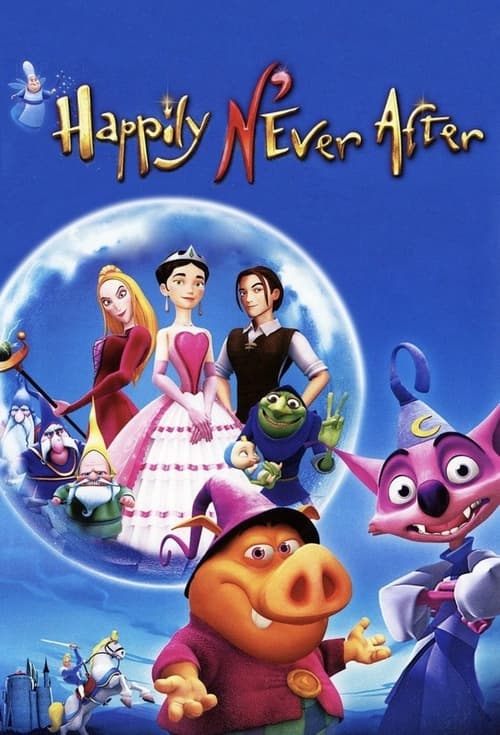
Happily N'Ever After
An alliance of evil-doers, led by Frieda, looks to take over Fairy Tale Land. But when Ella realizes her stepmother is out to ruin her storybook existence, she takes a dramatic turn and blossoms into the leader of the resistance effort.
The film underperformed commercially against its mid-range budget of $47.0M, earning $38.1M globally (-19% loss).


Plot Structure
Story beats plotted across runtime


Narrative Arc
Emotional journey through the story's key moments
Story Circle
Blueprint 15-beat structure
Arcplot Score Breakdown
Weighted: Precision (70%) + Arc (15%) + Theme (15%)
Happily N'Ever After (2007) demonstrates carefully calibrated narrative architecture, characteristic of Paul Bolger's storytelling approach. This structural analysis examines how the film's 11-point plot structure maps to proven narrative frameworks across 1 hour and 27 minutes. With an Arcplot score of 6.8, the film balances conventional beats with creative variation.
Structural Analysis
The Status Quo at 1 minutes (1% through the runtime) establishes Ella works as a servant in her stepmother's mansion in Fairytale Kingdom, where the Wizard controls the balance between good and evil. She dreams of better things but accepts her station while Rick the dishwasher pines for her.. Significantly, this early placement immediately immerses viewers in the story world.
The inciting incident occurs at 10 minutes when The Wizard leaves for vacation in Scotland, leaving the bumbling assistants Mambo and Munk in charge of the scales. Frieda discovers the control room and tips the scales toward evil, disrupting the natural order of fairy tales.. At 11% through the film, this Disruption aligns precisely with traditional story structure. This beat shifts the emotional landscape, launching the protagonist into the central conflict.
At 42 minutes, the Midpoint arrives at 49% of the runtime—precisely centered, creating perfect narrative symmetry. Structural examination shows that this crucial beat Frieda captures Ella and reveals her plan to eliminate all happy endings permanently. The stakes raise - it's not just about Ella's story anymore, but all of fairy tale land. What seemed like an adventure becomes a true threat., fundamentally raising what's at risk. The emotional intensity shifts, dividing the narrative into clear before-and-after phases.
The Collapse moment at 64 minutes (73% through) represents the emotional nadir. Here, Frieda captures Rick and sentences him to death. Ella hits rock bottom, believing she's lost everything - her chance at happiness, her friend, and hope for the kingdom. The "whiff of death" as Rick faces execution., demonstrates the protagonist at their lowest point. This beat's placement in the final quarter sets up the climactic reversal.
The Synthesis at 69 minutes initiates the final act resolution at 79% of the runtime. The final battle as Ella and allies confront Frieda. Ella saves Rick, the assistants restore the balance to the scales, and Frieda is defeated. The kingdom is restored but with a new understanding - characters can choose their own paths., demonstrating the transformation achieved throughout the journey.
Emotional Journey
Happily N'Ever After's emotional architecture traces a deliberate progression across 11 carefully calibrated beats.
Narrative Framework
This structural analysis employs structural analysis methodology used to understand storytelling architecture. By mapping Happily N'Ever After against these established plot points, we can identify how Paul Bolger utilizes or subverts traditional narrative conventions. The plot point approach reveals not only adherence to structural principles but also creative choices that distinguish Happily N'Ever After within the adventure genre.
Comparative Analysis
Additional adventure films include Harry Potter and the Philosopher's Stone, The Bad Guys and Zoom.
Plot Points by Act
Act I
SetupStatus Quo
Ella works as a servant in her stepmother's mansion in Fairytale Kingdom, where the Wizard controls the balance between good and evil. She dreams of better things but accepts her station while Rick the dishwasher pines for her.
Theme
Rick tells Ella, "You don't have to be a princess to live happily ever after - you just have to be yourself." The film's theme about self-determination versus destiny is established.
Worldbuilding
The Wizard and his assistants Mambo and Munk maintain the balance of fairy tales using magical scales. We see Ella's life of servitude, her cruel stepmother Frieda and stepsisters, Prince Charming's shallow nature, and Rick's unrequited feelings. The rules of this fairy tale world are established.
Disruption
The Wizard leaves for vacation in Scotland, leaving the bumbling assistants Mambo and Munk in charge of the scales. Frieda discovers the control room and tips the scales toward evil, disrupting the natural order of fairy tales.
Resistance
Frieda seizes control and begins rewriting fairy tales to favor villains. Ella is invited to the ball but Rick realizes something is wrong with the kingdom. Munk and Mambo debate whether to interfere. Ella still believes her fairy tale will work out with Prince Charming.
Act II
ConfrontationPremise
Ella and Rick journey through the corrupted fairy tale kingdom, encountering reversed stories where villains win. They gather allies including rebellious fairy tale characters. The fun premise of "fairy tales gone wrong" plays out as they navigate this topsy-turvy world.
Midpoint
Frieda captures Ella and reveals her plan to eliminate all happy endings permanently. The stakes raise - it's not just about Ella's story anymore, but all of fairy tale land. What seemed like an adventure becomes a true threat.
Opposition
Frieda's forces close in. Rick and the fairy tale rebels mount a resistance but face setbacks. Ella doubts whether she can truly change her fate. The wizard assistants fail repeatedly to fix the scales. Frieda grows more powerful.
Collapse
Frieda captures Rick and sentences him to death. Ella hits rock bottom, believing she's lost everything - her chance at happiness, her friend, and hope for the kingdom. The "whiff of death" as Rick faces execution.
Crisis
Ella processes her darkest moment and realizes what truly matters. She understands that she doesn't need to be rescued or follow a script - she has the power to write her own story and save those she loves.
Act III
ResolutionSynthesis
The final battle as Ella and allies confront Frieda. Ella saves Rick, the assistants restore the balance to the scales, and Frieda is defeated. The kingdom is restored but with a new understanding - characters can choose their own paths.