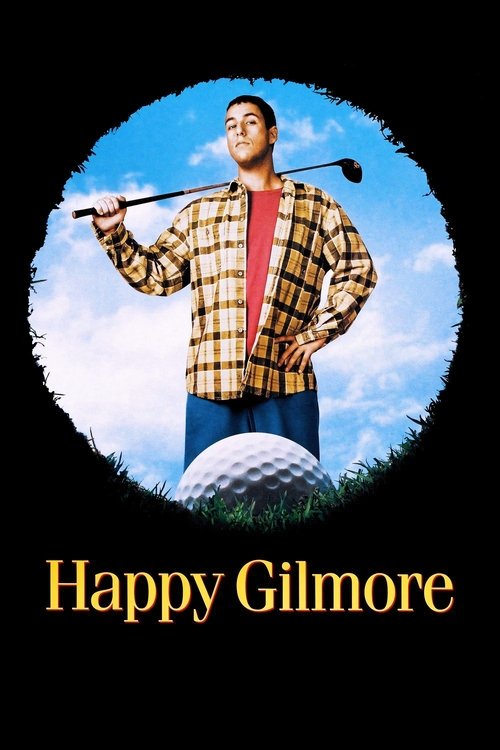
Happy Gilmore
Failed hockey player-turned-golf whiz Happy Gilmore — whose unconventional approach and antics on the green courts the ire of rival Shooter McGavin — is determined to win a PGA tournament so he can save his granny's house with the prize money. Meanwhile, an attractive tour publicist tries to soften Happy's image.
Despite its modest budget of $12.0M, Happy Gilmore became a commercial success, earning $41.4M worldwide—a 245% return. The film's compelling narrative attracted moviegoers, demonstrating that strong storytelling can transcend budget limitations.
1 win & 4 nominations


Plot Structure
Story beats plotted across runtime


Narrative Arc
Emotional journey through the story's key moments
Story Circle
Blueprint 15-beat structure
Arcplot Score Breakdown
Weighted: Precision (70%) + Arc (15%) + Theme (15%)
Happy Gilmore (1996) reveals carefully calibrated dramatic framework, characteristic of Dennis Dugan's storytelling approach. This structural analysis examines how the film's 15-point plot structure maps to proven narrative frameworks across 1 hour and 32 minutes. With an Arcplot score of 7.2, the film balances conventional beats with creative variation.
Characters
Cast & narrative archetypes

Happy Gilmore
Shooter McGavin
Virginia Venit
Chubbs Peterson
Grandma Gilmore
Main Cast & Characters
Happy Gilmore
Played by Adam Sandler
A hot-tempered failed hockey player who discovers a talent for golf and joins the pro tour to save his grandmother's house.
Shooter McGavin
Played by Christopher McDonald
The arrogant reigning golf champion who sees Happy as a threat to his dominance and endorsement deals.
Virginia Venit
Played by Julie Bowen
A public relations director for the PGA Tour who becomes Happy's love interest and helps him channel his anger.
Chubbs Peterson
Played by Carl Weathers
A former golf pro who lost his hand to an alligator and becomes Happy's mentor and spiritual guide.
Grandma Gilmore
Played by Frances Bay
Happy's beloved grandmother whose house is being repossessed by the IRS, motivating his golf career.
Structural Analysis
The Status Quo at 1 minutes (1% through the runtime) establishes Young Happy plays hockey with intense aggression, establishing his lifelong dream and violent tendencies. Sets up his world: hockey-obsessed, anger issues, living with grandmother.. Of particular interest, this early placement immediately immerses viewers in the story world.
The inciting incident occurs at 10 minutes when Grandmother's house is being repossessed by the IRS. Happy learns he has only a few weeks to raise $270,000 or she loses everything. The status quo collapses.. At 11% through the film, this Disruption aligns precisely with traditional story structure. This beat shifts the emotional landscape, launching the protagonist into the central conflict.
The First Threshold at 22 minutes marks the transition into Act II, occurring at 24% of the runtime. This reveals the protagonist's commitment to Happy decides to join the pro golf tour and signs with Chubbs as his coach. Active choice to enter the world of professional golf to save his grandmother's house., moving from reaction to action.
At 46 minutes, the Midpoint arrives at 50% of the runtime—precisely centered, creating perfect narrative symmetry. Of particular interest, this crucial beat Happy wins his first tournament and kisses Virginia. False victory: he's successful and finding love, but his anger issues remain unaddressed and Shooter is plotting against him. Stakes raise as Shooter becomes more threatened., fundamentally raising what's at risk. The emotional intensity shifts, dividing the narrative into clear before-and-after phases.
The Collapse moment at 65 minutes (71% through) represents the emotional nadir. Here, Chubbs Peterson falls to his death out a window. Happy loses his mentor and father figure. "Whiff of death" - literal death of the one person who believed in Happy and guided his transformation., indicates the protagonist at their lowest point. This beat's placement in the final quarter sets up the climactic reversal.
The Second Threshold at 72 minutes initiates the final act resolution at 78% of the runtime. Chubbs' ghost appears with inspiring wisdom. Abraham Lincoln also appears, telling Happy to win "for all of us." Happy synthesizes Chubbs' lessons about controlling his emotions with his natural talent. Finds peace and purpose beyond money., demonstrating the transformation achieved throughout the journey.
Emotional Journey
Happy Gilmore's emotional architecture traces a deliberate progression across 15 carefully calibrated beats.
Narrative Framework
This structural analysis employs proven narrative structure principles that track dramatic progression. By mapping Happy Gilmore against these established plot points, we can identify how Dennis Dugan utilizes or subverts traditional narrative conventions. The plot point approach reveals not only adherence to structural principles but also creative choices that distinguish Happy Gilmore within the comedy genre.
Dennis Dugan's Structural Approach
Among the 13 Dennis Dugan films analyzed on Arcplot, the average structural score is 7.3, reflecting strong command of classical structure. Happy Gilmore takes a more unconventional approach compared to the director's typical style. For comparative analysis, explore the complete Dennis Dugan filmography.
Comparative Analysis
Additional comedy films include The Bad Guys, Ella Enchanted and The Evening Star. For more Dennis Dugan analyses, see Jack and Jill, Grown Ups 2 and Grown Ups.
Plot Points by Act
Act I
SetupStatus Quo
Young Happy plays hockey with intense aggression, establishing his lifelong dream and violent tendencies. Sets up his world: hockey-obsessed, anger issues, living with grandmother.
Theme
Chubbs Peterson tells Happy, "It's all in the hips," suggesting that success comes from unconventional sources and controlling one's power. Theme: Finding your calling in unexpected places.
Worldbuilding
Adult Happy works odd jobs, gets kicked out of hockey tryouts for fighting. Grandmother loses house to IRS. Happy discovers freakish golf drive ability while helping movers. Establishes his rage, failure, and desperate financial situation.
Disruption
Grandmother's house is being repossessed by the IRS. Happy learns he has only a few weeks to raise $270,000 or she loses everything. The status quo collapses.
Resistance
Happy enters amateur golf tournament to win money. Wins $40,000 by hustling bets with his massive drives. Meets Chubbs who becomes his mentor. Debates whether to pursue professional golf despite hating the sport and its culture.
Act II
ConfrontationFirst Threshold
Happy decides to join the pro golf tour and signs with Chubbs as his coach. Active choice to enter the world of professional golf to save his grandmother's house.
Mirror World
Happy meets Virginia Venit, the tour publicist, who represents everything refined and controlled that Happy is not. She embodies the emotional maturity and self-control he needs to develop.
Premise
Happy brings his hockey mentality to golf, attracting huge crowds and media attention. Battles with Shooter McGavin, learns golf basics from Chubbs, has outbursts with hecklers. The fun of watching an angry hockey player disrupt genteel golf.
Midpoint
Happy wins his first tournament and kisses Virginia. False victory: he's successful and finding love, but his anger issues remain unaddressed and Shooter is plotting against him. Stakes raise as Shooter becomes more threatened.
Opposition
Shooter McGavin buys grandmother's house to psychologically torture Happy. Happy's anger intensifies, leading to public meltdowns. His relationship with Virginia suffers. The tour threatens to ban him. Everything tightens as his flaws catch up with him.
Collapse
Chubbs Peterson falls to his death out a window. Happy loses his mentor and father figure. "Whiff of death" - literal death of the one person who believed in Happy and guided his transformation.
Crisis
Happy spirals into grief and rage. Attacks Shooter's car with his putter. Gets suspended from the tour. Loses Virginia's support. Sits in darkness processing the loss of Chubbs and his dream.
Act III
ResolutionSecond Threshold
Chubbs' ghost appears with inspiring wisdom. Abraham Lincoln also appears, telling Happy to win "for all of us." Happy synthesizes Chubbs' lessons about controlling his emotions with his natural talent. Finds peace and purpose beyond money.
Synthesis
Final tournament at Tour Championship. Happy plays with newfound emotional control while Shooter cheats and schemes. Happy overcomes adversity, wins back Virginia, makes the final putt to defeat Shooter and win enough to reclaim grandmother's house.
Transformation
Happy achieves his "happy place" - ice skating with Virginia at a rink sponsored by his success. Image mirrors opening hockey dreams but shows transformation: he's found peace, love, and a new calling. The angry loner is now connected and at peace.