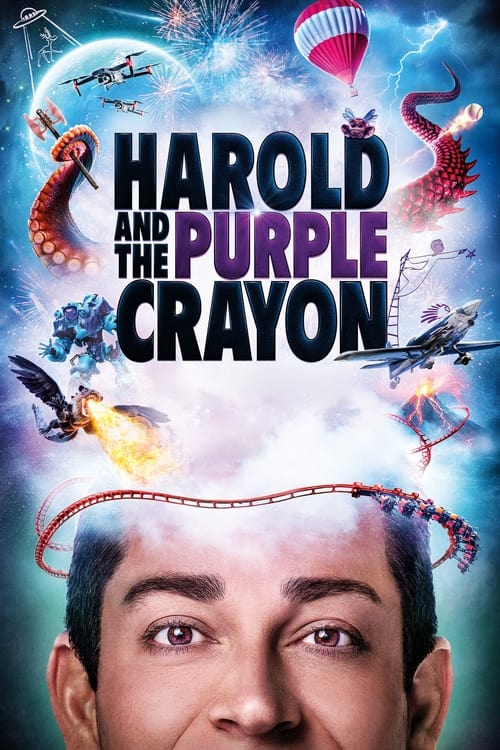
Harold and the Purple Crayon
Inside of his book, adventurous Harold can make anything come to life simply by drawing it. After he grows up and draws himself off the book's pages and into the physical world, Harold finds he has a lot to learn about real life.
The film disappointed at the box office against its moderate budget of $40.0M, earning $32.2M globally (-19% loss).


Plot Structure
Story beats plotted across runtime


Narrative Arc
Emotional journey through the story's key moments
Story Circle
Blueprint 15-beat structure
Structural Analysis
The Status Quo at 1 minutes (1% through the runtime) establishes Harold exists happily in his animated purple world with his friends Moose and Porcupine, creating whatever he needs with his magical purple crayon in a simple, innocent existence.. Structural examination shows that this early placement immediately immerses viewers in the story world.
The inciting incident occurs at 11 minutes when Harold uses his purple crayon to draw a portal and steps through it with Moose and Porcupine, leaving their animated world and emerging into the real world for the first time.. At 12% through the film, this Disruption aligns precisely with traditional story structure. This beat shifts the emotional landscape, launching the protagonist into the central conflict.
The First Threshold at 23 minutes marks the transition into Act II, occurring at 25% of the runtime. This shows the protagonist's commitment to Harold decides to stay in the real world to find "The Old Man" - the narrator/creator he believes can answer his questions about life's purpose. He commits to exploring this new reality rather than returning home., moving from reaction to action.
At 45 minutes, the Midpoint arrives at 50% of the runtime—precisely centered, creating perfect narrative symmetry. Notably, this crucial beat Harold seems to have found his place in the real world, integrating into Terry's family and community. He believes he's found what he was looking for - a false victory as the antagonist Gary begins his scheme to steal the crayon., fundamentally raising what's at risk. The emotional intensity shifts, dividing the narrative into clear before-and-after phases.
The Collapse moment at 68 minutes (75% through) represents the emotional nadir. Here, Gary steals the purple crayon and uses it for selfish purposes, causing destruction. Harold loses his magical tool and feels he has failed everyone - his friends, Terry's family, and the real world he's come to love., reveals the protagonist at their lowest point. This beat's placement in the final quarter sets up the climactic reversal.
The Second Threshold at 72 minutes initiates the final act resolution at 80% of the runtime. Harold realizes that the magic was never just in the crayon - it's in imagination itself and the connections he's made. With help from Terry's family and his friends, he finds a way to confront Gary and restore balance., demonstrating the transformation achieved throughout the journey.
Emotional Journey
Harold and the Purple Crayon's emotional architecture traces a deliberate progression across 15 carefully calibrated beats.
Narrative Framework
This structural analysis employs proven narrative structure principles that track dramatic progression. By mapping Harold and the Purple Crayon against these established plot points, we can identify how Carlos Saldanha utilizes or subverts traditional narrative conventions. The plot point approach reveals not only adherence to structural principles but also creative choices that distinguish Harold and the Purple Crayon within the animation genre.
Carlos Saldanha's Structural Approach
Among the 6 Carlos Saldanha films analyzed on Arcplot, the average structural score is 7.2, reflecting strong command of classical structure. Harold and the Purple Crayon exemplifies the director's characteristic narrative technique. For comparative analysis, explore the complete Carlos Saldanha filmography.
Comparative Analysis
Additional animation films include The Bad Guys, Puss in Boots and Violet Evergarden: Eternity and the Auto Memory Doll. For more Carlos Saldanha analyses, see Rio 2, Ice Age: The Meltdown and Rio.
Plot Points by Act
Act I
SetupStatus Quo
Harold exists happily in his animated purple world with his friends Moose and Porcupine, creating whatever he needs with his magical purple crayon in a simple, innocent existence.
Theme
The Old Man narrates that Harold has always wondered what lies beyond his purple world, suggesting that true fulfillment comes from discovering where you truly belong.
Worldbuilding
We see Harold's life in his animated world with Moose and Porcupine, establishing the rules of his purple crayon magic and his growing curiosity about what exists beyond the blank pages of his reality.
Disruption
Harold uses his purple crayon to draw a portal and steps through it with Moose and Porcupine, leaving their animated world and emerging into the real world for the first time.
Resistance
Harold and his friends experience culture shock in the real world, struggling to understand how things work without being able to simply draw solutions. They encounter Terry and his son Mel, who become bewildered witnesses to Harold's magical abilities.
Act II
ConfrontationFirst Threshold
Harold decides to stay in the real world to find "The Old Man" - the narrator/creator he believes can answer his questions about life's purpose. He commits to exploring this new reality rather than returning home.
Mirror World
Harold forms a deeper connection with Terry's family, particularly bonding with young Mel. Terry's wife and family become Harold's surrogate family, teaching him about real human relationships and responsibilities.
Premise
Harold uses his purple crayon to solve problems and help people in the real world, creating wondrous things and experiencing the joy of human connection. He explores jobs, relationships, and the pleasures of a world he didn't create.
Midpoint
Harold seems to have found his place in the real world, integrating into Terry's family and community. He believes he's found what he was looking for - a false victory as the antagonist Gary begins his scheme to steal the crayon.
Opposition
Gary, a greedy library administrator who has discovered the crayon's power, manipulates events to obtain it for himself. His machinations create chaos and begin to turn people against Harold, whose innocent use of the crayon causes unintended consequences.
Collapse
Gary steals the purple crayon and uses it for selfish purposes, causing destruction. Harold loses his magical tool and feels he has failed everyone - his friends, Terry's family, and the real world he's come to love.
Crisis
Harold faces his darkest moment without his crayon. He questions whether he belongs anywhere - not in his purple world, and seemingly not in the real world either. Gary's misuse of the crayon threatens both realities.
Act III
ResolutionSecond Threshold
Harold realizes that the magic was never just in the crayon - it's in imagination itself and the connections he's made. With help from Terry's family and his friends, he finds a way to confront Gary and restore balance.
Synthesis
Harold reclaims the crayon and uses it to undo Gary's damage. He defeats the villain not through combat but through creative problem-solving and the power of friendship, fixing the chaos Gary created and saving both worlds.
Transformation
Harold, now understanding his true purpose, chooses to remain connected to both worlds. He's transformed from a curious innocent into someone who knows that home isn't a place you draw - it's the people you love. The purple crayon glows as he draws a new beginning.