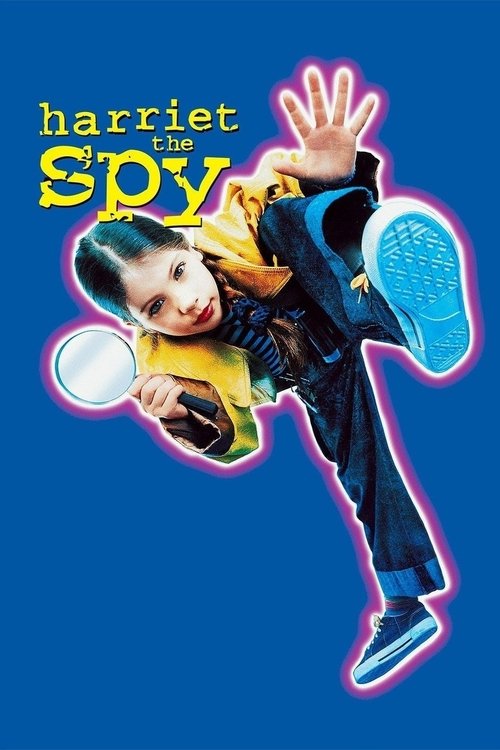
Harriet the Spy
When the secret notebook of a young girl who fancies herself a spy is found by her friends, her speculations make her very unpopular! Can she win her friends back?
Despite its modest budget of $12.0M, Harriet the Spy became a box office success, earning $26.6M worldwide—a 122% return.


Plot Structure
Story beats plotted across runtime


Narrative Arc
Emotional journey through the story's key moments
Story Circle
Blueprint 15-beat structure
Arcplot Score Breakdown
Weighted: Precision (70%) + Arc (15%) + Theme (15%)
Harriet the Spy (1996) exemplifies meticulously timed dramatic framework, characteristic of Bronwen Hughes's storytelling approach. This structural analysis examines how the film's 15-point plot structure maps to proven narrative frameworks across 1 hour and 41 minutes. With an Arcplot score of 7.8, the film showcases strong structural fundamentals.
Characters
Cast & narrative archetypes

Harriet M. Welsch
Ole Golly
Sport Rocque
Janie Gibbs
Marion Hawthorne
Mr. Welsch
Mrs. Welsch
Main Cast & Characters
Harriet M. Welsch
Played by Michelle Trachtenberg
An 11-year-old aspiring writer who observes and documents everything about her classmates and neighbors in a secret notebook.
Ole Golly
Played by Rosie O'Donnell
Harriet's beloved nanny and mentor who encourages her writing and teaches her life lessons about truth and consequences.
Sport Rocque
Played by Gregory Smith
Harriet's loyal best friend, a gentle boy who dreams of being a ball player and helps care for his writer father.
Janie Gibbs
Played by Vanessa Lee Chester
Harriet's eccentric best friend who loves science experiments and dreams of being a scientist.
Marion Hawthorne
Played by Charlotte Sullivan
The popular, manipulative class leader who becomes Harriet's main antagonist after the notebook is discovered.
Mr. Welsch
Played by Robert Joy
Harriet's well-meaning but emotionally distant father who works long hours and struggles to connect with his daughter.
Mrs. Welsch
Played by Jennifer Bassey
Harriet's conventional, socialite mother who is more concerned with appearances than understanding her daughter.
Structural Analysis
The Status Quo at 1 minutes (1% through the runtime) establishes Harriet M. Welsch writes in her spy notebook while observing her neighbors through binoculars from her New York brownstone window, living her dream life as a writer and observer.. Significantly, this early placement immediately immerses viewers in the story world.
The inciting incident occurs at 12 minutes when Ole Golly announces she's leaving to get married. Harriet loses her mentor, the one person who understood and encouraged her writing.. At 12% through the film, this Disruption aligns precisely with traditional story structure. This beat shifts the emotional landscape, launching the protagonist into the central conflict.
The First Threshold at 26 minutes marks the transition into Act II, occurring at 26% of the runtime. This indicates the protagonist's commitment to Harriet's private notebook is stolen by Marion Hawthorne during a game of tag. Her classmates discover and read aloud her cruel, honest observations about everyone., moving from reaction to action.
At 51 minutes, the Midpoint arrives at 51% of the runtime—precisely centered, creating perfect narrative symmetry. The analysis reveals that this crucial beat Harriet's parents confiscate her notebook after the school complains. She loses her voice, her identity, and her one outlet for expression., fundamentally raising what's at risk. The emotional intensity shifts, dividing the narrative into clear before-and-after phases.
The Collapse moment at 75 minutes (74% through) represents the emotional nadir. Here, Harriet hits rock bottom during a confrontation at school. She has lost everything: her friends, her notebook, her identity as a writer, and her sense of self., shows the protagonist at their lowest point. This beat's placement in the final quarter sets up the climactic reversal.
The Second Threshold at 80 minutes initiates the final act resolution at 79% of the runtime. Harriet realizes she must combine honesty with compassion. Ole Golly's letter gives her the wisdom to see that truth and kindness aren't mutually exclusive—she can be a writer AND a friend., demonstrating the transformation achieved throughout the journey.
Emotional Journey
Harriet the Spy's emotional architecture traces a deliberate progression across 15 carefully calibrated beats.
Narrative Framework
This structural analysis employs a 15-point narrative structure framework that maps key story moments. By mapping Harriet the Spy against these established plot points, we can identify how Bronwen Hughes utilizes or subverts traditional narrative conventions. The plot point approach reveals not only adherence to structural principles but also creative choices that distinguish Harriet the Spy within the comedy genre.
Bronwen Hughes's Structural Approach
Among the 2 Bronwen Hughes films analyzed on Arcplot, the average structural score is 7.5, reflecting strong command of classical structure. Harriet the Spy represents one of the director's most structurally precise works. For comparative analysis, explore the complete Bronwen Hughes filmography.
Comparative Analysis
Additional comedy films include The Bad Guys, Ella Enchanted and The Evening Star. For more Bronwen Hughes analyses, see Forces of Nature.
Plot Points by Act
Act I
SetupStatus Quo
Harriet M. Welsch writes in her spy notebook while observing her neighbors through binoculars from her New York brownstone window, living her dream life as a writer and observer.
Theme
Ole Golly, Harriet's nanny, tells her: "You have to lie sometimes, but to yourself you must always tell the truth." This establishes the central tension between honesty and deception.
Worldbuilding
Harriet's routine: spy route after school with friends Sport and Janie, writing brutal honest observations about everyone, her close relationship with Ole Golly, and her distant parents.
Disruption
Ole Golly announces she's leaving to get married. Harriet loses her mentor, the one person who understood and encouraged her writing.
Resistance
Harriet struggles with Ole Golly's departure, becomes more obsessive about her notebook, and continues her spy route while dealing with feelings of abandonment.
Act II
ConfrontationFirst Threshold
Harriet's private notebook is stolen by Marion Hawthorne during a game of tag. Her classmates discover and read aloud her cruel, honest observations about everyone.
Mirror World
Sport and Janie, her two best friends, confront Harriet about the horrible things she wrote about them. They represent the authentic friendship she needs versus her detached observer role.
Premise
Harriet is ostracized by the entire class. The "Spy Catcher Club" forms to torment her. She tries various failed revenge tactics, becoming more isolated and bitter.
Midpoint
Harriet's parents confiscate her notebook after the school complains. She loses her voice, her identity, and her one outlet for expression.
Opposition
Without her notebook, Harriet spirals. She stops caring for herself, withdraws completely, and her parents force her to see a psychologist. The bullying intensifies.
Collapse
Harriet hits rock bottom during a confrontation at school. She has lost everything: her friends, her notebook, her identity as a writer, and her sense of self.
Crisis
Harriet sits alone in complete isolation. She receives a letter from Ole Golly reminding her that apologizing is part of growing up and that sometimes you have to lie to be kind.
Act III
ResolutionSecond Threshold
Harriet realizes she must combine honesty with compassion. Ole Golly's letter gives her the wisdom to see that truth and kindness aren't mutually exclusive—she can be a writer AND a friend.
Synthesis
Harriet becomes editor of the school paper and writes honest but compassionate apology articles to each person she hurt. She makes amends, rebuilds friendships, and finds her authentic voice.
Transformation
Harriet writes in her notebook on the roof with Sport and Janie beside her, friends again. She's still a writer and observer, but now with empathy and connection instead of cold detachment.