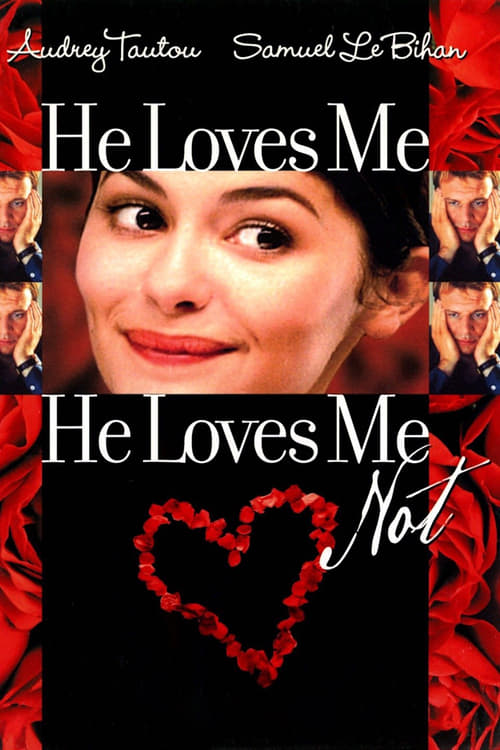
He Loves Me… He Loves Me Not
A talented art student named Angélique is passionately in love with Dr. Loïc Le Garrec, a handsome married man whom she believes will leave his wife. When he eventually decides to stay in his marriage, it causes Angélique to spiral. However, as the story shifts from Angélique's perspective to Loïc's, the surprising truth about their relationship is revealed.
The film earned $5.1M at the global box office.


Plot Structure
Story beats plotted across runtime


Narrative Arc
Emotional journey through the story's key moments
Story Circle
Blueprint 15-beat structure
Arcplot Score Breakdown
Weighted: Precision (70%) + Arc (15%) + Theme (15%)
He Loves Me… He Loves Me Not (2002) demonstrates strategically placed narrative design, characteristic of Laetitia Colombani's storytelling approach. This structural analysis examines how the film's 15-point plot structure maps to proven narrative frameworks across 1 hour and 32 minutes. With an Arcplot score of 7.0, the film balances conventional beats with creative variation.
Characters
Cast & narrative archetypes

Angélique
Dr. Loïc Le Garrec
Rachel
Héloïse
Main Cast & Characters
Angélique
Played by Audrey Tautou
A young art student whose obsessive love for a married cardiologist spirals into dangerous delusion and violence.
Dr. Loïc Le Garrec
Played by Samuel Le Bihan
A married cardiologist who becomes the unwitting object of Angélique's obsessive affection.
Rachel
Played by Isabelle Carré
Loïc's pregnant wife who becomes endangered by Angélique's escalating obsession.
Héloïse
Played by Sophie Guillemin
Angélique's friend and roommate who tries to support her through what she believes is a real relationship.
Structural Analysis
The Status Quo at 1 minutes (1% through the runtime) establishes Angélique in her art studio, surrounded by sculptures and paintings of her beloved Loïc, living in her romanticized world of what she believes is a passionate love affair.. Structural examination shows that this early placement immediately immerses viewers in the story world.
The inciting incident occurs at 11 minutes when Loïc appears distant or fails to show up for a planned meeting, creating the first crack in Angélique's perfect romantic fantasy and forcing her to take action to maintain the relationship.. At 11% through the film, this Disruption aligns precisely with traditional story structure. This beat shifts the emotional landscape, launching the protagonist into the central conflict.
The First Threshold at 22 minutes marks the transition into Act II, occurring at 24% of the runtime. This illustrates the protagonist's commitment to Angélique makes an active choice to pursue Loïc more aggressively - possibly escalating her stalking behavior (though presented as romantic pursuit in her perspective), crossing into dangerous territory., moving from reaction to action.
At 44 minutes, the Midpoint arrives at 48% of the runtime—precisely centered, creating perfect narrative symmetry. Of particular interest, this crucial beat A major event from Angélique's perspective: either Loïc's wife discovers the affair, or Loïc becomes seriously ill/endangered - raising stakes and shifting the tone from romance to thriller. This is a false defeat that will be recontextualized in Part 2., fundamentally raising what's at risk. The emotional intensity shifts, dividing the narrative into clear before-and-after phases.
The Collapse moment at 67 minutes (72% through) represents the emotional nadir. Here, The narrative RESETS - the film returns to the beginning and we see the truth: Angélique is a delusional stalker, Loïc barely knows her, and everything we witnessed was her dangerous fantasy. The "death" of the romantic narrative we believed., demonstrates the protagonist at their lowest point. This beat's placement in the final quarter sets up the climactic reversal.
The Second Threshold at 72 minutes initiates the final act resolution at 78% of the runtime. Loïc (now the true protagonist) and/or authorities realize the full extent of Angélique's dangerous delusion and decide they must stop her before someone gets hurt. The final confrontation becomes inevitable., demonstrating the transformation achieved throughout the journey.
Emotional Journey
He Loves Me… He Loves Me Not's emotional architecture traces a deliberate progression across 15 carefully calibrated beats.
Narrative Framework
This structural analysis employs structural analysis methodology used to understand storytelling architecture. By mapping He Loves Me… He Loves Me Not against these established plot points, we can identify how Laetitia Colombani utilizes or subverts traditional narrative conventions. The plot point approach reveals not only adherence to structural principles but also creative choices that distinguish He Loves Me… He Loves Me Not within the drama genre.
Comparative Analysis
Additional drama films include After Thomas, South Pacific and Dirty Dancing: Havana Nights.
Plot Points by Act
Act I
SetupStatus Quo
Angélique in her art studio, surrounded by sculptures and paintings of her beloved Loïc, living in her romanticized world of what she believes is a passionate love affair.
Theme
Angélique's friend or colleague makes a comment about perception versus reality, or about obsessive love - foreshadowing the film's exploration of delusion and the danger of unrequited obsession.
Worldbuilding
Establishment of Angélique's world through her perspective: her art, her supposed relationship with Loïc (a married cardiologist), their secret meetings, her friend Héloïse, and the romantic narrative she has constructed around their affair.
Disruption
Loïc appears distant or fails to show up for a planned meeting, creating the first crack in Angélique's perfect romantic fantasy and forcing her to take action to maintain the relationship.
Resistance
Angélique debates how to win back Loïc's attention, seeks advice from friends, and wrestles with her growing anxiety about losing him, while the audience still believes her version of events.
Act II
ConfrontationFirst Threshold
Angélique makes an active choice to pursue Loïc more aggressively - possibly escalating her stalking behavior (though presented as romantic pursuit in her perspective), crossing into dangerous territory.
Mirror World
Introduction or deepening of the relationship with Héloïse or another character who represents normalcy and genuine connection, contrasting with Angélique's delusional relationship.
Premise
The "promise of the premise" - watching Angélique navigate what appears to be a passionate, forbidden romance, complete with secret meetings, gifts, and romantic gestures, all filtered through her delusional perspective.
Midpoint
A major event from Angélique's perspective: either Loïc's wife discovers the affair, or Loïc becomes seriously ill/endangered - raising stakes and shifting the tone from romance to thriller. This is a false defeat that will be recontextualized in Part 2.
Opposition
Forces close in on Angélique - Loïc's wife becomes an obstacle, suspicions arise, or Loïc's condition worsens. Angélique's actions become more desperate as she fights to preserve her fantasy.
Collapse
The narrative RESETS - the film returns to the beginning and we see the truth: Angélique is a delusional stalker, Loïc barely knows her, and everything we witnessed was her dangerous fantasy. The "death" of the romantic narrative we believed.
Crisis
The dark truth unfolds: Angélique's harassment of Loïc and his family, her criminal actions, the real danger she poses. The audience processes the complete recontextualization of everything seen before.
Act III
ResolutionSecond Threshold
Loïc (now the true protagonist) and/or authorities realize the full extent of Angélique's dangerous delusion and decide they must stop her before someone gets hurt. The final confrontation becomes inevitable.
Synthesis
The finale: authorities close in on Angélique, the full extent of her crimes is revealed, and the confrontation occurs. Angélique faces consequences for her delusion-driven actions.
Transformation
Final image of Angélique in custody or psychiatric care, still lost in her delusion, or alternatively, a mirror of the opening shot now seen through the lens of truth - the beautiful artist revealed as a dangerous, delusional stalker. A corruption arc completed.