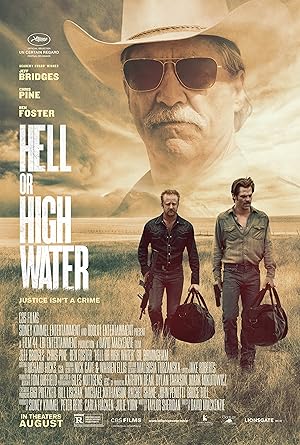
Hell or High Water
In Texas, after the death of his mother, the unemployed oil and gas worker Toby Howard is losing his ranch to the Texas Midlands Bank. Toby is divorced from his wife who lives with their two sons. When his brother Tanner Howard is released from the prison, they team up to rob agencies of the Texas Midlands Bank to raise money to pay the loan so that Toby may leave the real estate to his sons. Meanwhile the Texas Ranger Marcus Hamilton who is near retirement and his Native American-descendant partner Alberto Parker try to anticipate the next move of the thieves.
Despite its tight budget of $12.0M, Hell or High Water became a solid performer, earning $37.6M worldwide—a 213% return. The film's unconventional structure found its audience, showing that strong storytelling can transcend budget limitations.
Nominated for 4 Oscars. 47 wins & 174 nominations


Plot Structure
Story beats plotted across runtime


Narrative Arc
Emotional journey through the story's key moments
Story Circle
Blueprint 15-beat structure
Arcplot Score Breakdown
Weighted: Precision (70%) + Arc (15%) + Theme (15%)
Hell or High Water (2016) exemplifies precise dramatic framework, characteristic of David Mackenzie's storytelling approach. This structural analysis examines how the film's 15-point plot structure maps to proven narrative frameworks across 1 hour and 42 minutes. With an Arcplot score of 7.1, the film balances conventional beats with creative variation.
Characters
Cast & narrative archetypes

Toby Howard
Tanner Howard
Marcus Hamilton
Alberto Parker
Main Cast & Characters
Toby Howard
Played by Chris Pine
A divorced father and struggling rancher who robs banks to save his family's land from foreclosure.
Tanner Howard
Played by Ben Foster
Toby's volatile ex-con older brother who joins him in the bank robberies with dangerous recklessness.
Marcus Hamilton
Played by Jeff Bridges
A soon-to-be-retired Texas Ranger determined to catch the bank robbers in his final case.
Alberto Parker
Played by Gil Birmingham
Marcus's half-Mexican, half-Native American partner who endures his partner's casual racism with patience.
Structural Analysis
The Status Quo at 1 minutes (1% through the runtime) establishes Dawn breaks over a desolate West Texas town. Graffiti reads "3 tours in Iraq but no bailout for people like us." The Howard brothers pull up to a Texas Midlands Bank, ski masks ready, establishing their desperate criminality before we understand their cause.. Notably, this early placement immediately immerses viewers in the story world.
The inciting incident occurs at 13 minutes when Texas Ranger Marcus Hamilton, weeks from retirement, is assigned the bank robbery case with his partner Alberto. The hunt begins. Marcus immediately recognizes these aren't ordinary criminals—there's a pattern, a purpose behind the robberies.. At 12% through the film, this Disruption aligns precisely with traditional story structure. This beat shifts the emotional landscape, launching the protagonist into the central conflict.
The First Threshold at 26 minutes marks the transition into Act II, occurring at 26% of the runtime. This illustrates the protagonist's commitment to Toby commits fully to the plan after laundering their stolen cash at an Indian casino. He's crossed the point of no return—the money is now untraceable and earmarked for the bank payoff. There's no going back to his old life as a divorced father scraping by., moving from reaction to action.
At 52 minutes, the Midpoint arrives at 51% of the runtime—precisely centered, creating perfect narrative symmetry. Notably, this crucial beat The brothers successfully make a large casino payout, converting their stolen small bills into a legitimate cashier's check. They have enough to pay off the bank. False victory: Toby believes they're done, but Tanner has already planned one final, bigger score without telling him., fundamentally raising what's at risk. The emotional intensity shifts, dividing the narrative into clear before-and-after phases.
The Collapse moment at 77 minutes (75% through) represents the emotional nadir. Here, Alberto is shot and killed during the pursuit. Marcus cradles his dying partner—the man he'd teased mercilessly but loved deeply. Tanner has murdered a Texas Ranger. There is no walking away now. The whiff of death becomes a scream as the price of the brothers' plan is written in blood., indicates the protagonist at their lowest point. This beat's placement in the final quarter sets up the climactic reversal.
The Second Threshold at 82 minutes initiates the final act resolution at 80% of the runtime. Tanner makes his last stand on a ridge, pinning down pursuers while Toby escapes. He calls Toby one final time: "Go home. Don't look back." Tanner has chosen to sacrifice himself so his brother's sons can have the future they never did. The synthesis of love and violence is complete., demonstrating the transformation achieved throughout the journey.
Emotional Journey
Hell or High Water's emotional architecture traces a deliberate progression across 15 carefully calibrated beats.
Narrative Framework
This structural analysis employs a 15-point narrative structure framework that maps key story moments. By mapping Hell or High Water against these established plot points, we can identify how David Mackenzie utilizes or subverts traditional narrative conventions. The plot point approach reveals not only adherence to structural principles but also creative choices that distinguish Hell or High Water within the crime genre.
David Mackenzie's Structural Approach
Among the 2 David Mackenzie films analyzed on Arcplot, the average structural score is 7.1, reflecting strong command of classical structure. Hell or High Water exemplifies the director's characteristic narrative technique. For comparative analysis, explore the complete David Mackenzie filmography.
Comparative Analysis
Additional crime films include The Bad Guys, Rustom and The Whole Ten Yards. For more David Mackenzie analyses, see Spread.
Plot Points by Act
Act I
SetupStatus Quo
Dawn breaks over a desolate West Texas town. Graffiti reads "3 tours in Iraq but no bailout for people like us." The Howard brothers pull up to a Texas Midlands Bank, ski masks ready, establishing their desperate criminality before we understand their cause.
Theme
At a diner, a waitress tells Toby about the foreclosed farms surrounding them: "Folks around here, been so poor for so long, they don't even know it's happening to them." The theme of generational poverty as an inescapable disease is stated plainly.
Worldbuilding
We learn the brothers' backstory: their mother just died, the ranch is being foreclosed by Texas Midlands Bank, and Toby has a plan to rob the bank's branches to pay off the reverse mortgage with their own money. Tanner is the volatile ex-con; Toby is the calculated one with sons to provide for.
Disruption
Texas Ranger Marcus Hamilton, weeks from retirement, is assigned the bank robbery case with his partner Alberto. The hunt begins. Marcus immediately recognizes these aren't ordinary criminals—there's a pattern, a purpose behind the robberies.
Resistance
Marcus and Alberto investigate while the brothers continue their methodical heists. The parallel structure emerges: two pairs of partners, each with their own code. Toby wrestles with guilt while Tanner embraces the outlaw life. Marcus debates the morality of banks that "have been robbing people for years."
Act II
ConfrontationFirst Threshold
Toby commits fully to the plan after laundering their stolen cash at an Indian casino. He's crossed the point of no return—the money is now untraceable and earmarked for the bank payoff. There's no going back to his old life as a divorced father scraping by.
Mirror World
Marcus and Alberto stake out another Texas Midlands branch, trading barbs about Alberto's Comanche and Mexican heritage. Their partnership reveals the film's deeper meditation on legacy, dignity, and how men face the end of their usefulness. Marcus mirrors Toby—both fighting obsolescence.
Premise
The cat-and-mouse game plays out across the Texas landscape. The brothers rob banks with surgical precision. Marcus tracks them with instinctive brilliance. Toby visits his estranged sons, revealing his motivation: breaking the cycle of poverty. The "fun" is the tension of whether they'll pull it off.
Midpoint
The brothers successfully make a large casino payout, converting their stolen small bills into a legitimate cashier's check. They have enough to pay off the bank. False victory: Toby believes they're done, but Tanner has already planned one final, bigger score without telling him.
Opposition
Tanner insists on hitting a larger branch in Post, Texas. Marcus closes in, correctly predicting their next target. The robbery goes catastrophically wrong when armed citizens open fire. Tanner kills several people defending his brother. The game has turned deadly, and Alberto pieces together the brothers' identity.
Collapse
Alberto is shot and killed during the pursuit. Marcus cradles his dying partner—the man he'd teased mercilessly but loved deeply. Tanner has murdered a Texas Ranger. There is no walking away now. The whiff of death becomes a scream as the price of the brothers' plan is written in blood.
Crisis
The brothers split up. Tanner takes the money to Toby and forces him to leave while he stays behind to draw the law. Marcus, consumed by grief and rage, pursues alone. Toby drives away with the blood money while his brother prepares to die.
Act III
ResolutionSecond Threshold
Tanner makes his last stand on a ridge, pinning down pursuers while Toby escapes. He calls Toby one final time: "Go home. Don't look back." Tanner has chosen to sacrifice himself so his brother's sons can have the future they never did. The synthesis of love and violence is complete.
Synthesis
Marcus kills Tanner in a sniper duel. Months later, Toby has paid off the ranch, placed it in a trust, and the oil money flows to his sons. Marcus, now retired and haunted, tracks Toby down. They share a tense porch conversation where both acknowledge the truth they can never prove.
Transformation
Marcus leaves, promising to return. Toby watches him go from the porch of the ranch he saved through robbery and blood. He's won, but he's lost his brother and any claim to moral high ground. The poverty cycle is broken, but at what cost? Both men are trapped in what they've become.