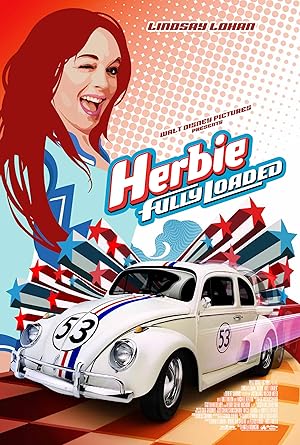
Herbie Fully Loaded
Maggie Peyton is the new owner of Number 53--the free wheelin' Volkswagen bug with a mind of its own; she puts the car through its paces on the road to becoming a NASCAR competitor. As a third generation member of a NASCAR family, racing is in Maggie Peyton's blood, but she is forbidden from pursuing her dream by her overprotective father, Ray Peyton, Sr. When Ray Sr. offers Maggie a car as a college graduation present, he takes her to a junkyard to choose one from an assortment of very used cars. Maggie has her eye on an old Nissan, but a certain rusty, banged up '63 VW Bug seems to be clamoring for her attention. To her surprise, Maggie leaves the lot with Herbie. As she prepares to leave town for a position with ESPN News, Maggie discovers that Herbie has a mind of his own--and an alternate route for her future.
Despite a respectable budget of $50.0M, Herbie Fully Loaded became a financial success, earning $144.1M worldwide—a 188% return.
2 wins & 6 nominations


Plot Structure
Story beats plotted across runtime


Narrative Arc
Emotional journey through the story's key moments
Story Circle
Blueprint 15-beat structure
Arcplot Score Breakdown
Weighted: Precision (70%) + Arc (15%) + Theme (15%)
Herbie Fully Loaded (2005) exemplifies precise story structure, characteristic of Angela Robinson's storytelling approach. This structural analysis examines how the film's 15-point plot structure maps to proven narrative frameworks across 1 hour and 41 minutes. With an Arcplot score of 6.5, the film balances conventional beats with creative variation.
Characters
Cast & narrative archetypes

Maggie Peyton
Herbie
Kevin
Trip Murphy
Ray Peyton Sr.
Ray Peyton Jr.
Main Cast & Characters
Maggie Peyton
Played by Lindsay Lohan
A recent college graduate passionate about racing who bonds with Herbie, seeking to prove herself in NASCAR despite her father's disapproval.
Herbie
A sentient 1963 Volkswagen Beetle race car with a mind of his own, seeking redemption and a return to racing glory.
Kevin
Played by Justin Long
Maggie's supportive best friend and mechanic who helps restore Herbie and believes in her racing dreams.
Trip Murphy
Played by Matt Dillon
An arrogant NASCAR champion and antagonist who becomes obsessed with defeating Herbie after being humiliated.
Ray Peyton Sr.
Played by Michael Keaton
Maggie's overprotective father and former racing legend who initially opposes her racing ambitions.
Ray Peyton Jr.
Played by Breckin Meyer
Maggie's brother, a struggling NASCAR driver living in his father's shadow.
Structural Analysis
The Status Quo at 1 minutes (1% through the runtime) establishes Maggie Peyton graduates college with honors, but her racing legacy father Ray Sr. Expects her to work at ESPN rather than pursue her dream of racing like her brother Ray Jr.. Structural examination shows that this early placement immediately immerses viewers in the story world.
The inciting incident occurs at 12 minutes when Maggie discovers Herbie at Crazy Dave's junkyard and feels an inexplicable connection. The sentient VW Bug chooses her, demonstrating magical abilities that disrupt her mundane expectations.. At 12% through the film, this Disruption aligns precisely with traditional story structure. This beat shifts the emotional landscape, launching the protagonist into the central conflict.
The First Threshold at 26 minutes marks the transition into Act II, occurring at 26% of the runtime. This reveals the protagonist's commitment to Maggie actively chooses to race Herbie after being challenged by arrogant NASCAR champion Trip Murphy. She commits to street racing and entering the racing world she was told to avoid., moving from reaction to action.
At 51 minutes, the Midpoint arrives at 51% of the runtime—precisely centered, creating perfect narrative symmetry. Structural examination shows that this crucial beat Maggie qualifies for the NASCAR Cup race, achieving a false victory. Her father discovers she's been racing and she seems to have won his approval, but the stakes are raised when Trip Murphy becomes threatened and dangerous., fundamentally raising what's at risk. The emotional intensity shifts, dividing the narrative into clear before-and-after phases.
The Collapse moment at 75 minutes (74% through) represents the emotional nadir. Here, Herbie, feeling abandoned and jealous, runs away and gets captured by Trip Murphy. Maggie loses her partner and magic element right before the big race. Her dream appears dead without Herbie., indicates the protagonist at their lowest point. This beat's placement in the final quarter sets up the climactic reversal.
The Second Threshold at 80 minutes initiates the final act resolution at 79% of the runtime. Maggie realizes she needs to rescue Herbie and race with true partnership, not dependence. She discovers Trip has Herbie and formulates a plan to save him and compete, combining her skills with belief in their bond., demonstrating the transformation achieved throughout the journey.
Emotional Journey
Herbie Fully Loaded's emotional architecture traces a deliberate progression across 15 carefully calibrated beats.
Narrative Framework
This structural analysis employs proven narrative structure principles that track dramatic progression. By mapping Herbie Fully Loaded against these established plot points, we can identify how Angela Robinson utilizes or subverts traditional narrative conventions. The plot point approach reveals not only adherence to structural principles but also creative choices that distinguish Herbie Fully Loaded within the adventure genre.
Comparative Analysis
Additional adventure films include The Black Stallion, The Bad Guys and Puss in Boots.
Plot Points by Act
Act I
SetupStatus Quo
Maggie Peyton graduates college with honors, but her racing legacy father Ray Sr. expects her to work at ESPN rather than pursue her dream of racing like her brother Ray Jr.
Theme
Ray Sr. tells Maggie she needs to "find her own path" and forget about racing, suggesting that believing in yourself means accepting your limitations - the false philosophy Maggie must overcome.
Worldbuilding
Establishment of the Peyton racing family, Maggie's suppressed racing ambitions, her graduation gift search leading to a junkyard, and the introduction of the NASCAR world through her brother Ray Jr.
Disruption
Maggie discovers Herbie at Crazy Dave's junkyard and feels an inexplicable connection. The sentient VW Bug chooses her, demonstrating magical abilities that disrupt her mundane expectations.
Resistance
Herbie reveals his racing capabilities through wild rides. Maggie debates whether to embrace racing with this magical car or follow her father's wishes. Kevin, a mechanic, helps her understand Herbie's history and potential.
Act II
ConfrontationFirst Threshold
Maggie actively chooses to race Herbie after being challenged by arrogant NASCAR champion Trip Murphy. She commits to street racing and entering the racing world she was told to avoid.
Mirror World
Maggie's relationship with Kevin deepens as he becomes her crew chief. Their partnership represents the thematic truth: believing in others and being believed in unlocks potential.
Premise
The fun of watching Herbie and Maggie dominate street races, qualify for NASCAR, and experience the joy of racing. Maggie discovers her natural talent while bonding with Herbie and developing feelings for Kevin.
Midpoint
Maggie qualifies for the NASCAR Cup race, achieving a false victory. Her father discovers she's been racing and she seems to have won his approval, but the stakes are raised when Trip Murphy becomes threatened and dangerous.
Opposition
Trip Murphy sabotages and threatens Maggie. Her father's old fears about racing surface. Herbie becomes jealous of Maggie's attention to other aspects of life. The pressure of NASCAR fame and competition intensifies while internal team conflicts grow.
Collapse
Herbie, feeling abandoned and jealous, runs away and gets captured by Trip Murphy. Maggie loses her partner and magic element right before the big race. Her dream appears dead without Herbie.
Crisis
Maggie contemplates giving up racing entirely. She processes that her worth as a racer isn't just about Herbie's magic - she has real talent. She must reconcile with both Herbie and her own self-belief.
Act III
ResolutionSecond Threshold
Maggie realizes she needs to rescue Herbie and race with true partnership, not dependence. She discovers Trip has Herbie and formulates a plan to save him and compete, combining her skills with belief in their bond.
Synthesis
The big NASCAR race where Maggie and Herbie work as true partners. She uses her racing intelligence and Herbie's heart to overcome Trip Murphy's cheating. Ray Sr. finally supports her fully, and she proves herself as a legitimate racer.
Transformation
Maggie celebrates victory with her family's full support, Kevin by her side, and Herbie as her partner. She has transformed from a suppressed dreamer into a confident racer who found her own path by believing in herself.