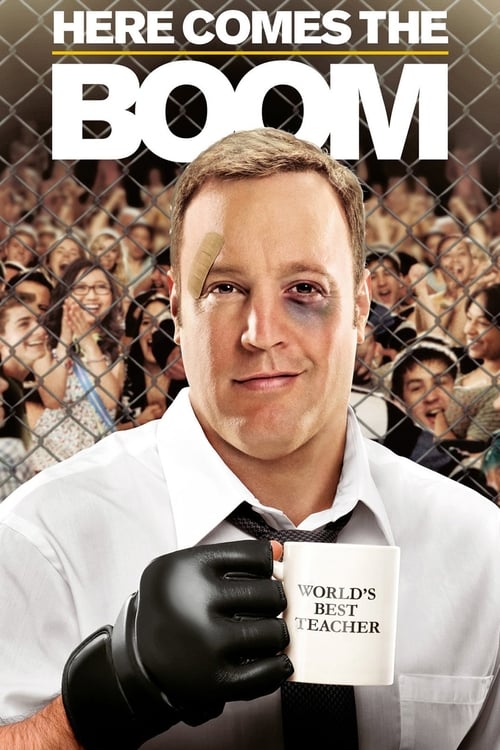
Here Comes the Boom
A high school biology teacher moonlights as a mixed-martial arts fighter in an effort to raise money to save the school's music program.
Working with a respectable budget of $42.0M, the film achieved a modest success with $73.1M in global revenue (+74% profit margin).


Plot Structure
Story beats plotted across runtime


Narrative Arc
Emotional journey through the story's key moments
Story Circle
Blueprint 15-beat structure
Arcplot Score Breakdown
Weighted: Precision (70%) + Arc (15%) + Theme (15%)
Here Comes the Boom (2012) exhibits precise narrative design, characteristic of Frank Coraci's storytelling approach. This structural analysis examines how the film's 15-point plot structure maps to proven narrative frameworks across 1 hour and 45 minutes. With an Arcplot score of 6.3, the film takes an unconventional approach to traditional narrative frameworks.
Characters
Cast & narrative archetypes

Scott Voss
Marty Streb
Niko
Bella Flores
Principal Betcher
Malia De La Cruz
Main Cast & Characters
Scott Voss
Played by Kevin James
A burned-out high school biology teacher who becomes an MMA fighter to save the school's music program.
Marty Streb
Played by Henry Winkler
Scott's colleague and best friend, the passionate music teacher whose program is on the chopping block.
Niko
Played by Bas Rutten
A former MMA fighter turned immigrant citizenship teacher who becomes Scott's trainer and mentor.
Bella Flores
Played by Salma Hayek
The school nurse who becomes Scott's love interest and supports his unconventional fundraising efforts.
Principal Betcher
Played by Greg Germann
The school principal who must make difficult budget decisions and initially opposes Scott's plan.
Malia De La Cruz
Played by Charice
A dedicated student and talented violinist whose future depends on the survival of the music program.
Structural Analysis
The Status Quo at 1 minutes (1% through the runtime) establishes Scott Voss arrives late to his high school teaching job, showing his apathy and lack of passion for his once-beloved career as an educator.. Notably, this early placement immediately immerses viewers in the story world.
The inciting incident occurs at 13 minutes when The principal announces budget cuts will eliminate the music program and Marty's job, devastating the passionate teacher who has dedicated his life to the students.. At 12% through the film, this Disruption aligns precisely with traditional story structure. This beat shifts the emotional landscape, launching the protagonist into the central conflict.
The First Threshold at 26 minutes marks the transition into Act II, occurring at 25% of the runtime. This demonstrates the protagonist's commitment to Scott actively chooses to enter his first MMA fight, stepping into the cage despite being completely unprepared and terrified, committing to this dangerous path to raise $48,000., moving from reaction to action.
At 53 minutes, the Midpoint arrives at 50% of the runtime—precisely centered, creating perfect narrative symmetry. The analysis reveals that this crucial beat Scott lands a spot on a major UFC fight card that could pay enough to save the music program in one night. False victory—he seems on track to succeed, but hasn't faced truly elite competition yet., fundamentally raising what's at risk. The emotional intensity shifts, dividing the narrative into clear before-and-after phases.
The Collapse moment at 79 minutes (75% through) represents the emotional nadir. Here, Scott suffers a brutal injury in training or a preliminary fight, and the doctor tells him he risks permanent damage if he continues. His dream of saving the music program appears dead., illustrates the protagonist at their lowest point. This beat's placement in the final quarter sets up the climactic reversal.
The Second Threshold at 84 minutes initiates the final act resolution at 80% of the runtime. Scott realizes this fight isn't just about saving Marty's job—it's about showing his students that fighting for what you believe in matters. He chooses to fight, combining his renewed passion with everything Niko taught him., demonstrating the transformation achieved throughout the journey.
Emotional Journey
Here Comes the Boom's emotional architecture traces a deliberate progression across 15 carefully calibrated beats.
Narrative Framework
This structural analysis employs structural analysis methodology used to understand storytelling architecture. By mapping Here Comes the Boom against these established plot points, we can identify how Frank Coraci utilizes or subverts traditional narrative conventions. The plot point approach reveals not only adherence to structural principles but also creative choices that distinguish Here Comes the Boom within the comedy genre.
Frank Coraci's Structural Approach
Among the 5 Frank Coraci films analyzed on Arcplot, the average structural score is 6.9, demonstrating varied approaches to story architecture. Here Comes the Boom takes a more unconventional approach compared to the director's typical style. For comparative analysis, explore the complete Frank Coraci filmography.
Comparative Analysis
Additional comedy films include The Bad Guys, Ella Enchanted and The Evening Star. For more Frank Coraci analyses, see The Waterboy, Click and Zookeeper.
Plot Points by Act
Act I
SetupStatus Quo
Scott Voss arrives late to his high school teaching job, showing his apathy and lack of passion for his once-beloved career as an educator.
Theme
Music teacher Marty tells Scott that their school and students deserve teachers who actually care, indirectly stating the film's theme about rediscovering passion and fighting for what matters.
Worldbuilding
Establishing Scott's cynical routine at the failing public school, his friendship with dedicated music teacher Marty, the budget crisis threatening the music program, and Scott's attraction to school nurse Bella.
Disruption
The principal announces budget cuts will eliminate the music program and Marty's job, devastating the passionate teacher who has dedicated his life to the students.
Resistance
Scott debates how to save Marty's job and considers various fundraising schemes. He discovers MMA fighters make large purses and gets the idea to fight for money, despite having no experience.
Act II
ConfrontationFirst Threshold
Scott actively chooses to enter his first MMA fight, stepping into the cage despite being completely unprepared and terrified, committing to this dangerous path to raise $48,000.
Mirror World
Scott begins training with Niko, a former MMA fighter, developing a mentor-student relationship that will teach him discipline and dedication—the qualities he's lost as a teacher.
Premise
The fun of watching an out-of-shape teacher get pummeled in MMA fights while slowly improving. Scott takes multiple beatings but keeps fighting, earning small purses, gaining school community support, and pursuing Bella.
Midpoint
Scott lands a spot on a major UFC fight card that could pay enough to save the music program in one night. False victory—he seems on track to succeed, but hasn't faced truly elite competition yet.
Opposition
Training intensifies as the stakes rise. Scott faces the physical toll of fighting, school administration pushes back, his body breaks down, and he confronts the reality of facing a professional UFC opponent who could seriously hurt him.
Collapse
Scott suffers a brutal injury in training or a preliminary fight, and the doctor tells him he risks permanent damage if he continues. His dream of saving the music program appears dead.
Crisis
Scott contemplates quitting, facing his fear and pain. He must decide if he's truly transformed or if he'll return to his apathetic ways. His students and Marty don't pressure him—the choice must be his.
Act III
ResolutionSecond Threshold
Scott realizes this fight isn't just about saving Marty's job—it's about showing his students that fighting for what you believe in matters. He chooses to fight, combining his renewed passion with everything Niko taught him.
Synthesis
The final UFC fight where Scott uses heart, strategy, and unorthodox techniques to survive against a superior opponent. The school community rallies behind him, and he proves that dedication and caring can overcome long odds.
Transformation
Scott stands before his students as a transformed teacher—no longer late or apathetic, but engaged and passionate. The music program is saved, and he's become the educator he once was, inspiring others through his actions.