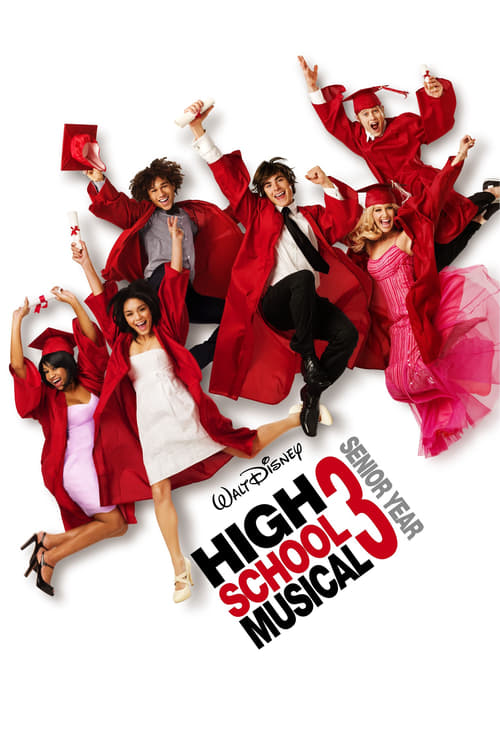
High School Musical 3: Senior Year
As seniors in high school, Troy and Gabriella struggle with the idea of being separated from one another as college approaches. Along with the rest of the Wildcats, they stage a spring musical to address their experiences, hopes and fears about their future.
Despite its modest budget of $11.0M, High School Musical 3: Senior Year became a massive hit, earning $252.9M worldwide—a remarkable 2199% return. The film's unique voice attracted moviegoers, illustrating how strong storytelling can transcend budget limitations.
8 wins & 9 nominations


Plot Structure
Story beats plotted across runtime


Narrative Arc
Emotional journey through the story's key moments
Story Circle
Blueprint 15-beat structure
Arcplot Score Breakdown
Weighted: Precision (70%) + Arc (15%) + Theme (15%)
High School Musical 3: Senior Year (2008) showcases carefully calibrated story structure, characteristic of Kenny Ortega's storytelling approach. This structural analysis examines how the film's 15-point plot structure maps to proven narrative frameworks across 1 hour and 57 minutes. With an Arcplot score of 7.6, the film showcases strong structural fundamentals.
Structural Analysis
The Status Quo at 1 minutes (1% through the runtime) establishes Opening basketball game where Troy leads the Wildcats in their final championship game. Shows the senior year status quo: Troy as star athlete, comfortable in his established world, with Gabriella cheering from the stands and the whole school rallying behind the team.. Structural examination shows that this early placement immediately immerses viewers in the story world.
The inciting incident occurs at 14 minutes when Troy receives a full scholarship offer to the University of Albuquerque, which would keep him close to home and his father's basketball legacy. This conflicts with his unspoken dreams of Juilliard and creates tension with Gabriella, who has received acceptance to Stanford - on opposite coasts.. At 12% through the film, this Disruption aligns precisely with traditional story structure. This beat shifts the emotional landscape, launching the protagonist into the central conflict.
The First Threshold at 29 minutes marks the transition into Act II, occurring at 25% of the runtime. This indicates the protagonist's commitment to Troy makes the active choice to audition for Juilliard without telling anyone - not his father, not Gabriella, not his teammates. He secretly films his audition tape, stepping across the threshold into pursuing his own dreams rather than everyone else's expectations., moving from reaction to action.
At 57 minutes, the Midpoint arrives at 49% of the runtime—precisely centered, creating perfect narrative symmetry. Significantly, this crucial beat False defeat: Gabriella discovers Troy's secret Juilliard audition through Sharpay's manipulation. She feels betrayed that Troy kept this huge decision from her, while simultaneously announcing she's been accepted to Stanford's Freshman Honors Program - which starts early, meaning she'll have to leave before prom and the musical. The stakes are raised., fundamentally raising what's at risk. The emotional intensity shifts, dividing the narrative into clear before-and-after phases.
The Collapse moment at 86 minutes (74% through) represents the emotional nadir. Here, Gabriella leaves East High early for Stanford without saying goodbye, withdrawing from the musical entirely. Troy finds her empty locker - a metaphorical death of their relationship and his dream of finishing senior year together. He sits alone in the empty theater, the stage dark, his dreams seemingly dead., reveals the protagonist at their lowest point. This beat's placement in the final quarter sets up the climactic reversal.
The Second Threshold at 92 minutes initiates the final act resolution at 78% of the runtime. Troy drives to Stanford and finds Gabriella. She tells him, "You need to trust that things are gonna work out the way they're supposed to." This synthesis moment makes Troy realize he doesn't have to choose between basketball and theater, between his dad's dreams and his own - he can honor all parts of himself. He gains clarity that the future is uncertain, but that's okay., demonstrating the transformation achieved throughout the journey.
Emotional Journey
High School Musical 3: Senior Year's emotional architecture traces a deliberate progression across 15 carefully calibrated beats.
Narrative Framework
This structural analysis employs structural analysis methodology used to understand storytelling architecture. By mapping High School Musical 3: Senior Year against these established plot points, we can identify how Kenny Ortega utilizes or subverts traditional narrative conventions. The plot point approach reveals not only adherence to structural principles but also creative choices that distinguish High School Musical 3: Senior Year within the comedy genre.
Kenny Ortega's Structural Approach
Among the 5 Kenny Ortega films analyzed on Arcplot, the average structural score is 7.2, reflecting strong command of classical structure. High School Musical 3: Senior Year represents one of the director's most structurally precise works. For comparative analysis, explore the complete Kenny Ortega filmography.
Comparative Analysis
Additional comedy films include The Bad Guys, Ella Enchanted and The Evening Star. For more Kenny Ortega analyses, see Newsies, High School Musical 2 and Hocus Pocus.
Plot Points by Act
Act I
SetupStatus Quo
Opening basketball game where Troy leads the Wildcats in their final championship game. Shows the senior year status quo: Troy as star athlete, comfortable in his established world, with Gabriella cheering from the stands and the whole school rallying behind the team.
Theme
Ms. Darbus announces the senior spring musical and tells the students: "This is your last chance to be a Wildcat. Make it count." The theme of endings, transitions, and making choices about the future is explicitly stated.
Worldbuilding
Establishes senior year dynamics: Troy and Gabriella's relationship, their college decisions looming, Sharpay's theatrical ambitions, the Wildcats' tight-knit friendship group. Shows the parallel pressure tracks - basketball championship, college applications, spring musical auditions, and the impending reality of graduation.
Disruption
Troy receives a full scholarship offer to the University of Albuquerque, which would keep him close to home and his father's basketball legacy. This conflicts with his unspoken dreams of Juilliard and creates tension with Gabriella, who has received acceptance to Stanford - on opposite coasts.
Resistance
Troy debates his future between basketball legacy and theatrical passion. His father acts as guide, pushing the Albuquerque scholarship. Troy and Gabriella dance around their conflicting college plans. Musical rehearsals begin, with Troy torn between what's expected and what he wants. The junkyard performance "I Want It All" shows his internal conflict.
Act II
ConfrontationFirst Threshold
Troy makes the active choice to audition for Juilliard without telling anyone - not his father, not Gabriella, not his teammates. He secretly films his audition tape, stepping across the threshold into pursuing his own dreams rather than everyone else's expectations.
Mirror World
Troy and Gabriella perform "Can I Have This Dance" on the rooftop garden. This romantic moment represents the thematic counterpoint - their relationship embodies the tension between staying together and pursuing individual dreams. The rooftop becomes a recurring mirror world space throughout the film.
Premise
The promise of the premise: senior year musical theater, elaborate production numbers, romance, and friendship. The Wildcats explore what it means to be ending this chapter together. Musical numbers include "A Night to Remember" (prom planning), continued rehearsals, and the gang navigating their final semester together.
Midpoint
False defeat: Gabriella discovers Troy's secret Juilliard audition through Sharpay's manipulation. She feels betrayed that Troy kept this huge decision from her, while simultaneously announcing she's been accepted to Stanford's Freshman Honors Program - which starts early, meaning she'll have to leave before prom and the musical. The stakes are raised.
Opposition
Everything gets harder. Troy faces pressure from his father about the Juilliard secret. Gabriella withdraws emotionally. The musical is in jeopardy without its female lead. Sharpay schemes to take over as lead. Troy tries to balance basketball playoffs, the musical, and his fracturing relationship. The championship game and musical performance are scheduled for the same night.
Collapse
Gabriella leaves East High early for Stanford without saying goodbye, withdrawing from the musical entirely. Troy finds her empty locker - a metaphorical death of their relationship and his dream of finishing senior year together. He sits alone in the empty theater, the stage dark, his dreams seemingly dead.
Crisis
Troy's dark night. He performs "Walk Away" in the empty auditorium, processing the loss. He questions all his choices - the secret audition, whether to go to Juilliard, whether he should have fought harder to keep Gabriella. His friends rally but he's emotionally shut down.
Act III
ResolutionSecond Threshold
Troy drives to Stanford and finds Gabriella. She tells him, "You need to trust that things are gonna work out the way they're supposed to." This synthesis moment makes Troy realize he doesn't have to choose between basketball and theater, between his dad's dreams and his own - he can honor all parts of himself. He gains clarity that the future is uncertain, but that's okay.
Synthesis
The finale resolves all threads. Troy leads the Wildcats to basketball championship victory, then rushes to the theater. Gabriella returns for opening night. They perform the musical together. Troy learns he got into both UC Berkeley and Juilliard's summer program - he can pursue both passions. All the seniors celebrate graduation, accepting their different paths forward.
Transformation
Graduation day. The final image mirrors the opening basketball game but shows transformation: Troy in his cap and gown, surrounded by all his friends, embracing both his basketball and theater communities. He and Gabriella acknowledge their uncertain future ("We're all in this together" one last time) but are now comfortable with change and growth. The childhood world ends; adulthood begins.