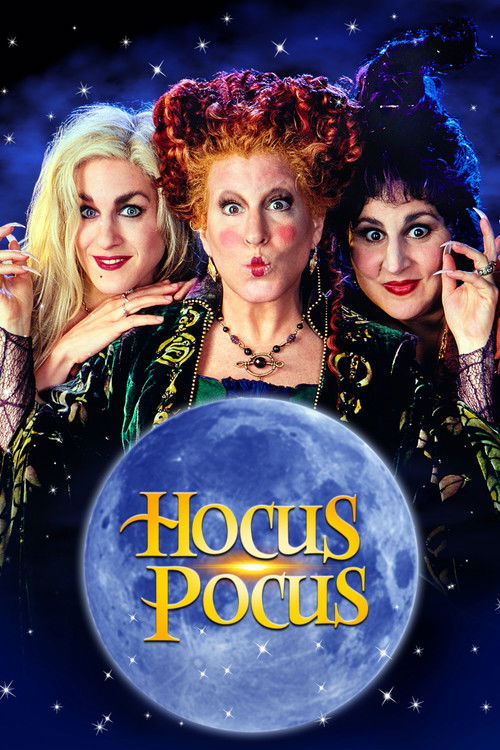
Hocus Pocus
After 300 years of slumber, three sister witches are accidentally resurrected in Salem on Halloween night, and it is up to three kids and their newfound feline friend to put an end to the witches' reign of terror once and for all.
Working with a moderate budget of $28.0M, the film achieved a respectable showing with $51.7M in global revenue (+85% profit margin).
2 wins & 11 nominations


Plot Structure
Story beats plotted across runtime


Narrative Arc
Emotional journey through the story's key moments
Story Circle
Blueprint 15-beat structure
Arcplot Score Breakdown
Weighted: Precision (70%) + Arc (15%) + Theme (15%)
Hocus Pocus (1993) exemplifies carefully calibrated narrative design, characteristic of Kenny Ortega's storytelling approach. This structural analysis examines how the film's 15-point plot structure maps to proven narrative frameworks across 1 hour and 36 minutes. With an Arcplot score of 6.6, the film balances conventional beats with creative variation.
Characters
Cast & narrative archetypes

Max Dennison
Winifred Sanderson
Sarah Sanderson
Mary Sanderson
Allison
Dani Dennison
Thackery Binx
Billy Butcherson
Main Cast & Characters
Max Dennison
Played by Omri Katz
A skeptical teenager from Los Angeles who accidentally resurrects the Sanderson sisters on Halloween night.
Winifred Sanderson
Played by Bette Midler
The eldest and most powerful of the witch sisters, obsessed with youth and leading her siblings in their quest for immortality.
Sarah Sanderson
Played by Sarah Jessica Parker
The seductive youngest sister with the power to lure children with her enchanting voice.
Mary Sanderson
Played by Kathy Najimy
The middle sister with enhanced sense of smell who can track children and serves as comic relief.
Allison
Played by Vinessa Shaw
Max's classmate and love interest who helps fight the Sanderson sisters with her knowledge of Salem history.
Dani Dennison
Played by Thora Birch
Max's enthusiastic younger sister who believes in the supernatural and joins the fight against the witches.
Thackery Binx
Played by Sean Murray
A boy cursed to live as an immortal black cat for 300 years after trying to save his sister from the witches.
Billy Butcherson
Played by Doug Jones
Winifred's zombie ex-boyfriend who was murdered by her and reluctantly helps the children.
Structural Analysis
The Status Quo at 1 minutes (1% through the runtime) establishes Salem, 1693: Young Emily Binx is lured into the forest by Sarah Sanderson. Her brother Thackery watches helplessly as the Sanderson sisters drain her life force, establishing the dark supernatural threat that will haunt Salem for centuries.. Notably, this early placement immediately immerses viewers in the story world.
The inciting incident occurs at 12 minutes when Max lights the Black Flame Candle to impress Allison and prove there's no such thing as magic. The flame ignites, lightning strikes, and the Sanderson sisters are resurrected after 300 years. His act of arrogant disbelief has unleashed genuine evil.. At 12% through the film, this Disruption aligns precisely with traditional story structure. This beat shifts the emotional landscape, launching the protagonist into the central conflict.
The First Threshold at 24 minutes marks the transition into Act II, occurring at 25% of the runtime. This reveals the protagonist's commitment to Rather than simply hiding until dawn, Max makes the active choice to fight back against the witches. He decides to trap them in the burning kiln at the school, taking responsibility for the chaos he caused by lighting the candle., moving from reaction to action.
At 48 minutes, the Midpoint arrives at 50% of the runtime—precisely centered, creating perfect narrative symmetry. Notably, this crucial beat False victory collapses: the Sanderson sisters regenerate from the fire, having been resurrected by magical means that make them indestructible until sunrise. The celebration ends as the kids realize the witches are still hunting them and now have until dawn to complete their potion., fundamentally raising what's at risk. The emotional intensity shifts, dividing the narrative into clear before-and-after phases.
The Collapse moment at 72 minutes (75% through) represents the emotional nadir. Here, Dani is captured by the witches and taken to their cottage to be the first soul drained. Binx, trying to save her, is knocked off a cliff and appears to die. Max's worst fear is realized - he has failed to protect his little sister, just as Binx failed Emily 300 years ago., shows the protagonist at their lowest point. This beat's placement in the final quarter sets up the climactic reversal.
The Second Threshold at 77 minutes initiates the final act resolution at 80% of the runtime. Max storms the cottage and drinks the potion himself, offering his soul instead of Dani's. This selfless sacrifice - the cynic who believed in nothing now believing in family above all - represents his complete transformation. He has become the protective brother Binx always was., demonstrating the transformation achieved throughout the journey.
Emotional Journey
Hocus Pocus's emotional architecture traces a deliberate progression across 15 carefully calibrated beats.
Narrative Framework
This structural analysis employs structural analysis methodology used to understand storytelling architecture. By mapping Hocus Pocus against these established plot points, we can identify how Kenny Ortega utilizes or subverts traditional narrative conventions. The plot point approach reveals not only adherence to structural principles but also creative choices that distinguish Hocus Pocus within the fantasy genre.
Kenny Ortega's Structural Approach
Among the 5 Kenny Ortega films analyzed on Arcplot, the average structural score is 7.2, reflecting strong command of classical structure. Hocus Pocus takes a more unconventional approach compared to the director's typical style. For comparative analysis, explore the complete Kenny Ortega filmography.
Comparative Analysis
Additional fantasy films include Thinner, Ella Enchanted and Conan the Barbarian. For more Kenny Ortega analyses, see High School Musical 3: Senior Year, Newsies and High School Musical 2.
Plot Points by Act
Act I
SetupStatus Quo
Salem, 1693: Young Emily Binx is lured into the forest by Sarah Sanderson. Her brother Thackery watches helplessly as the Sanderson sisters drain her life force, establishing the dark supernatural threat that will haunt Salem for centuries.
Theme
Max dismisses the legend of the Sanderson sisters to his class, declaring "It's just a bunch of hocus pocus." His teacher and classmates establish that disbelief in Salem's traditions makes him an outsider, stating the film's central theme about the power of belief.
Worldbuilding
Modern-day Salem on Halloween: Max is established as a cynical California transplant who doesn't fit in. His relationship with his younger sister Dani is introduced - she adores Halloween while he's too cool for it. He meets Allison, his crush, and we see the Sanderson cottage has become a museum.
Disruption
Max lights the Black Flame Candle to impress Allison and prove there's no such thing as magic. The flame ignites, lightning strikes, and the Sanderson sisters are resurrected after 300 years. His act of arrogant disbelief has unleashed genuine evil.
Resistance
The kids flee the cottage with Winifred's spellbook while the witches orient themselves to the modern world. Thackery Binx, cursed as an immortal cat, becomes their guide, explaining the sisters' plan to drain children's souls. The group debates what to do as the witches give chase.
Act II
ConfrontationFirst Threshold
Rather than simply hiding until dawn, Max makes the active choice to fight back against the witches. He decides to trap them in the burning kiln at the school, taking responsibility for the chaos he caused by lighting the candle.
Mirror World
The bond between Max, Dani, Allison, and Binx deepens as they work together. Binx shares his tragic backstory about failing to save his sister Emily. This parallel to Max and Dani's relationship plants the thematic seed: Max must learn to protect his sister the way Binx couldn't.
Premise
The fun and games of the film's premise unfold: the witches hilariously misunderstand modern technology (buses, pavement, TV), the kids outsmart them at the school Halloween party, and the sisters are apparently destroyed in the pottery kiln. The protagonists celebrate their seeming victory.
Midpoint
False victory collapses: the Sanderson sisters regenerate from the fire, having been resurrected by magical means that make them indestructible until sunrise. The celebration ends as the kids realize the witches are still hunting them and now have until dawn to complete their potion.
Opposition
The witches gain ground relentlessly. Sarah enchants Salem's children with her siren song, drawing them toward the cottage. The parents at the town hall are bewitched to dance endlessly. Billy Butcherson is raised as a zombie. Every adult who could help is neutralized. The kids are increasingly isolated.
Collapse
Dani is captured by the witches and taken to their cottage to be the first soul drained. Binx, trying to save her, is knocked off a cliff and appears to die. Max's worst fear is realized - he has failed to protect his little sister, just as Binx failed Emily 300 years ago.
Crisis
Max faces his darkest moment. Binx returns (his immortality saving him) and Max must choose: run and save himself, or risk everything to save Dani. The weight of his earlier arrogance and disbelief crashes down - his cynicism brought this horror to Salem.
Act III
ResolutionSecond Threshold
Max storms the cottage and drinks the potion himself, offering his soul instead of Dani's. This selfless sacrifice - the cynic who believed in nothing now believing in family above all - represents his complete transformation. He has become the protective brother Binx always was.
Synthesis
The final battle in the cemetery. Billy Butcherson turns ally, revealing the witches killed him too. Max, Allison, and Dani fight to survive until dawn while protecting the children of Salem. Winifred desperately pursues Max for his soul as the sun begins to rise.
Transformation
Dawn breaks and the Sanderson sisters turn to dust. Thackery Binx finally dies and is reunited with Emily's spirit, his centuries of guilt absolved. Max, no longer a cynical outsider, embraces Dani and Allison - transformed into a believer who understands the power of protecting those you love.