
Highlander
In New York City, the owner of a sophisticated antique shop Russell Edwin Nash is challenged to a sword fight in the parking lot of the Madison Square Garden by a man called Iman Fasil that is beheaded by Russell. He hides his sword and is arrested by the police while leaving the stadium. Russell recalls his life in the sixteenth century in Scotland, when he is Connor MacLeod, and is fatally wounded in a battle against another Clan. However, he surprisingly survives and his Clan believes he has a pact with the devil and expels him from their lands. Then he meets Juan Sanchez Villa-Lobos Ramirez, who explains that he is immortal unless he is beheaded. Further, the immortals dispute a game killing each other and in the end only one survives receiving a prize with the power of the other immortals. Russell is released by the police, but the snoopy forensic agent Brenda J. Wyatt is attracted by the case since she found fragments of an ancient Katana and follows Russell. But the also immortal Kurgan is hunting down MacLeod, and Brenda is in the middle of their battle.
The film disappointed at the box office against its moderate budget of $19.0M, earning $12.9M globally (-32% loss). While initial box office returns were modest, the film has gained appreciation for its fresh perspective within the action genre.


Plot Structure
Story beats plotted across runtime


Narrative Arc
Emotional journey through the story's key moments
Story Circle
Blueprint 15-beat structure
Arcplot Score Breakdown
Weighted: Precision (70%) + Arc (15%) + Theme (15%)
Highlander (1986) demonstrates precise plot construction, characteristic of Russell Mulcahy's storytelling approach. This structural analysis examines how the film's 15-point plot structure maps to proven narrative frameworks across 1 hour and 56 minutes. With an Arcplot score of 6.8, the film balances conventional beats with creative variation.
Characters
Cast & narrative archetypes

Connor MacLeod
Ramirez

The Kurgan

Brenda Wyatt

Heather MacLeod
Main Cast & Characters
Connor MacLeod
Played by Christopher Lambert
A 16th-century Scottish immortal living in modern New York, destined to fight for The Prize.
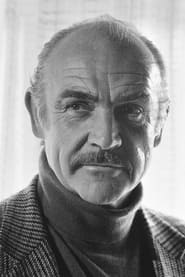
Ramirez
Played by Sean Connery
An ancient Egyptian immortal who becomes Connor's mentor, teaching him the ways of immortals.
The Kurgan
Played by Clancy Brown
A brutal immortal warrior from the Russian steppes, Connor's primary antagonist seeking The Prize.
Brenda Wyatt
Played by Roxanne Hart
A forensic metallurgist who becomes romantically involved with Connor while investigating mysterious sword deaths.
Heather MacLeod
Played by Beatie Edney
Connor's mortal wife from 16th-century Scotland who ages while he remains immortal.
Structural Analysis
The Status Quo at 1 minutes (1% through the runtime) establishes Connor MacLeod attends a wrestling match at Madison Square Garden in 1985, appearing as a solitary antiques dealer blending into modern New York City, concealing his immortal nature beneath an ordinary facade.. Of particular interest, this early placement immediately immerses viewers in the story world.
The inciting incident occurs at 14 minutes when Connor senses another immortal at Madison Square Garden and is attacked by Iman Fasil in the parking garage, forcing him to fight and behead the immortal - drawing police attention and signaling the Gathering has begun.. At 12% through the film, this Disruption aligns precisely with traditional story structure. This beat shifts the emotional landscape, launching the protagonist into the central conflict.
The First Threshold at 29 minutes marks the transition into Act II, occurring at 25% of the runtime. This reveals the protagonist's commitment to Connor chooses to reclaim his sword from Brenda rather than disappear, actively engaging with both the mortal world and the Gathering - committing himself to see the immortal conflict through to its end., moving from reaction to action.
At 58 minutes, the Midpoint arrives at 50% of the runtime—precisely centered, creating perfect narrative symmetry. Notably, this crucial beat The Kurgan kills Kastagir, Connor's last immortal friend, leaving only Connor and the Kurgan remaining for the Prize. The false defeat reveals Connor is now truly alone with no allies against his ancient enemy., fundamentally raising what's at risk. The emotional intensity shifts, dividing the narrative into clear before-and-after phases.
The Collapse moment at 87 minutes (75% through) represents the emotional nadir. Here, The Kurgan kidnaps Brenda, threatening to kill her if Connor doesn't face him. Connor must watch another woman he loves become a pawn of his immortal enemy - the cycle of loss threatening to repeat., demonstrates the protagonist at their lowest point. This beat's placement in the final quarter sets up the climactic reversal.
The Second Threshold at 93 minutes initiates the final act resolution at 80% of the runtime. Connor chooses to fight for Brenda and humanity's future, synthesizing Ramirez's warrior training with his hard-won wisdom about love and loss. He goes to Silvercup Studios to face the Kurgan in final combat., demonstrating the transformation achieved throughout the journey.
Emotional Journey
Highlander's emotional architecture traces a deliberate progression across 15 carefully calibrated beats.
Narrative Framework
This structural analysis employs proven narrative structure principles that track dramatic progression. By mapping Highlander against these established plot points, we can identify how Russell Mulcahy utilizes or subverts traditional narrative conventions. The plot point approach reveals not only adherence to structural principles but also creative choices that distinguish Highlander within the action genre.
Russell Mulcahy's Structural Approach
Among the 5 Russell Mulcahy films analyzed on Arcplot, the average structural score is 6.8, demonstrating varied approaches to story architecture. Highlander takes a more unconventional approach compared to the director's typical style. For comparative analysis, explore the complete Russell Mulcahy filmography.
Comparative Analysis
Additional action films include The Bad Guys, Puss in Boots and Venom: The Last Dance. For more Russell Mulcahy analyses, see The Shadow, The Real McCoy and Highlander II: The Quickening.
Plot Points by Act
Act I
SetupStatus Quo
Connor MacLeod attends a wrestling match at Madison Square Garden in 1985, appearing as a solitary antiques dealer blending into modern New York City, concealing his immortal nature beneath an ordinary facade.
Theme
Ramirez later tells Connor: "It's better to burn out than to fade away" - establishing that immortality without purpose is meaningless, and one must choose how to live with the burden of endless life.
Worldbuilding
The film establishes its dual timeline structure: Connor's isolated modern existence as Russell Nash in New York, intercut with flashbacks to 16th century Scotland where he first discovered his immortality after being killed by the Kurgan in battle.
Disruption
Connor senses another immortal at Madison Square Garden and is attacked by Iman Fasil in the parking garage, forcing him to fight and behead the immortal - drawing police attention and signaling the Gathering has begun.
Resistance
Through flashbacks, we see Ramirez arrive to train Connor in swordplay and the rules of immortal combat, while in the present Connor evades police investigation by forensics expert Brenda Wyatt who found his katana at the crime scene.
Act II
ConfrontationFirst Threshold
Connor chooses to reclaim his sword from Brenda rather than disappear, actively engaging with both the mortal world and the Gathering - committing himself to see the immortal conflict through to its end.
Mirror World
Connor begins a relationship with Brenda Wyatt, mirroring his past love with Heather. Brenda represents his connection to humanity and the possibility of love despite his immortal curse.
Premise
The "promise of the premise" delivers immortal duels and flashbacks showing Connor's training with Ramirez, his life with Heather, and the tragic burden of watching her age while he remains young - all while the Kurgan hunts surviving immortals.
Midpoint
The Kurgan kills Kastagir, Connor's last immortal friend, leaving only Connor and the Kurgan remaining for the Prize. The false defeat reveals Connor is now truly alone with no allies against his ancient enemy.
Opposition
The Kurgan closes in as Connor's vulnerability increases. Flashbacks reveal the Kurgan killed Ramirez and violated Heather, while in the present the villain tracks Connor through New York, terrorizing anyone connected to him.
Collapse
The Kurgan kidnaps Brenda, threatening to kill her if Connor doesn't face him. Connor must watch another woman he loves become a pawn of his immortal enemy - the cycle of loss threatening to repeat.
Crisis
Connor confronts his centuries of grief and loss - Heather's death, Ramirez's murder, watching everyone he loved age and die. He must decide if he can risk his heart again or let the Kurgan take everything.
Act III
ResolutionSecond Threshold
Connor chooses to fight for Brenda and humanity's future, synthesizing Ramirez's warrior training with his hard-won wisdom about love and loss. He goes to Silvercup Studios to face the Kurgan in final combat.
Synthesis
The climactic battle at Silvercup Studios as Connor and the Kurgan fight amid shattered glass and electrical explosions. Connor defeats the Kurgan, claiming the Prize - the knowledge and power of all immortals who ever lived.
Transformation
Connor stands with Brenda in the Scottish Highlands, now mortal and able to have children. The man who began as an outcast hiding from humanity has become its guardian, finally able to grow old with someone he loves.