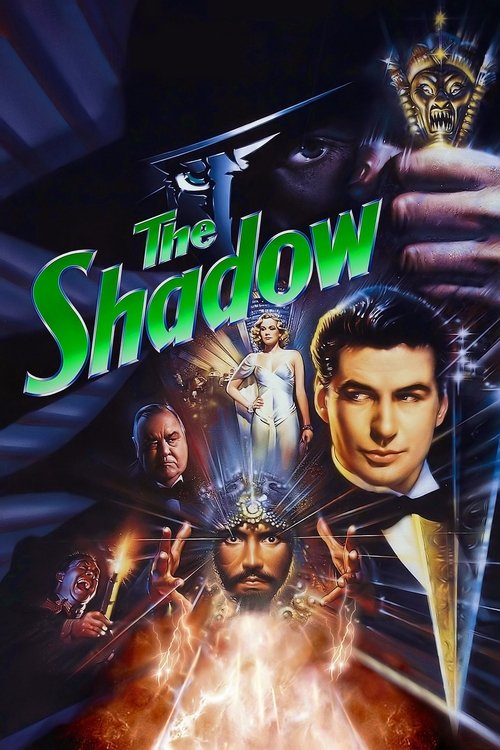
The Shadow
Based on the 1930s comic strip, The Shadow is put up against his archenemy Shiwan Khan, who plans to take over the world by holding a city to ransom using an atom bomb. Using his powers of invisibility and "the power to cloud men's minds", The Shadow comes blazing to the rescue with explosive results.
Working with a moderate budget of $25.0M, the film achieved a steady performer with $48.1M in global revenue (+92% profit margin).


Plot Structure
Story beats plotted across runtime


Narrative Arc
Emotional journey through the story's key moments
Story Circle
Blueprint 15-beat structure
Arcplot Score Breakdown
Weighted: Precision (70%) + Arc (15%) + Theme (15%)
The Shadow (1994) reveals deliberately positioned plot construction, characteristic of Russell Mulcahy's storytelling approach. This structural analysis examines how the film's 15-point plot structure maps to proven narrative frameworks across 1 hour and 48 minutes. With an Arcplot score of 6.8, the film balances conventional beats with creative variation.
Structural Analysis
The Status Quo at 1 minutes (1% through the runtime) establishes In 1930s Tibet, Lamont Cranston rules as the brutal warlord Ying Ko, surrounded by opium and violence. This dark opening establishes who he was before transformation—a man consumed by his shadow self.. Significantly, this early placement immediately immerses viewers in the story world.
The inciting incident occurs at 13 minutes when A silver sarcophagus arrives in New York containing Shiwan Khan, the last descendant of Genghis Khan. He kills the museum staff and announces his presence—a dark mirror of Cranston who chose conquest over redemption.. At 12% through the film, this Disruption aligns precisely with traditional story structure. This beat shifts the emotional landscape, launching the protagonist into the central conflict.
The First Threshold at 27 minutes marks the transition into Act II, occurring at 25% of the runtime. This shows the protagonist's commitment to Khan invites Cranston to join his conquest of the world, appealing to his dark past as Ying Ko. Cranston firmly refuses, choosing his path of redemption over returning to evil. This commits him to a war against his dark reflection., moving from reaction to action.
At 54 minutes, the Midpoint arrives at 50% of the runtime—precisely centered, creating perfect narrative symmetry. Significantly, this crucial beat Khan reveals his invisible hotel—the Monolith—hidden in plain sight on a New York street. The Shadow discovers the full scope of Khan's plan: a beryllium sphere atomic bomb that will destroy the city. The stakes escalate from personal conflict to mass destruction., fundamentally raising what's at risk. The emotional intensity shifts, dividing the narrative into clear before-and-after phases.
The Collapse moment at 81 minutes (75% through) represents the emotional nadir. Here, Khan defeats The Shadow in psychic combat, shattering the mirror that reflects Cranston's dual nature. Khan's knife wounds Cranston physically while his taunts about their shared darkness wound him spiritually. The Shadow seems broken, his redemption questioned., illustrates the protagonist at their lowest point. This beat's placement in the final quarter sets up the climactic reversal.
The Second Threshold at 86 minutes initiates the final act resolution at 80% of the runtime. Cranston realizes he can use the shard of the broken mirror—symbol of his fractured self—as a weapon. By accepting both his darkness and his choice to fight it, he synthesizes his past and present into renewed purpose. He knows exactly how Khan thinks., demonstrating the transformation achieved throughout the journey.
Emotional Journey
The Shadow's emotional architecture traces a deliberate progression across 15 carefully calibrated beats.
Narrative Framework
This structural analysis employs systematic plot point analysis that identifies crucial turning points. By mapping The Shadow against these established plot points, we can identify how Russell Mulcahy utilizes or subverts traditional narrative conventions. The plot point approach reveals not only adherence to structural principles but also creative choices that distinguish The Shadow within the fantasy genre.
Russell Mulcahy's Structural Approach
Among the 5 Russell Mulcahy films analyzed on Arcplot, the average structural score is 6.8, demonstrating varied approaches to story architecture. The Shadow takes a more unconventional approach compared to the director's typical style. For comparative analysis, explore the complete Russell Mulcahy filmography.
Comparative Analysis
Additional fantasy films include Thinner, Ella Enchanted and Conan the Barbarian. For more Russell Mulcahy analyses, see Highlander, The Real McCoy and Highlander II: The Quickening.
Plot Points by Act
Act I
SetupStatus Quo
In 1930s Tibet, Lamont Cranston rules as the brutal warlord Ying Ko, surrounded by opium and violence. This dark opening establishes who he was before transformation—a man consumed by his shadow self.
Theme
The Tulku tells Cranston: "You know what evil lurks in the hearts of men because you have seen that evil in your own heart." The theme of knowing darkness to fight it is established—redemption requires confronting one's shadow.
Worldbuilding
Cranston's origin in Tibet is revealed: his capture by the Tulku, training in mental powers, and transformation into The Shadow. Seven years later in New York, we see his dual life as wealthy socialite and mysterious crime fighter with his network of agents.
Disruption
A silver sarcophagus arrives in New York containing Shiwan Khan, the last descendant of Genghis Khan. He kills the museum staff and announces his presence—a dark mirror of Cranston who chose conquest over redemption.
Resistance
Cranston investigates the mysterious arrival while meeting Margo Lane at a club. Khan reaches out telepathically, revealing he knows The Shadow's true identity. Cranston debates how to handle this threat who shares his dark origins but made different choices.
Act II
ConfrontationFirst Threshold
Khan invites Cranston to join his conquest of the world, appealing to his dark past as Ying Ko. Cranston firmly refuses, choosing his path of redemption over returning to evil. This commits him to a war against his dark reflection.
Mirror World
Margo Lane's telepathic connection to Cranston deepens as she receives his psychic projections. She represents human connection and the possibility of being truly known—something Cranston's isolated double life has denied him.
Premise
The Shadow investigates Khan's plans, using his network of agents and mental powers. He discovers Khan is building an atomic bomb using Margo's father, scientist Reinhardt Lane. Classic pulp adventure unfolds as The Shadow battles Khan's hypnotized minions.
Midpoint
Khan reveals his invisible hotel—the Monolith—hidden in plain sight on a New York street. The Shadow discovers the full scope of Khan's plan: a beryllium sphere atomic bomb that will destroy the city. The stakes escalate from personal conflict to mass destruction.
Opposition
Khan's forces close in as the bomb nears completion. Margo is captured and used as leverage. The Shadow's agents are compromised. Khan demonstrates superior mental powers, forcing Cranston into increasingly desperate confrontations while time runs out.
Collapse
Khan defeats The Shadow in psychic combat, shattering the mirror that reflects Cranston's dual nature. Khan's knife wounds Cranston physically while his taunts about their shared darkness wound him spiritually. The Shadow seems broken, his redemption questioned.
Crisis
Wounded and doubting himself, Cranston must confront the truth in Khan's words—they are alike. But where Khan embraced the darkness, Cranston chose to fight it. Margo's faith in him and his network's loyalty remind him that redemption is a daily choice.
Act III
ResolutionSecond Threshold
Cranston realizes he can use the shard of the broken mirror—symbol of his fractured self—as a weapon. By accepting both his darkness and his choice to fight it, he synthesizes his past and present into renewed purpose. He knows exactly how Khan thinks.
Synthesis
The Shadow infiltrates the Monolith for the final confrontation. Using the mirror shard, he defeats Khan in psychic and physical combat. Margo disarms the bomb with her father's help. Khan is lobotomized, his dark powers removed, and institutionalized—defeated not by death but by losing what made him dangerous.
Transformation
Cranston visits the catatonic Khan in the asylum, demonstrating mercy over vengeance. He returns to his dual life, but now with Margo knowing his secret—no longer alone. The Shadow continues, but Lamont Cranston has found connection and deeper peace with his path of redemption.