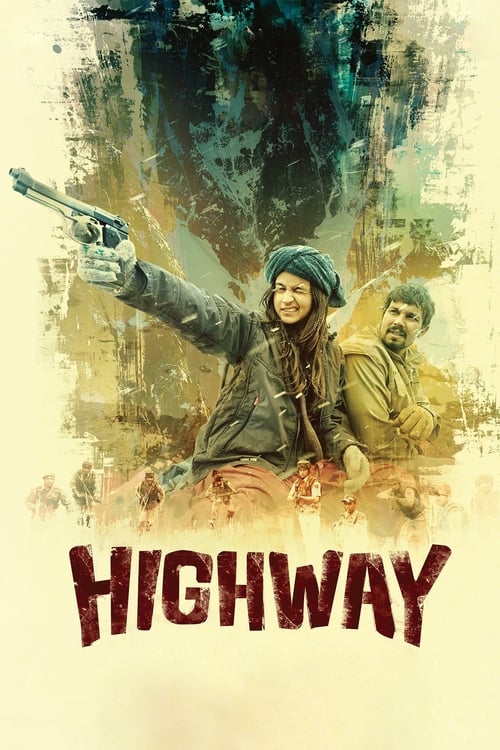
Highway
Right before her wedding, a young woman finds herself abducted and held for ransom. As the initial days pass, she begins to develop a strange bond with her kidnapper.
Working with a modest budget of $2.9M, the film achieved a modest success with $5.5M in global revenue (+91% profit margin).
10 wins & 27 nominations

Plot Structure
Story beats plotted across runtime


Narrative Arc
Emotional journey through the story's key moments
Story Circle
Blueprint 15-beat structure
Arcplot Score Breakdown
Weighted: Precision (70%) + Arc (15%) + Theme (15%)
Highway (2014) exhibits deliberately positioned plot construction, characteristic of Imtiaz Ali's storytelling approach. This structural analysis examines how the film's 15-point plot structure maps to proven narrative frameworks across 2 hours and 13 minutes. With an Arcplot score of 6.8, the film balances conventional beats with creative variation.
Characters
Cast & narrative archetypes

Veera Tripathi
Mahabir Bhati
Main Cast & Characters
Veera Tripathi
Played by Alia Bhatt
A privileged young woman who is kidnapped on the eve of her wedding and undergoes a transformative journey of self-discovery and freedom.
Mahabir Bhati
Played by Randeep Hooda
A hardened criminal who kidnaps Veera but develops an unexpected bond with her as they travel across the countryside.
Structural Analysis
The Status Quo at 2 minutes (1% through the runtime) establishes Veera, a wealthy Delhi girl, is shown in her luxurious home preparing for her wedding, appearing disconnected and emotionally numb despite the celebratory chaos around her.. Structural examination shows that this early placement immediately immerses viewers in the story world.
The inciting incident occurs at 16 minutes when Veera is kidnapped by Mahabir and his gang at a gas station on the eve of her wedding. The violent abduction shatters her controlled world and thrusts her into danger.. At 12% through the film, this Disruption aligns precisely with traditional story structure. This beat shifts the emotional landscape, launching the protagonist into the central conflict.
The First Threshold at 33 minutes marks the transition into Act II, occurring at 25% of the runtime. This shows the protagonist's commitment to Veera stops crying and fighting, instead choosing to embrace the journey. She asks Mahabir to take her away rather than return her, actively choosing freedom over her former life., moving from reaction to action.
At 67 minutes, the Midpoint arrives at 50% of the runtime—precisely centered, creating perfect narrative symmetry. The analysis reveals that this crucial beat Veera reveals her childhood trauma of sexual abuse by her uncle, the dark secret that has kept her emotionally imprisoned. This confession deepens her bond with Mahabir and marks a false victory—she feels liberated by speaking her truth., fundamentally raising what's at risk. The emotional intensity shifts, dividing the narrative into clear before-and-after phases.
The Collapse moment at 100 minutes (75% through) represents the emotional nadir. Here, Police surround them in the mountains. Mahabir is shot and severely wounded during the confrontation. The dream of freedom is shattered as Veera faces losing the one person who saw and accepted her true self., demonstrates the protagonist at their lowest point. This beat's placement in the final quarter sets up the climactic reversal.
The Second Threshold at 106 minutes initiates the final act resolution at 80% of the runtime. Veera refuses to return to her former life. She confronts her family about the abuse and rejects the wedding, choosing to honor the transformation she experienced rather than bury it. She claims her voice and her truth., demonstrating the transformation achieved throughout the journey.
Emotional Journey
Highway's emotional architecture traces a deliberate progression across 15 carefully calibrated beats.
Narrative Framework
This structural analysis employs a 15-point narrative structure framework that maps key story moments. By mapping Highway against these established plot points, we can identify how Imtiaz Ali utilizes or subverts traditional narrative conventions. The plot point approach reveals not only adherence to structural principles but also creative choices that distinguish Highway within the drama genre.
Imtiaz Ali's Structural Approach
Among the 2 Imtiaz Ali films analyzed on Arcplot, the average structural score is 6.8, demonstrating varied approaches to story architecture. Highway exemplifies the director's characteristic narrative technique. For comparative analysis, explore the complete Imtiaz Ali filmography.
Comparative Analysis
Additional drama films include After Thomas, South Pacific and Dirty Dancing: Havana Nights. For more Imtiaz Ali analyses, see Rockstar.
Plot Points by Act
Act I
SetupStatus Quo
Veera, a wealthy Delhi girl, is shown in her luxurious home preparing for her wedding, appearing disconnected and emotionally numb despite the celebratory chaos around her.
Theme
A relative mentions how Veera seems distant and asks if she's truly happy, hinting at the theme of freedom versus captivity and finding one's authentic self.
Worldbuilding
Establishment of Veera's privileged but suffocating world in Delhi—her upcoming wedding, her overbearing family, and her visible emotional detachment. We see the contrast between material wealth and spiritual emptiness.
Disruption
Veera is kidnapped by Mahabir and his gang at a gas station on the eve of her wedding. The violent abduction shatters her controlled world and thrusts her into danger.
Resistance
Initial captivity period where Veera is terrified but begins observing Mahabir and the kidnappers. The gang debates what to do with her, and ransom demands are made. Veera remains passive but watchful.
Act II
ConfrontationFirst Threshold
Veera stops crying and fighting, instead choosing to embrace the journey. She asks Mahabir to take her away rather than return her, actively choosing freedom over her former life.
Mirror World
Veera and Mahabir begin conversing during their travels through the mountains. Their relationship shifts from captor-captive to something more complex—a connection forms that will carry the film's thematic exploration of freedom and authenticity.
Premise
The journey across North India—from Punjab to Himachal Pradesh. Veera experiences genuine freedom for the first time, exploring nature, small towns, and her own voice. She shares stories, laughs, and discovers joy in simplicity while traveling with Mahabir.
Midpoint
Veera reveals her childhood trauma of sexual abuse by her uncle, the dark secret that has kept her emotionally imprisoned. This confession deepens her bond with Mahabir and marks a false victory—she feels liberated by speaking her truth.
Opposition
Police close in on their location. Veera's family and fiancé pursue them relentlessly. The gang members grow suspicious and hostile. The outside world threatens to destroy the fragile sanctuary Veera has found, while Mahabir becomes more protective and conflicted.
Collapse
Police surround them in the mountains. Mahabir is shot and severely wounded during the confrontation. The dream of freedom is shattered as Veera faces losing the one person who saw and accepted her true self.
Crisis
Veera is rescued and returned to her family, but she is emotionally devastated. She must confront the emptiness of her old life and the loss of the freedom she experienced. She mourns Mahabir and the death of her brief authentic existence.
Act III
ResolutionSecond Threshold
Veera refuses to return to her former life. She confronts her family about the abuse and rejects the wedding, choosing to honor the transformation she experienced rather than bury it. She claims her voice and her truth.
Synthesis
Veera returns to the mountains alone, retracing the journey. She visits the places where she found freedom, living independently and authentically. She integrates the lessons learned—that freedom is internal, not dependent on any person or circumstance.
Transformation
Veera stands alone in the mountains, smiling and at peace. In contrast to the numb, trapped girl from the opening, she is now fully alive, free, and authentic—having claimed her own story and identity.