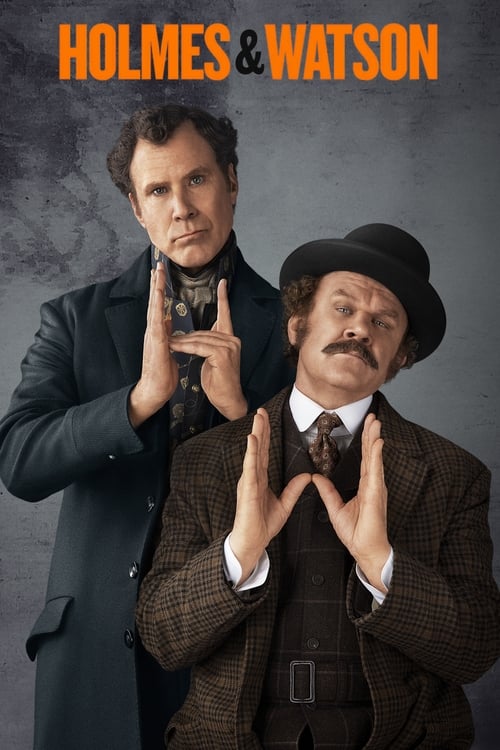
Holmes & Watson
Detective Sherlock Holmes and Dr. John Watson join forces to investigate a mysterious murder at Buckingham Palace. It seems like an open-and-shut case as all signs point to Professor James Moriarty, the criminal mastermind and longtime nemesis of the crime-solving duo. When new twists and clues begin to emerge, the world's greatest sleuth and his trusted assistant must now use their legendary wits and ingenious methods to catch the killer as they only have four days before the queen becomes the next victim.
The film underperformed commercially against its respectable budget of $42.0M, earning $40.5M globally (-4% loss).
4 wins & 4 nominations


Plot Structure
Story beats plotted across runtime


Narrative Arc
Emotional journey through the story's key moments
Story Circle
Blueprint 15-beat structure
Arcplot Score Breakdown
Weighted: Precision (70%) + Arc (15%) + Theme (15%)
Holmes & Watson (2018) showcases strategically placed narrative architecture, characteristic of Etan Cohen's storytelling approach. This structural analysis examines how the film's 15-point plot structure maps to proven narrative frameworks across 1 hour and 30 minutes. With an Arcplot score of 7.0, the film balances conventional beats with creative variation.
Characters
Cast & narrative archetypes

Sherlock Holmes
Dr. John Watson
Dr. Grace Hart
Professor James Moriarty
Mrs. Hudson
Queen Victoria
Main Cast & Characters
Sherlock Holmes
Played by Will Ferrell
The world's greatest detective, egotistical and brilliant but socially inept and oblivious to emotional nuance.
Dr. John Watson
Played by John C. Reilly
Holmes' loyal companion and biographer, insecure about his intelligence but brave and devoted to his friend.
Dr. Grace Hart
Played by Rebecca Hall
An American doctor and accomplished physician who becomes Watson's love interest and assists in the investigation.
Professor James Moriarty
Played by Ralph Fiennes
Holmes' legendary nemesis and criminal mastermind who orchestrates elaborate plots from the shadows.
Mrs. Hudson
Played by Kelly Macdonald
Holmes and Watson's long-suffering landlady at 221B Baker Street who tolerates their chaos with wry humor.
Queen Victoria
Played by Pam Ferris
The elderly monarch of England who becomes the target of an assassination plot and requests Holmes' protection.
Structural Analysis
The Status Quo at 1 minutes (1% through the runtime) establishes Young Holmes at boarding school demonstrates his deductive genius by outsmarting bullies, establishing his brilliant but socially awkward nature and his partnership with Watson that will define their lives.. Significantly, this early placement immediately immerses viewers in the story world.
The inciting incident occurs at 11 minutes when Holmes receives a threat from Professor Moriarty announcing a plot to murder Queen Victoria in four days, sending a corpse as a message and disrupting their comfortable existence.. At 12% through the film, this Disruption aligns precisely with traditional story structure. This beat shifts the emotional landscape, launching the protagonist into the central conflict.
The First Threshold at 23 minutes marks the transition into Act II, occurring at 26% of the runtime. This reveals the protagonist's commitment to Holmes and Watson actively commit to solving the case and protecting the Queen, officially taking on the investigation despite the danger and personal conflicts between them., moving from reaction to action.
At 45 minutes, the Midpoint arrives at 50% of the runtime—precisely centered, creating perfect narrative symmetry. The analysis reveals that this crucial beat Holmes and Watson believe they've identified the assassin and the method, but their plan at the Queen's celebration goes disastrously wrong, revealing they've been chasing the wrong lead. Stakes raise as time runs out., fundamentally raising what's at risk. The emotional intensity shifts, dividing the narrative into clear before-and-after phases.
The Collapse moment at 68 minutes (75% through) represents the emotional nadir. Here, Holmes and Watson hit rock bottom: they're arrested, completely discredited, their partnership seemingly destroyed. Holmes faces that his arrogance has cost him everything, including his only true friend. Their detective careers appear dead., illustrates the protagonist at their lowest point. This beat's placement in the final quarter sets up the climactic reversal.
The Second Threshold at 72 minutes initiates the final act resolution at 80% of the runtime. Holmes realizes the true nature of Moriarty's plot and that the real assassin is someone they trusted. Armed with this insight and renewed partnership with Watson, they break free to stop the actual threat., demonstrating the transformation achieved throughout the journey.
Emotional Journey
Holmes & Watson's emotional architecture traces a deliberate progression across 15 carefully calibrated beats.
Narrative Framework
This structural analysis employs a 15-point narrative structure framework that maps key story moments. By mapping Holmes & Watson against these established plot points, we can identify how Etan Cohen utilizes or subverts traditional narrative conventions. The plot point approach reveals not only adherence to structural principles but also creative choices that distinguish Holmes & Watson within the comedy genre.
Etan Cohen's Structural Approach
Among the 2 Etan Cohen films analyzed on Arcplot, the average structural score is 7.0, reflecting strong command of classical structure. Holmes & Watson takes a more unconventional approach compared to the director's typical style. For comparative analysis, explore the complete Etan Cohen filmography.
Comparative Analysis
Additional comedy films include The Bad Guys, Ella Enchanted and The Evening Star. For more Etan Cohen analyses, see Get Hard.
Plot Points by Act
Act I
SetupStatus Quo
Young Holmes at boarding school demonstrates his deductive genius by outsmarting bullies, establishing his brilliant but socially awkward nature and his partnership with Watson that will define their lives.
Theme
A character remarks on the nature of partnership and friendship, suggesting that true success comes from collaboration rather than solo brilliance—the thematic core Holmes must learn.
Worldbuilding
Adult Holmes and Watson are established as famous detectives in Victorian London. Holmes' arrogance and dependence on Watson is shown, along with their detective methods and their place in society as celebrated crime-solvers.
Disruption
Holmes receives a threat from Professor Moriarty announcing a plot to murder Queen Victoria in four days, sending a corpse as a message and disrupting their comfortable existence.
Resistance
Holmes and Watson debate how to handle the threat. Watson announces plans to move out and get married, creating personal tension. They resist fully committing to the dangerous case while investigating initial clues.
Act II
ConfrontationFirst Threshold
Holmes and Watson actively commit to solving the case and protecting the Queen, officially taking on the investigation despite the danger and personal conflicts between them.
Mirror World
Introduction of Dr. Grace Hart, a female doctor who challenges Holmes' worldview and represents both a romantic interest for Watson and a thematic mirror showing competence through collaboration rather than ego.
Premise
The fun of watching Holmes and Watson bumble through the investigation with comedic detective work, chase scenes, and absurd deductions. They follow false leads, clash with American doctor rivals, and navigate their friendship tensions.
Midpoint
Holmes and Watson believe they've identified the assassin and the method, but their plan at the Queen's celebration goes disastrously wrong, revealing they've been chasing the wrong lead. Stakes raise as time runs out.
Opposition
Everything falls apart. Holmes and Watson are disgraced, their reputation ruined. The real conspiracy closes in, their friendship fractures further, and Watson's wedding plans complicate matters as the Queen's life remains in danger.
Collapse
Holmes and Watson hit rock bottom: they're arrested, completely discredited, their partnership seemingly destroyed. Holmes faces that his arrogance has cost him everything, including his only true friend. Their detective careers appear dead.
Crisis
In their darkest hour, Holmes and Watson separately process their failure and what they mean to each other. Holmes must confront that he needs Watson not as a sidekick but as an equal partner.
Act III
ResolutionSecond Threshold
Holmes realizes the true nature of Moriarty's plot and that the real assassin is someone they trusted. Armed with this insight and renewed partnership with Watson, they break free to stop the actual threat.
Synthesis
Holmes and Watson work together as true equals to stop the assassination plot. They infiltrate the Queen's event, identify the real villain, and use both Holmes' deduction and Watson's skills to save the day and expose Moriarty's scheme.
Transformation
Holmes and Watson, now genuine partners rather than genius and sidekick, are celebrated together. Holmes has learned humility and the value of true friendship, mirroring the opening but showing growth from arrogant loner to collaborative partner.