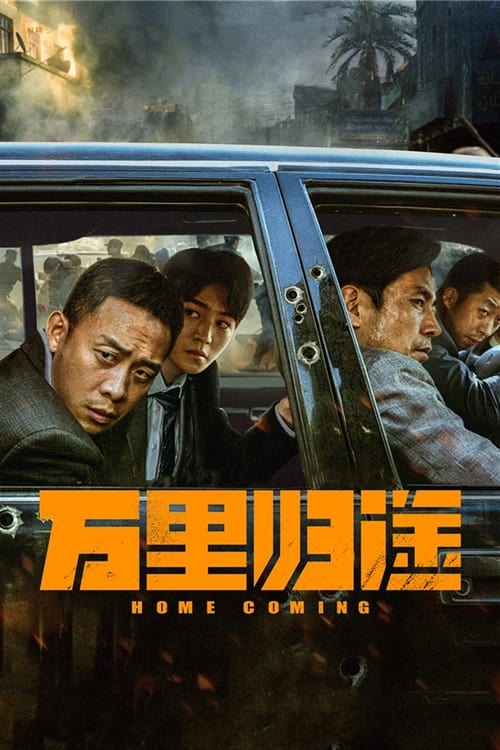
Home Coming
Two members of the Chinese Ministry of Foreign Affairs are tasked with the evacuation of Chinese citizens when war breaks out in Numia, North Africa.
The film earned $236.1M at the global box office.
Plot Structure
Story beats plotted across runtime


Narrative Arc
Emotional journey through the story's key moments
Story Circle
Blueprint 15-beat structure
Arcplot Score Breakdown
Weighted: Precision (70%) + Arc (15%) + Theme (15%)
Home Coming (2022) demonstrates carefully calibrated narrative architecture, characteristic of Rao Xiaozhi's storytelling approach. This structural analysis examines how the film's 15-point plot structure maps to proven narrative frameworks across 2 hours and 17 minutes. With an Arcplot score of 7.7, the film showcases strong structural fundamentals.
Structural Analysis
The Status Quo at 2 minutes (1% through the runtime) establishes Zong Dawei at home with his pregnant wife, showing his ordinary life as a diplomat preparing to retire from field work.. Structural examination shows that this early placement immediately immerses viewers in the story world.
The inciting incident occurs at 17 minutes when Civil war erupts in Numia with a rebel attack, forcing immediate evacuation. Zong Dawei is ordered to lead one final rescue mission to evacuate stranded Chinese citizens despite planning to return home.. At 12% through the film, this Disruption aligns precisely with traditional story structure. This beat shifts the emotional landscape, launching the protagonist into the central conflict.
The First Threshold at 34 minutes marks the transition into Act II, occurring at 25% of the runtime. This shows the protagonist's commitment to Zong and Cheng leave the relative safety of the evacuation convoy and actively choose to drive into rebel-controlled territory to reach the stranded Chinese workers at the Dirat factory., moving from reaction to action.
At 68 minutes, the Midpoint arrives at 50% of the runtime—precisely centered, creating perfect narrative symmetry. Structural examination shows that this crucial beat The group is captured by rebel forces led by the brutal Mufta. What seemed like a achievable rescue mission becomes a desperate survival situation as they're held hostage., fundamentally raising what's at risk. The emotional intensity shifts, dividing the narrative into clear before-and-after phases.
The Collapse moment at 102 minutes (74% through) represents the emotional nadir. Here, A worker is executed by the rebels. Zong's diplomatic solutions fail, and he realizes they will all die unless they take desperate action. Hope seems lost., shows the protagonist at their lowest point. This beat's placement in the final quarter sets up the climactic reversal.
The Second Threshold at 109 minutes initiates the final act resolution at 79% of the runtime. Zong devises a plan using his knowledge of local customs and politics. He chooses to gamble everything on one final negotiation combined with a daring escape, synthesizing diplomatic skill with courage., demonstrating the transformation achieved throughout the journey.
Emotional Journey
Home Coming's emotional architecture traces a deliberate progression across 15 carefully calibrated beats.
Narrative Framework
This structural analysis employs proven narrative structure principles that track dramatic progression. By mapping Home Coming against these established plot points, we can identify how Rao Xiaozhi utilizes or subverts traditional narrative conventions. The plot point approach reveals not only adherence to structural principles but also creative choices that distinguish Home Coming within the drama genre.
Comparative Analysis
Additional drama films include After Thomas, South Pacific and Dirty Dancing: Havana Nights.
Plot Points by Act
Act I
SetupStatus Quo
Zong Dawei at home with his pregnant wife, showing his ordinary life as a diplomat preparing to retire from field work.
Theme
A colleague states that bringing people home safely is what defines their duty, establishing the film's central theme of responsibility and sacrifice.
Worldbuilding
Introduction to the diplomatic mission in the fictional war-torn country of Numia, establishing the volatile political situation, Chinese embassy operations, and key characters including experienced Zong Dawei and inexperienced Cheng Lang.
Disruption
Civil war erupts in Numia with a rebel attack, forcing immediate evacuation. Zong Dawei is ordered to lead one final rescue mission to evacuate stranded Chinese citizens despite planning to return home.
Resistance
Zong debates whether to take the dangerous mission. He reluctantly agrees and prepares with rookie Cheng Lang, gathering intelligence and resources while witnessing the escalating chaos and violence.
Act II
ConfrontationFirst Threshold
Zong and Cheng leave the relative safety of the evacuation convoy and actively choose to drive into rebel-controlled territory to reach the stranded Chinese workers at the Dirat factory.
Mirror World
Zong takes rookie diplomat Cheng Lang under his wing, establishing their mentor-student relationship that will carry the film's theme of duty, sacrifice, and what it means to bring people home.
Premise
The dangerous journey through war-torn Numia: navigating checkpoints, evading rebel forces, using diplomatic skills to negotiate safe passage, and gathering the Chinese workers while tensions escalate.
Midpoint
The group is captured by rebel forces led by the brutal Mufta. What seemed like a achievable rescue mission becomes a desperate survival situation as they're held hostage.
Opposition
Brutal captivity under Mufta's control. Zong must use wit and negotiation to keep everyone alive while Cheng struggles with fear. The situation deteriorates as executions occur and escape routes close.
Collapse
A worker is executed by the rebels. Zong's diplomatic solutions fail, and he realizes they will all die unless they take desperate action. Hope seems lost.
Crisis
Zong and Cheng face their darkest moment, contemplating the weight of their responsibility for the lives entrusted to them and whether they have the courage to risk everything for escape.
Act III
ResolutionSecond Threshold
Zong devises a plan using his knowledge of local customs and politics. He chooses to gamble everything on one final negotiation combined with a daring escape, synthesizing diplomatic skill with courage.
Synthesis
The harrowing escape and final push to the border. Zong and Cheng lead the civilians through minefields, firefights, and final obstacles, with Cheng finding his courage and Zong fully embodying his duty.
Transformation
The survivors cross safely into home territory. Zong, bloodied and exhausted, has become the embodiment of the diplomat who brings people home. Cheng has transformed from rookie to someone who understands the weight of duty.