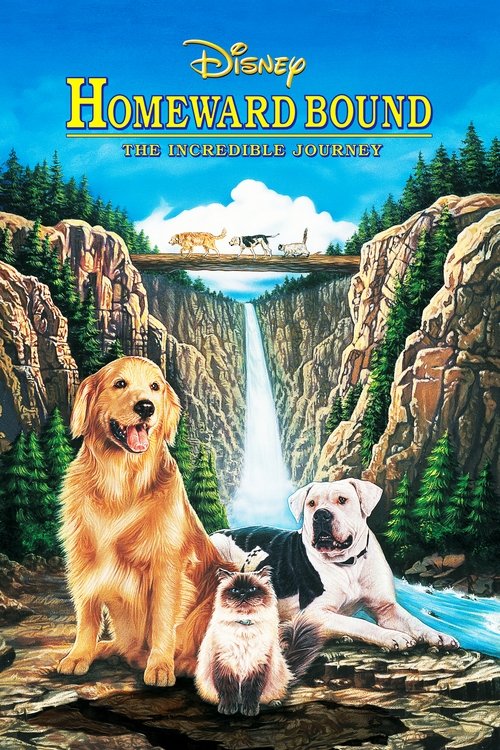
Homeward Bound: The Incredible Journey
Before the Seavers leave for a family vacation to San Francisco, they drop off their pets -- Chance, an adventurous American bulldog; Shadow, a wise golden retriever; and Sassy, a cautious cat -- at a friend's ranch. But when the animals start to worry that they've been left for good, the three embark together on a treacherous and thrilling journey to find their way back home through the California wilderness.
Despite a respectable budget of $24.0M, Homeward Bound: The Incredible Journey became a financial success, earning $57.3M worldwide—a 139% return.


Plot Structure
Story beats plotted across runtime


Narrative Arc
Emotional journey through the story's key moments
Story Circle
Blueprint 15-beat structure
Arcplot Score Breakdown
Weighted: Precision (70%) + Arc (15%) + Theme (15%)
Homeward Bound: The Incredible Journey (1993) exemplifies carefully calibrated narrative design, characteristic of Duwayne Dunham's storytelling approach. This structural analysis examines how the film's 15-point plot structure maps to proven narrative frameworks across 1 hour and 24 minutes. With an Arcplot score of 7.4, the film balances conventional beats with creative variation.
Characters
Cast & narrative archetypes

Shadow
Chance
Sassy
Peter Burnford
Hope Burnford
Jamie Burnford
Main Cast & Characters
Shadow
Played by Don Ameche
An aging, wise Golden Retriever who leads the journey home with loyalty and heart.
Chance
Played by Michael J. Fox
A young, reckless American Bulldog who learns responsibility and courage on the journey.
Sassy
Played by Sally Field
A snobbish, pampered Himalayan cat who discovers her inner strength during the trek.
Peter Burnford
Played by Benj Thall
The young boy who owns Shadow and deeply misses him during the separation.
Hope Burnford
Played by Veronica Lauren
The daughter who owns Sassy and worries about her cat's wellbeing.
Jamie Burnford
Played by Kevin Chevalia
The youngest child who owns Chance and believes in his dog's ability to return.
Structural Analysis
The Status Quo at 1 minutes (1% through the runtime) establishes Shadow, Chance, and Sassy live happily with their family on the ranch. The pets are content in their comfortable home, establishing the bond between animals and owners.. Of particular interest, this early placement immediately immerses viewers in the story world.
The inciting incident occurs at 9 minutes when The family leaves the pets at Kate's ranch while they relocate. The animals watch their family drive away, feeling abandoned. Chance believes they've been left behind permanently.. At 11% through the film, this Disruption aligns precisely with traditional story structure. This beat shifts the emotional landscape, launching the protagonist into the central conflict.
The First Threshold at 19 minutes marks the transition into Act II, occurring at 22% of the runtime. This reveals the protagonist's commitment to The three pets make the active choice to escape the ranch and journey home across the Sierra Nevada mountains. They break through the fence and begin their trek into the wilderness., moving from reaction to action.
At 41 minutes, the Midpoint arrives at 49% of the runtime—precisely centered, creating perfect narrative symmetry. Structural examination shows that this crucial beat Sassy is swept away by the raging river and disappears over a waterfall. Shadow and Chance believe she is dead. This false defeat raises the stakes and tests their resolve to continue., fundamentally raising what's at risk. The emotional intensity shifts, dividing the narrative into clear before-and-after phases.
The Collapse moment at 60 minutes (72% through) represents the emotional nadir. Here, Shadow falls into a deep pit and cannot climb out. Old and exhausted, he tells Chance to go on without him. This represents the "whiff of death" as Shadow appears ready to give up and die, accepting he won't make it home., demonstrates the protagonist at their lowest point. This beat's placement in the final quarter sets up the climactic reversal.
The Second Threshold at 66 minutes initiates the final act resolution at 79% of the runtime. Chance finds a way to help Shadow escape the pit by finding a railroad worker who rescues the old dog. This synthesis of Chance's determination and outside help gives them the breakthrough they need for the final push home., demonstrating the transformation achieved throughout the journey.
Emotional Journey
Homeward Bound: The Incredible Journey's emotional architecture traces a deliberate progression across 15 carefully calibrated beats.
Narrative Framework
This structural analysis employs structural analysis methodology used to understand storytelling architecture. By mapping Homeward Bound: The Incredible Journey against these established plot points, we can identify how Duwayne Dunham utilizes or subverts traditional narrative conventions. The plot point approach reveals not only adherence to structural principles but also creative choices that distinguish Homeward Bound: The Incredible Journey within the adventure genre.
Duwayne Dunham's Structural Approach
Among the 2 Duwayne Dunham films analyzed on Arcplot, the average structural score is 7.2, reflecting strong command of classical structure. Homeward Bound: The Incredible Journey represents one of the director's most structurally precise works. For comparative analysis, explore the complete Duwayne Dunham filmography.
Comparative Analysis
Additional adventure films include The Black Stallion, The Bad Guys and Puss in Boots. For more Duwayne Dunham analyses, see Little Giants.
Plot Points by Act
Act I
SetupStatus Quo
Shadow, Chance, and Sassy live happily with their family on the ranch. The pets are content in their comfortable home, establishing the bond between animals and owners.
Theme
Shadow narrates about the meaning of home and family: "A dog loves the hand that feeds him, but a home is where the heart is." This establishes the film's central question about what truly defines home.
Worldbuilding
Introduction to the family dynamics: Shadow's deep bond with Peter, Chance's playful relationship with Jamie, and Sassy's connection to Hope. The Seaver family prepares for their temporary move to San Francisco.
Disruption
The family leaves the pets at Kate's ranch while they relocate. The animals watch their family drive away, feeling abandoned. Chance believes they've been left behind permanently.
Resistance
The pets debate their situation at the ranch. Shadow tries to reassure them that the family will return, but Chance convinces them they've been abandoned. Kate goes to town, and the pets misinterpret her departure as confirmation of abandonment.
Act II
ConfrontationFirst Threshold
The three pets make the active choice to escape the ranch and journey home across the Sierra Nevada mountains. They break through the fence and begin their trek into the wilderness.
Mirror World
The pets encounter their first wilderness challenge together, learning to rely on each other. Their relationship dynamic shifts from household companions to survival team, mirroring the theme of what family truly means.
Premise
The adventure through the wilderness. The pets face various obstacles: crossing rivers, encountering wildlife (porcupine quills in Chance's face), navigating mountain terrain, and experiencing hunger. Meanwhile, Kate discovers they're missing and the family is notified.
Midpoint
Sassy is swept away by the raging river and disappears over a waterfall. Shadow and Chance believe she is dead. This false defeat raises the stakes and tests their resolve to continue.
Opposition
Shadow and Chance continue without Sassy, facing increasing challenges. They encounter a mountain lion, get caught by an animal control officer (though they escape), and Shadow's age begins to show. Sassy survives and is rescued by a kind family but escapes to rejoin her companions.
Collapse
Shadow falls into a deep pit and cannot climb out. Old and exhausted, he tells Chance to go on without him. This represents the "whiff of death" as Shadow appears ready to give up and die, accepting he won't make it home.
Crisis
Chance must decide whether to abandon Shadow or help him. Shadow urges Chance to save himself. Chance processes this dark moment, refusing to leave Shadow behind despite the old dog's insistence.
Act III
ResolutionSecond Threshold
Chance finds a way to help Shadow escape the pit by finding a railroad worker who rescues the old dog. This synthesis of Chance's determination and outside help gives them the breakthrough they need for the final push home.
Synthesis
The reunited trio makes the final journey home. They arrive at the ranch where the family has gathered, having given up hope. Chance and Sassy emerge first, reuniting with Jamie and Hope in joyful celebration.
Transformation
After painful moments of waiting, Shadow finally appears over the hill. Peter runs to embrace his beloved dog. The image mirrors the opening but shows transformation: the pets proved that home isn't a place but the people you love, and family never abandons each other.