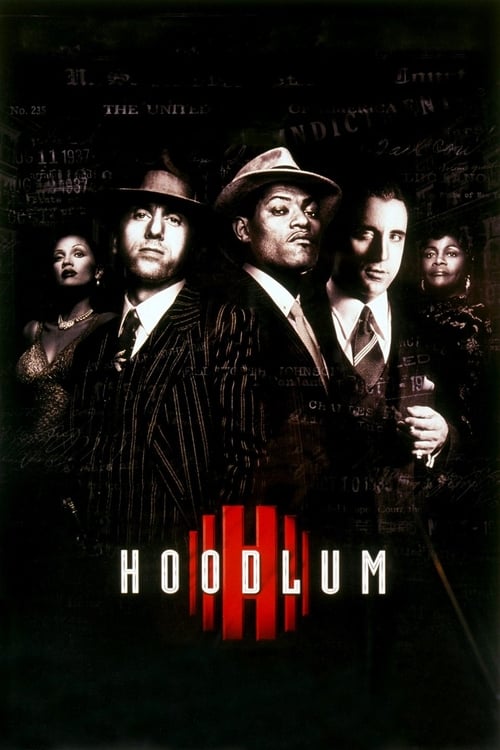
Hoodlum
In 1934, the second most lucrative business in New York City was running 'the numbers'. When Madam Queen—the powerful woman who runs the scam in Harlem—is arrested, Ellsworth 'Bumpy' Johnson takes over the business and must resist an invasion from a merciless mobster.
The film struggled financially against its respectable budget of $30.0M, earning $23.5M globally (-22% loss).


Plot Structure
Story beats plotted across runtime


Narrative Arc
Emotional journey through the story's key moments
Story Circle
Blueprint 15-beat structure
Arcplot Score Breakdown
Weighted: Precision (70%) + Arc (15%) + Theme (15%)
Hoodlum (1997) showcases carefully calibrated plot construction, characteristic of Bill Duke's storytelling approach. This structural analysis examines how the film's 15-point plot structure maps to proven narrative frameworks across 2 hours and 10 minutes. With an Arcplot score of 6.8, the film balances conventional beats with creative variation.
Characters
Cast & narrative archetypes

Ellsworth "Bumpy" Johnson
Dutch Schultz
Francine Hughes
Stephanie St. Clair
Lucky Luciano
Illinois Gordon
Thomas Dewey
Main Cast & Characters
Ellsworth "Bumpy" Johnson
Played by Laurence Fishburne
Harlem gangster who returns from prison to reclaim his territory from Dutch Schultz during the 1930s numbers war.
Dutch Schultz
Played by Tim Roth
Ruthless white mobster attempting to take over the Harlem numbers racket through violence and intimidation.
Francine Hughes
Played by Vanessa Williams
Bumpy's sophisticated girlfriend who runs a successful beauty salon and wants him to leave the criminal life.
Stephanie St. Clair
Played by Cicely Tyson
The Numbers Queen of Harlem who mentors Bumpy and refuses to surrender her empire to Dutch Schultz.
Lucky Luciano
Played by Andy Garcia
Powerful Italian mob boss who initially backs Dutch Schultz but navigates the shifting power dynamics.
Illinois Gordon
Played by Chi McBride
Bumpy's loyal best friend and right-hand man who stands by him throughout the gang war.
Thomas Dewey
Played by William Atherton
Ambitious special prosecutor determined to bring down organized crime in New York City.
Structural Analysis
The Status Quo at 1 minutes (1% through the runtime) establishes Bumpy Johnson is released from Sing Sing prison in 1934, returning to Harlem after serving time. He's a respected figure in the community, greeted warmly as he walks the streets of his neighborhood.. Structural examination shows that this early placement immediately immerses viewers in the story world.
The inciting incident occurs at 17 minutes when Dutch Schultz viciously attacks Stephanie St. Clair's numbers operation, bombing her headquarters and killing several people. This act of violence makes it clear that the peaceful coexistence is over and Schultz intends to take Harlem by force.. At 13% through the film, this Disruption is delayed, allowing extended setup of the story world. This beat shifts the emotional landscape, launching the protagonist into the central conflict.
The First Threshold at 33 minutes marks the transition into Act II, occurring at 26% of the runtime. This illustrates the protagonist's commitment to Bumpy makes the active choice to become Stephanie's enforcer and lead the war against Dutch Schultz. He commits to fighting for Harlem's independence, knowing this means putting himself and his loved ones in danger. This is his point of no return., moving from reaction to action.
At 66 minutes, the Midpoint arrives at 50% of the runtime—precisely centered, creating perfect narrative symmetry. Of particular interest, this crucial beat Bumpy scores a major victory by successfully disrupting Dutch Schultz's operations and gaining ground in the numbers racket. It appears he's winning the war. However, this false victory raises the stakes - Schultz becomes more desperate and dangerous, and Bumpy has more to lose., fundamentally raising what's at risk. The emotional intensity shifts, dividing the narrative into clear before-and-after phases.
The Collapse moment at 98 minutes (76% through) represents the emotional nadir. Here, Someone close to Bumpy is killed in the violence (the "whiff of death"), or Bumpy faces a devastating defeat that threatens everything he's built. The human cost of the war becomes unbearable, and it seems like all is lost - Schultz has the power, resources, and willingness to destroy everything., reveals the protagonist at their lowest point. This beat's placement in the final quarter sets up the climactic reversal.
The Second Threshold at 105 minutes initiates the final act resolution at 81% of the runtime. Bumpy gains crucial information or has a realization that synthesizes everything he's learned. He understands that true power comes from community solidarity and strategic thinking, not just violence. He formulates a final plan that combines his street smarts with the political lessons learned, possibly leveraging Lucky Luciano's rivalry with Schultz., demonstrating the transformation achieved throughout the journey.
Emotional Journey
Hoodlum's emotional architecture traces a deliberate progression across 15 carefully calibrated beats.
Narrative Framework
This structural analysis employs systematic plot point analysis that identifies crucial turning points. By mapping Hoodlum against these established plot points, we can identify how Bill Duke utilizes or subverts traditional narrative conventions. The plot point approach reveals not only adherence to structural principles but also creative choices that distinguish Hoodlum within the crime genre.
Bill Duke's Structural Approach
Among the 3 Bill Duke films analyzed on Arcplot, the average structural score is 7.3, reflecting strong command of classical structure. Hoodlum takes a more unconventional approach compared to the director's typical style. For comparative analysis, explore the complete Bill Duke filmography.
Comparative Analysis
Additional crime films include The Bad Guys, Rustom and The Whole Ten Yards. For more Bill Duke analyses, see Sister Act 2: Back in the Habit, A Rage in Harlem.
Plot Points by Act
Act I
SetupStatus Quo
Bumpy Johnson is released from Sing Sing prison in 1934, returning to Harlem after serving time. He's a respected figure in the community, greeted warmly as he walks the streets of his neighborhood.
Theme
Stephanie St. Clair, the Queen of Numbers, tells Bumpy that "this is about respect and dignity" - what the community deserves versus what the white mob wants to take from them. The theme of dignity and self-determination in the face of oppression is established.
Worldbuilding
Bumpy reunites with his family and reconnects with Stephanie St. Clair's numbers operation in Harlem. We see the world of 1930s Harlem: the cultural richness, the illegal gambling operations, the racial tensions, and the threat of Dutch Schultz's encroachment on black-run enterprises. Bumpy takes a position working for Stephanie.
Disruption
Dutch Schultz viciously attacks Stephanie St. Clair's numbers operation, bombing her headquarters and killing several people. This act of violence makes it clear that the peaceful coexistence is over and Schultz intends to take Harlem by force.
Resistance
Bumpy debates how to respond to Dutch Schultz's aggression. Stephanie wants to fight back, but Bumpy is hesitant about all-out war. He navigates relationships with Lucky Luciano, who offers potential alliance, and witnesses more violence. He's torn between keeping his head down and standing up for his community.
Act II
ConfrontationFirst Threshold
Bumpy makes the active choice to become Stephanie's enforcer and lead the war against Dutch Schultz. He commits to fighting for Harlem's independence, knowing this means putting himself and his loved ones in danger. This is his point of no return.
Mirror World
Bumpy's relationship with Francine deepens. She represents the legitimate life he could have - love, family, normalcy. She challenges him to think about what kind of man he wants to be, mirroring the film's theme about dignity and self-worth beyond violence.
Premise
The war between Bumpy and Dutch Schultz escalates with strategic moves and counter-moves. Bumpy proves himself as a clever tactician, disrupting Schultz's operations while building alliances. We see the "gangster war" premise play out with violence, strategy, and power plays across Harlem and beyond.
Midpoint
Bumpy scores a major victory by successfully disrupting Dutch Schultz's operations and gaining ground in the numbers racket. It appears he's winning the war. However, this false victory raises the stakes - Schultz becomes more desperate and dangerous, and Bumpy has more to lose.
Opposition
Dutch Schultz retaliates with increasing brutality. The violence affects innocent people in Harlem. Bumpy's personal life suffers as the war consumes him. Political pressure mounts, corrupt cops squeeze both sides, and Bumpy faces internal conflicts about the cost of this war. The opposition closes in from all angles.
Collapse
Someone close to Bumpy is killed in the violence (the "whiff of death"), or Bumpy faces a devastating defeat that threatens everything he's built. The human cost of the war becomes unbearable, and it seems like all is lost - Schultz has the power, resources, and willingness to destroy everything.
Crisis
Bumpy faces his dark night of the soul, questioning whether the fight is worth it. He contemplates the price of dignity and whether he's become the very thing he fought against. He must reckon with the violence he's perpetuated and what it means for his community and soul.
Act III
ResolutionSecond Threshold
Bumpy gains crucial information or has a realization that synthesizes everything he's learned. He understands that true power comes from community solidarity and strategic thinking, not just violence. He formulates a final plan that combines his street smarts with the political lessons learned, possibly leveraging Lucky Luciano's rivalry with Schultz.
Synthesis
Bumpy executes his final plan. The historical climax involves Dutch Schultz's assassination (orchestrated by the Commission including Lucky Luciano). Bumpy ensures Harlem's numbers operations remain in community hands. He confronts remaining enemies and secures his position, synthesizing his warrior nature with wisdom about sustainable power.
Transformation
Bumpy stands in Harlem, transformed from an ex-con trying to find his place into a leader who secured his community's autonomy. Unlike the opening where he was just returning, he now owns his role as protector and power broker. He has earned the respect and dignity the theme promised, though at great cost.