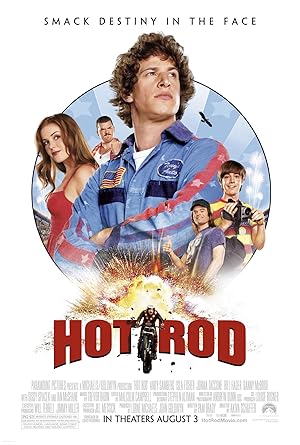
Hot Rod
Rod Kimble is a naïf, a slacker living in a small US town with his mom, his younger brother, and his stepfather whose respect he craves. He also misses his dead dad, whom he thinks was Evel Knievel's back-up. Rod, a man-child, believes that he is a stunt man. When his stepfather needs an operation, with help from his brother and his slacker pals, Rod hatches a plan to set a school-bus-jumping record on his moped. First, his crew and he have to raise money to rent the buses and build the ramp. Trouble is, Rod's inept at his chosen career. Looming failure is complicated by the return of Denise, Rod's next-door neighbor and secret heartthrob, who is home from college. Is public humiliation at hand?
The film struggled financially against its moderate budget of $25.0M, earning $14.4M globally (-43% loss). While initial box office returns were modest, the film has gained appreciation for its compelling narrative within the comedy genre.
1 win & 1 nomination


Plot Structure
Story beats plotted across runtime


Narrative Arc
Emotional journey through the story's key moments
Story Circle
Blueprint 15-beat structure
Arcplot Score Breakdown
Weighted: Precision (70%) + Arc (15%) + Theme (15%)
Hot Rod (2007) exemplifies meticulously timed plot construction, characteristic of Akiva Schaffer's storytelling approach. This structural analysis examines how the film's 15-point plot structure maps to proven narrative frameworks across 1 hour and 28 minutes. With an Arcplot score of 7.4, the film balances conventional beats with creative variation.
Characters
Cast & narrative archetypes

Rod Kimble
Kevin Powell
Dave
Rico
Denise
Frank Powell
Marie Powell
Main Cast & Characters
Rod Kimble
Played by Andy Samberg
A self-proclaimed stuntman who wants to earn his stepfather's respect by beating him in a fight, but first must raise money for his heart surgery.
Kevin Powell
Played by Jorma Taccone
Rod's half-brother and cameraman, a quiet and supportive member of the stunt crew.
Dave
Played by Bill Hader
Rod's best friend and crew member, an energetic and loyal supporter of Rod's stunts.
Rico
Played by Danny McBride
The newest and most sensible member of Rod's stunt crew who questions the logic of their plans.
Denise
Played by Isla Fisher
Rod's neighbor and love interest who becomes involved with Rod's rival but eventually supports his stunt.
Frank Powell
Played by Ian McShane
Rod's stepfather, a stern and dismissive man whose approval Rod desperately seeks.
Marie Powell
Played by Sissy Spacek
Rod's loving mother who supports her son despite his questionable stunt career.
Structural Analysis
The Status Quo at 1 minutes (1% through the runtime) establishes Rod Kimble prepares for a stunt jump in full daredevil regalia, establishing his identity as a would-be professional stuntman who idolizes Evel Knievel despite being perpetually unsuccessful.. Of particular interest, this early placement immediately immerses viewers in the story world.
The inciting incident occurs at 10 minutes when Frank collapses from a heart condition and Rod learns he needs a $50,000 heart transplant or he'll die. Rod's world is disrupted by the potential loss of the man he needs to defeat to earn respect.. At 11% through the film, this Disruption aligns precisely with traditional story structure. This beat shifts the emotional landscape, launching the protagonist into the central conflict.
The First Threshold at 21 minutes marks the transition into Act II, occurring at 24% of the runtime. This indicates the protagonist's commitment to Rod makes the active decision to perform a massive stunt jumping 15 buses to raise $50,000 for Frank's surgery. This is his choice to enter the world of attempting a truly legitimate, dangerous stunt., moving from reaction to action.
At 45 minutes, the Midpoint arrives at 51% of the runtime—precisely centered, creating perfect narrative symmetry. Structural examination shows that this crucial beat False victory: The fundraiser is successful, they've raised the money, and Rod feels like a hero. He shares a romantic moment with Denise. Everything seems to be coming together, but this masks underlying problems with his motivations., fundamentally raising what's at risk. The emotional intensity shifts, dividing the narrative into clear before-and-after phases.
The Collapse moment at 64 minutes (72% through) represents the emotional nadir. Here, Rod crashes during a practice run and is badly injured. His crew abandons him, Denise rejects him after learning his selfish motivations, and he's left alone having lost everything. The "death" of his dream and relationships., indicates the protagonist at their lowest point. This beat's placement in the final quarter sets up the climactic reversal.
The Second Threshold at 69 minutes initiates the final act resolution at 78% of the runtime. Rod realizes he needs to do the stunt for the right reasons: to genuinely help Frank and honor his deceased father's memory. His friends return, and he understands that respect comes from integrity and caring for others, not just from stunts., demonstrating the transformation achieved throughout the journey.
Emotional Journey
Hot Rod's emotional architecture traces a deliberate progression across 15 carefully calibrated beats.
Narrative Framework
This structural analysis employs proven narrative structure principles that track dramatic progression. By mapping Hot Rod against these established plot points, we can identify how Akiva Schaffer utilizes or subverts traditional narrative conventions. The plot point approach reveals not only adherence to structural principles but also creative choices that distinguish Hot Rod within the comedy genre.
Akiva Schaffer's Structural Approach
Among the 3 Akiva Schaffer films analyzed on Arcplot, the average structural score is 7.5, reflecting strong command of classical structure. Hot Rod takes a more unconventional approach compared to the director's typical style. For comparative analysis, explore the complete Akiva Schaffer filmography.
Comparative Analysis
Additional comedy films include The Bad Guys, Ella Enchanted and The Evening Star. For more Akiva Schaffer analyses, see Popstar: Never Stop Never Stopping, The Watch.
Plot Points by Act
Act I
SetupStatus Quo
Rod Kimble prepares for a stunt jump in full daredevil regalia, establishing his identity as a would-be professional stuntman who idolizes Evel Knievel despite being perpetually unsuccessful.
Theme
Dave tells Rod that he needs to "earn respect" through his actions. This encapsulates the film's central theme: respect must be earned through genuine achievement, not demanded or assumed.
Worldbuilding
Establishment of Rod's dysfunctional relationship with stepfather Frank (who beats him in weekly fights), his crew of misfit friends, his unrequited love for neighbor Denise, and his delusional aspirations to become a professional stuntman despite constant failure.
Disruption
Frank collapses from a heart condition and Rod learns he needs a $50,000 heart transplant or he'll die. Rod's world is disrupted by the potential loss of the man he needs to defeat to earn respect.
Resistance
Rod debates what to do about Frank's condition. He initially resists getting involved but realizes he needs Frank alive so he can defeat him properly. The crew discusses various fundraising schemes, leading to Rod's decision.
Act II
ConfrontationFirst Threshold
Rod makes the active decision to perform a massive stunt jumping 15 buses to raise $50,000 for Frank's surgery. This is his choice to enter the world of attempting a truly legitimate, dangerous stunt.
Mirror World
Rod's relationship with Denise deepens as she agrees to help with the fundraiser. She represents the authentic connection and respect Rod actually needs, contrasting with his obsession with earning Frank's respect through violence.
Premise
The "fun and games" of preparing for the big stunt: training montages, small fundraising stunts, bonding with the crew, absurd comedy set pieces, and Rod attempting to prove himself while growing closer to Denise.
Midpoint
False victory: The fundraiser is successful, they've raised the money, and Rod feels like a hero. He shares a romantic moment with Denise. Everything seems to be coming together, but this masks underlying problems with his motivations.
Opposition
Things fall apart: Rod's ego grows out of control, he alienates his friends and Denise with his arrogance, the crew fractures, and Rod reveals he's doing this primarily for his own glory rather than to save Frank.
Collapse
Rod crashes during a practice run and is badly injured. His crew abandons him, Denise rejects him after learning his selfish motivations, and he's left alone having lost everything. The "death" of his dream and relationships.
Crisis
Rod's dark night of the soul. He goes on a falling rampage through the woods, literally tumbling downhill in a visual metaphor for his life. He contemplates giving up entirely on his dreams and identity.
Act III
ResolutionSecond Threshold
Rod realizes he needs to do the stunt for the right reasons: to genuinely help Frank and honor his deceased father's memory. His friends return, and he understands that respect comes from integrity and caring for others, not just from stunts.
Synthesis
The finale stunt over 15 buses. Rod performs the jump with his crew united, Denise supporting him, and genuine purpose. He successfully completes the jump (barely), Frank gets his surgery, and Rod finally earns authentic respect.
Transformation
Closing image mirrors the opening but transformed: Rod attempts another stunt, but now with Denise as his partner, Frank's genuine respect earned through his selfless act, and true confidence rather than delusion. He's still a goofball, but now with authentic relationships and earned respect.