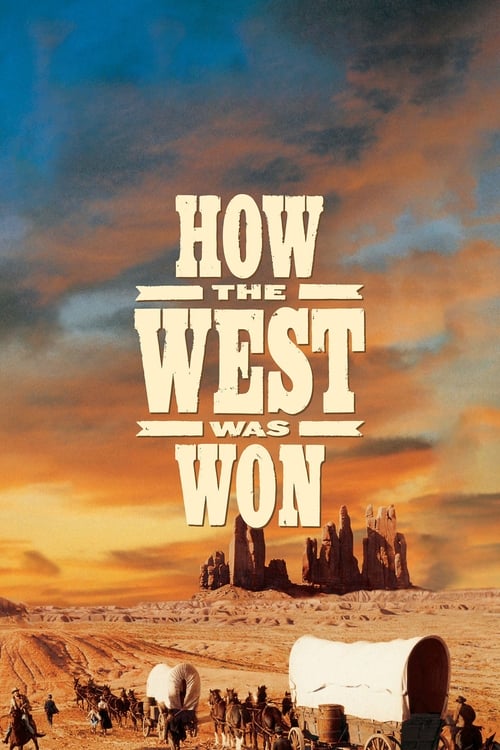
How the West Was Won
The epic tale of the development of the American West from the 1830s through the Civil War to the end of the century, as seen through the eyes of one pioneer family.
Despite a moderate budget of $15.0M, How the West Was Won became a financial success, earning $50.0M worldwide—a 233% return.
3 Oscars. 10 wins & 5 nominations


Plot Structure
Story beats plotted across runtime


Narrative Arc
Emotional journey through the story's key moments
Story Circle
Blueprint 15-beat structure
Arcplot Score Breakdown
Weighted: Precision (70%) + Arc (15%) + Theme (15%)
How the West Was Won (1962) exemplifies strategically placed narrative architecture, characteristic of John Ford's storytelling approach. This structural analysis examines how the film's 15-point plot structure maps to proven narrative frameworks across 2 hours and 44 minutes. With an Arcplot score of 7.3, the film balances conventional beats with creative variation.
Characters
Cast & narrative archetypes

Eve Prescott
Linus Rawlings
Cleve Van Valen
Zeb Rawlings
Lilith Prescott
Zebulon Prescott
Rebecca Prescott
Main Cast & Characters
Eve Prescott
Played by Carroll Baker
Strong-willed daughter of pioneers who falls for a gambler and settles in the West.
Linus Rawlings
Played by James Stewart
Mountain man and trapper who guides the Prescott family and marries the eldest daughter.
Cleve Van Valen
Played by Gregory Peck
Charming gambler who wins Eve's heart and eventually becomes a rancher.
Zeb Rawlings
Played by George Peppard
Eve and Cleve's son who becomes a cavalry officer during the Civil War and Indian conflicts.
Lilith Prescott
Played by Debbie Reynolds
Eve's older sister who marries Linus and settles on the frontier.
Zebulon Prescott
Played by Karl Malden
Patriarch of the Prescott family leading his family west on the Erie Canal.
Rebecca Prescott
Played by Agnes Moorehead
Matriarch of the Prescott family who dies in the river rapids sequence.
Structural Analysis
The Status Quo at 2 minutes (1% through the runtime) establishes The Prescott family travels west on the Erie Canal, seeking new opportunities in the frontier. The opening establishes the family's unity and their dream of settling virgin land.. Notably, this early placement immediately immerses viewers in the story world.
The inciting incident occurs at 20 minutes when River pirates attack the Prescott family. In the chaos and violence, the mother and father are killed, leaving the daughters orphaned on the frontier. The family's dream is shattered.. At 12% through the film, this Disruption aligns precisely with traditional story structure. This beat shifts the emotional landscape, launching the protagonist into the central conflict.
The First Threshold at 42 minutes marks the transition into Act II, occurring at 26% of the runtime. This shows the protagonist's commitment to Eve chooses to stay and build a farm, accepting Linus's help. This decision commits her to the frontier life and sets the family saga in motion across generations. The west will be their destiny., moving from reaction to action.
At 82 minutes, the Midpoint arrives at 50% of the runtime—precisely centered, creating perfect narrative symmetry. Notably, this crucial beat The Civil War's Battle of Shiloh represents a false defeat. Zeb survives the carnage but is disillusioned, questioning whether the cost of progress is worth the sacrifice. The naive optimism of westward expansion is challenged., fundamentally raising what's at risk. The emotional intensity shifts, dividing the narrative into clear before-and-after phases.
The Collapse moment at 123 minutes (75% through) represents the emotional nadir. Here, The buffalo stampede through the railroad camp and subsequent disasters represent the chaotic price of progress. Multiple deaths occur, and the destruction of the Native American way of life becomes undeniable. The whiff of death permeates this segment., illustrates the protagonist at their lowest point. This beat's placement in the final quarter sets up the climactic reversal.
The Second Threshold at 131 minutes initiates the final act resolution at 80% of the runtime. Zeb makes peace with the complexity of the American story. He chooses to stay in the west with his family, accepting both the glory and the guilt. The railroad is completed, symbolizing synthesis of the old and new., demonstrating the transformation achieved throughout the journey.
Emotional Journey
How the West Was Won's emotional architecture traces a deliberate progression across 15 carefully calibrated beats.
Narrative Framework
This structural analysis employs proven narrative structure principles that track dramatic progression. By mapping How the West Was Won against these established plot points, we can identify how John Ford utilizes or subverts traditional narrative conventions. The plot point approach reveals not only adherence to structural principles but also creative choices that distinguish How the West Was Won within the western genre.
John Ford's Structural Approach
Among the 6 John Ford films analyzed on Arcplot, the average structural score is 6.9, demonstrating varied approaches to story architecture. How the West Was Won represents one of the director's most structurally precise works. For comparative analysis, explore the complete John Ford filmography.
Comparative Analysis
Additional western films include All the Pretty Horses, Shenandoah and Lone Star. For more John Ford analyses, see She Wore a Yellow Ribbon, Donovan's Reef and The Man Who Shot Liberty Valance.
Plot Points by Act
Act I
SetupStatus Quo
The Prescott family travels west on the Erie Canal, seeking new opportunities in the frontier. The opening establishes the family's unity and their dream of settling virgin land.
Theme
Zebulon Prescott speaks of the American spirit and manifest destiny: "This land has a destiny, and so do we." The theme of westward expansion as both promise and sacrifice is introduced.
Worldbuilding
Introduction to the Prescott family members, their relationships, and the dangerous journey west. We meet river man Linus Rawlings and see the attraction between him and Eve Prescott. The wild frontier and its perils are established.
Disruption
River pirates attack the Prescott family. In the chaos and violence, the mother and father are killed, leaving the daughters orphaned on the frontier. The family's dream is shattered.
Resistance
Linus helps the surviving daughters. Eve must decide whether to continue west or return east. The sisters debate their future, with Lilith choosing to go to St. Louis while Eve remains committed to their parents' dream of farming the Ohio valley.
Act II
ConfrontationFirst Threshold
Eve chooses to stay and build a farm, accepting Linus's help. This decision commits her to the frontier life and sets the family saga in motion across generations. The west will be their destiny.
Mirror World
The second generation emerges: Eve and Linus's son Zeb grows up during the Gold Rush era. The Civil War subplot introduces him to a world beyond the farm, showing the cost of nation-building.
Premise
The promise of the premise: witnessing the epic scope of westward expansion through multiple generations. We see the Gold Rush, wagon trains, the Civil War, and the building of the transcontinental railroad.
Midpoint
The Civil War's Battle of Shiloh represents a false defeat. Zeb survives the carnage but is disillusioned, questioning whether the cost of progress is worth the sacrifice. The naive optimism of westward expansion is challenged.
Opposition
The railroad segment shows increasing opposition: Native Americans defending their land, corporate greed, labor exploitation, and family separation. Zeb becomes a marshal facing outlaws. The dream of the west becomes harder and more morally complex.
Collapse
The buffalo stampede through the railroad camp and subsequent disasters represent the chaotic price of progress. Multiple deaths occur, and the destruction of the Native American way of life becomes undeniable. The whiff of death permeates this segment.
Crisis
Zeb faces a dark reckoning with the violence he's perpetrated as a lawman and the realization that the west was won through blood and displacement. The family confronts what their dream actually cost.
Act III
ResolutionSecond Threshold
Zeb makes peace with the complexity of the American story. He chooses to stay in the west with his family, accepting both the glory and the guilt. The railroad is completed, symbolizing synthesis of the old and new.
Synthesis
The finale shows the completion of the transcontinental railroad and Zeb's family established in California. The west is won, but at tremendous cost. The family endures, carrying forward the legacy of those who died building this nation.
Transformation
Aerial shots of modern highways and cities where wilderness once stood. The closing image transforms the pioneer trails into 1960s America, showing how the Prescott family's journey became the nation itself.