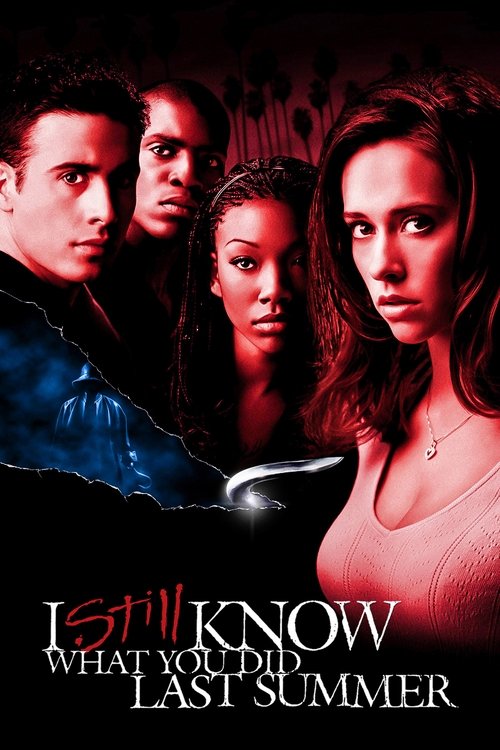
I Still Know What You Did Last Summer
Ever since killing the Fisherman one year ago, Julie James is still haunted by images of him after her. When her best friend Karla wins free tickets to the Bahamas, Julie finds this a perfect opportunity to finally relax. But someone is waiting for her. Someone who she thought was dead. Someone who is out again for revenge.
Despite a respectable budget of $24.0M, I Still Know What You Did Last Summer became a commercial success, earning $84.0M worldwide—a 250% return.
5 wins & 7 nominations


Plot Structure
Story beats plotted across runtime


Narrative Arc
Emotional journey through the story's key moments
Story Circle
Blueprint 15-beat structure
Arcplot Score Breakdown
Weighted: Precision (70%) + Arc (15%) + Theme (15%)
I Still Know What You Did Last Summer (1998) reveals carefully calibrated dramatic framework, characteristic of Danny Cannon's storytelling approach. This structural analysis examines how the film's 15-point plot structure maps to proven narrative frameworks across 1 hour and 40 minutes. With an Arcplot score of 6.8, the film balances conventional beats with creative variation.
Characters
Cast & narrative archetypes

Julie James
Ray Bronson
Karla Wilson
Will Benson
Tyrell Martin
Ben Willis / The Fisherman
Nancy
Main Cast & Characters
Julie James
Played by Jennifer Love Hewitt
Traumatized survivor from the previous summer, struggling with nightmares and guilt while trying to move forward with her life.
Ray Bronson
Played by Freddie Prinze Jr.
Julie's loyal boyfriend, working class fisherman who tries to support her through her trauma while dealing with his own fears.
Karla Wilson
Played by Brandy Norwood
Julie's best friend and college roommate, outgoing and fun-loving student who wins a trip to the Bahamas.
Will Benson
Played by Matthew Settle
Charming stranger who befriends the group in the Bahamas, seemingly helpful but with mysterious connections to the killer.
Tyrell Martin
Played by Mekhi Phifer
Karla's boyfriend, confident and protective young man who accompanies the group on their tropical vacation.
Ben Willis / The Fisherman
Played by Muse Watson
The vengeful killer who has returned to stalk Julie, a fisherman who refuses to die and seeks revenge for his son's death.
Nancy
Played by Jennifer Esposito
Charming but mysterious woman working at the island resort who has connections to the killer's plan.
Structural Analysis
The Status Quo at 1 minutes (1% through the runtime) establishes Julie wakes from a violent nightmare about Ben Willis attacking her in a confessional, revealing she remains deeply traumatized one year after the original events.. Of particular interest, this early placement immediately immerses viewers in the story world.
The inciting incident occurs at 13 minutes when Karla wins a radio contest for an all-expenses-paid trip to the Bahamas for four, seemingly offering Julie the perfect escape from her trauma and dark memories.. At 13% through the film, this Disruption is delayed, allowing extended setup of the story world. This beat shifts the emotional landscape, launching the protagonist into the central conflict.
The First Threshold at 26 minutes marks the transition into Act II, occurring at 26% of the runtime. This reveals the protagonist's commitment to Julie chooses to embrace the trip and boards the boat to Tower Bay Resort with Karla, Tyrell, and Will, actively deciding to try and leave her traumatic past behind., moving from reaction to action.
At 51 minutes, the Midpoint arrives at 51% of the runtime—precisely centered, creating perfect narrative symmetry. Structural examination shows that this crucial beat Julie discovers the body of the pool boy and realizes Ben Willis has followed her to the island. The storm has trapped them with no escape, transforming the vacation paradise into a death trap., fundamentally raising what's at risk. The emotional intensity shifts, dividing the narrative into clear before-and-after phases.
The Collapse moment at 75 minutes (75% through) represents the emotional nadir. Here, Will reveals himself as Ben Willis's son and has been helping his father all along. Julie's trust is completely shattered as the person she opened her heart to betrays her, and Karla is captured., demonstrates the protagonist at their lowest point. This beat's placement in the final quarter sets up the climactic reversal.
The Second Threshold at 81 minutes initiates the final act resolution at 81% of the runtime. Ray arrives on the island having survived the earlier attack, and Julie realizes she must stop running from her past and actively fight to save herself and her friends., demonstrating the transformation achieved throughout the journey.
Emotional Journey
I Still Know What You Did Last Summer's emotional architecture traces a deliberate progression across 15 carefully calibrated beats.
Narrative Framework
This structural analysis employs a 15-point narrative structure framework that maps key story moments. By mapping I Still Know What You Did Last Summer against these established plot points, we can identify how Danny Cannon utilizes or subverts traditional narrative conventions. The plot point approach reveals not only adherence to structural principles but also creative choices that distinguish I Still Know What You Did Last Summer within the horror genre.
Danny Cannon's Structural Approach
Among the 3 Danny Cannon films analyzed on Arcplot, the average structural score is 7.0, demonstrating varied approaches to story architecture. I Still Know What You Did Last Summer takes a more unconventional approach compared to the director's typical style. For comparative analysis, explore the complete Danny Cannon filmography.
Comparative Analysis
Additional horror films include Thinner, A Nightmare on Elm Street and Mary Reilly. For more Danny Cannon analyses, see Judge Dredd, Goal!.
Plot Points by Act
Act I
SetupStatus Quo
Julie wakes from a violent nightmare about Ben Willis attacking her in a confessional, revealing she remains deeply traumatized one year after the original events.
Theme
Karla tells Julie she needs to move on and stop letting the past control her life, stating that she can't keep living in fear of something that's over.
Worldbuilding
Julie struggles with PTSD at college while trying to maintain normalcy. We meet her roommate Karla, Karla's boyfriend Tyrell, and Julie's new romantic interest Will. Ray remains in Southport, working and planning to propose.
Disruption
Karla wins a radio contest for an all-expenses-paid trip to the Bahamas for four, seemingly offering Julie the perfect escape from her trauma and dark memories.
Resistance
Julie debates whether to go on the trip. Ray is attacked by the fisherman and left for dead, though Julie doesn't know this. The group prepares for the vacation while Ray tries desperately to reach Julie with warnings.
Act II
ConfrontationFirst Threshold
Julie chooses to embrace the trip and boards the boat to Tower Bay Resort with Karla, Tyrell, and Will, actively deciding to try and leave her traumatic past behind.
Mirror World
Julie begins to open up romantically to Will Benson at the resort, allowing herself to feel hopeful about a new relationship and future, unaware he is actually the killer's son.
Premise
The group enjoys the tropical paradise resort while ominous signs emerge. A massive storm approaches, isolating the island. Strange occurrences begin as guests and staff start disappearing one by one.
Midpoint
Julie discovers the body of the pool boy and realizes Ben Willis has followed her to the island. The storm has trapped them with no escape, transforming the vacation paradise into a death trap.
Opposition
Ben Willis systematically hunts the survivors through the resort. Tyrell is killed. The group discovers the radio contest was rigged. They realize the killer knew exactly where they would be and has been planning this all along.
Collapse
Will reveals himself as Ben Willis's son and has been helping his father all along. Julie's trust is completely shattered as the person she opened her heart to betrays her, and Karla is captured.
Crisis
Julie faces the horror of complete betrayal and isolation. Everyone she trusted is either dead, captured, or revealed as an enemy. She must process this devastation while finding the will to fight back alone.
Act III
ResolutionSecond Threshold
Ray arrives on the island having survived the earlier attack, and Julie realizes she must stop running from her past and actively fight to save herself and her friends.
Synthesis
Julie and Ray battle Ben Willis and his son in a violent confrontation through the resort greenhouse. Will is killed. Ben Willis is seemingly defeated when Julie shoots him and he falls into the greenhouse equipment.
Transformation
In the hospital, Julie is recovering when Ben Willis's hand suddenly grabs her, revealing he has survived yet again. Her nightmare continues - she can never truly escape her past.