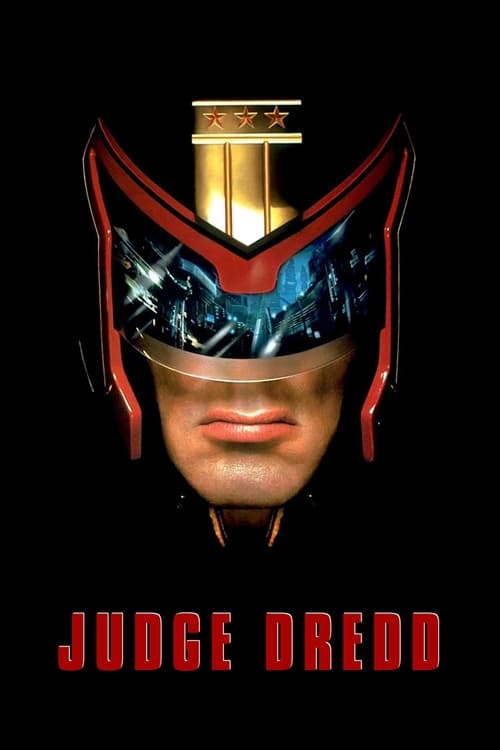
Judge Dredd
In a dystopian future, Dredd, the most famous judge (a cop with instant field judiciary powers) is convicted for a crime he did not commit while his murderous counterpart escapes.
Working with a substantial budget of $90.0M, the film achieved a respectable showing with $113.5M in global revenue (+26% profit margin).


Plot Structure
Story beats plotted across runtime


Narrative Arc
Emotional journey through the story's key moments
Story Circle
Blueprint 15-beat structure
Arcplot Score Breakdown
Weighted: Precision (70%) + Arc (15%) + Theme (15%)
Judge Dredd (1995) reveals deliberately positioned narrative architecture, characteristic of Danny Cannon's storytelling approach. This structural analysis examines how the film's 15-point plot structure maps to proven narrative frameworks across 1 hour and 36 minutes. With an Arcplot score of 6.9, the film balances conventional beats with creative variation.
Characters
Cast & narrative archetypes

Judge Joseph Dredd
Rico
Judge Hershey
Herman Ferguson
Chief Justice Fargo
Judge Griffin
Main Cast & Characters
Judge Joseph Dredd
Played by Sylvester Stallone
Mega-City One's most legendary Street Judge, unwavering in his dedication to the Law, framed for murder and forced to question his absolute beliefs.
Rico
Played by Armand Assante
A former Judge and Dredd's unknown genetic brother, consumed by vengeance after years of wrongful imprisonment in Aspen Penal Colony.
Judge Hershey
Played by Diane Lane
A principled and compassionate Judge who believes in Dredd's innocence and risks her career to help him.
Herman Ferguson
Played by Rob Schneider
A cowardly hacker and recurring offender who becomes Dredd's unlikely ally during his fugitive journey.
Chief Justice Fargo
Played by Max von Sydow
The founder of the Judge system and Dredd's genetic father, who undertakes the Long Walk when his past is revealed.
Judge Griffin
Played by Jürgen Prochnow
A senior Judge and member of the Council who conspires with Rico to seize power and reinstate the Janus Project.
Structural Analysis
The Status Quo at 1 minutes (1% through the runtime) establishes Mega-City One in chaos; Judge Dredd arrives as the ultimate lawman, dispensing swift justice without hesitation, establishing him as an unwavering symbol of the law.. Of particular interest, this early placement immediately immerses viewers in the story world.
The inciting incident occurs at 12 minutes when Rico is released from prison and murders reporter Vardus Hammond using Dredd's gun, framing Dredd for the crime—shattering Dredd's status as the infallible judge.. At 13% through the film, this Disruption is delayed, allowing extended setup of the story world. This beat shifts the emotional landscape, launching the protagonist into the central conflict.
The First Threshold at 24 minutes marks the transition into Act II, occurring at 25% of the runtime. This indicates the protagonist's commitment to Dredd is sentenced to life imprisonment in the Cursed Earth wasteland. He removes his badge and accepts exile, crossing from judge to criminal, entering a world where law means nothing., moving from reaction to action.
At 48 minutes, the Midpoint arrives at 50% of the runtime—precisely centered, creating perfect narrative symmetry. Notably, this crucial beat Dredd discovers the truth: he and Rico are both clones of Chief Justice Fargo, raised as experiments. His entire identity as the perfect judge is revealed as artificial—a false defeat shaking his core., fundamentally raising what's at risk. The emotional intensity shifts, dividing the narrative into clear before-and-after phases.
The Collapse moment at 72 minutes (75% through) represents the emotional nadir. Here, Chief Justice Fargo is murdered by Judge Griffin. Dredd's creator and father figure dies, representing the death of the old order and Dredd's last connection to his identity as a judge., indicates the protagonist at their lowest point. This beat's placement in the final quarter sets up the climactic reversal.
The Second Threshold at 77 minutes initiates the final act resolution at 80% of the runtime. Dredd embraces his humanity and chooses to fight not as the perfect judge, but as a man who understands justice requires compassion. He reclaims his badge, synthesizing law with humanity., demonstrating the transformation achieved throughout the journey.
Emotional Journey
Judge Dredd's emotional architecture traces a deliberate progression across 15 carefully calibrated beats.
Narrative Framework
This structural analysis employs structural analysis methodology used to understand storytelling architecture. By mapping Judge Dredd against these established plot points, we can identify how Danny Cannon utilizes or subverts traditional narrative conventions. The plot point approach reveals not only adherence to structural principles but also creative choices that distinguish Judge Dredd within the science fiction genre.
Danny Cannon's Structural Approach
Among the 3 Danny Cannon films analyzed on Arcplot, the average structural score is 7.0, demonstrating varied approaches to story architecture. Judge Dredd takes a more unconventional approach compared to the director's typical style. For comparative analysis, explore the complete Danny Cannon filmography.
Comparative Analysis
Additional science fiction films include The Postman, Mad Max 2 and AVP: Alien vs. Predator. For more Danny Cannon analyses, see Goal!, I Still Know What You Did Last Summer.
Plot Points by Act
Act I
SetupStatus Quo
Mega-City One in chaos; Judge Dredd arrives as the ultimate lawman, dispensing swift justice without hesitation, establishing him as an unwavering symbol of the law.
Theme
Chief Justice Fargo discusses with others the balance between justice and humanity, foreshadowing Dredd's need to learn that the law must serve people, not replace compassion.
Worldbuilding
Introduction to Mega-City One's dystopian society, the Judge system, Dredd's rigid adherence to law, his relationship with Judge Hershey, and the Council of Judges governing structure.
Disruption
Rico is released from prison and murders reporter Vardus Hammond using Dredd's gun, framing Dredd for the crime—shattering Dredd's status as the infallible judge.
Resistance
Dredd is arrested, tried, and convicted despite his protests of innocence. Judge Hershey doubts his guilt. Chief Justice Fargo resigns in shame. Dredd faces the reality of being judged by the system he served.
Act II
ConfrontationFirst Threshold
Dredd is sentenced to life imprisonment in the Cursed Earth wasteland. He removes his badge and accepts exile, crossing from judge to criminal, entering a world where law means nothing.
Mirror World
Dredd meets Herman Ferguson, a talkative hacker prisoner who represents humanity, humor, and survival by flexibility—everything Dredd's rigidity lacks. Their partnership begins to teach Dredd about human connection.
Premise
Dredd and Herman survive the wasteland, encounter Judge Hershey who believes in Dredd's innocence, battle cannibal gangs, and discover Rico's plot to create an army of cloned judges to overthrow the system.
Midpoint
Dredd discovers the truth: he and Rico are both clones of Chief Justice Fargo, raised as experiments. His entire identity as the perfect judge is revealed as artificial—a false defeat shaking his core.
Opposition
Rico accelerates his plan, producing clone judges. Judge Griffin reveals himself as the conspiracy's mastermind. Dredd must infiltrate the Hall of Justice while hunted by both Rico and corrupt judges.
Collapse
Chief Justice Fargo is murdered by Judge Griffin. Dredd's creator and father figure dies, representing the death of the old order and Dredd's last connection to his identity as a judge.
Crisis
Dredd grieves Fargo's death and faces his darkest moment—he is not the law incarnate, but a man who must choose what justice truly means beyond blind adherence to rules.
Act III
ResolutionSecond Threshold
Dredd embraces his humanity and chooses to fight not as the perfect judge, but as a man who understands justice requires compassion. He reclaims his badge, synthesizing law with humanity.
Synthesis
Dredd confronts Rico and Judge Griffin, destroys the cloning facility, defeats Rico in combat, and exposes the conspiracy. He saves Mega-City One by combining his skills with newfound wisdom.
Transformation
Dredd stands before the Council as a changed man—still a judge, but now one who understands mercy and humanity. He takes off his helmet, revealing his face, symbolizing his acceptance of his human identity.