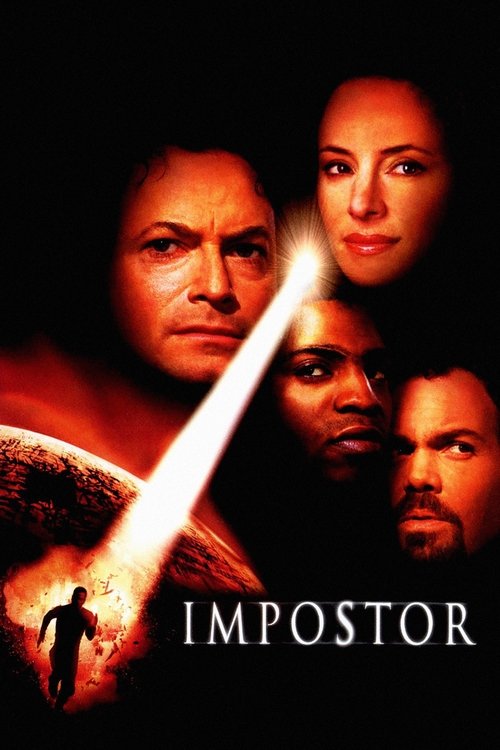
Impostor
A top-secret government weapons designer is arrested by a clandestine government organization on suspicion of being a clone created by the hostile alien race wanting to take over Earth.
The film box office disappointment against its moderate budget of $40.0M, earning $8.7M globally (-78% loss). While initial box office returns were modest, the film has gained appreciation for its compelling narrative within the action genre.


Plot Structure
Story beats plotted across runtime


Narrative Arc
Emotional journey through the story's key moments
Story Circle
Blueprint 15-beat structure
Arcplot Score Breakdown
Weighted: Precision (70%) + Arc (15%) + Theme (15%)
Impostor (2001) reveals meticulously timed story structure, characteristic of Gary Fleder's storytelling approach. This structural analysis examines how the film's 15-point plot structure maps to proven narrative frameworks across 1 hour and 42 minutes. With an Arcplot score of 7.3, the film balances conventional beats with creative variation.
Characters
Cast & narrative archetypes

Spencer Olham
Maya Olham
Major D.H. Hathaway
Colonel Burgess
Cale
Main Cast & Characters
Spencer Olham
Played by Gary Sinise
A weapons designer accused of being an alien replicant who must prove his humanity while evading capture.
Maya Olham
Played by Madeleine Stowe
Spencer's wife who believes in his innocence and helps him evade the authorities.
Major D.H. Hathaway
Played by Vincent D'Onofrio
A relentless government agent tasked with hunting down and eliminating Spencer as a suspected alien infiltrator.
Colonel Burgess
Played by Tony Shalhoub
Spencer's superior officer who oversees the weapons development program and becomes suspicious of him.
Cale
Played by Mekhi Phifer
A resourceful underground dweller who assists Spencer in his escape and search for truth.
Structural Analysis
The Status Quo at 1 minutes (1% through the runtime) establishes Spencer Olham is a top weapons scientist in a future Earth at war with Alpha Centauri aliens, living a comfortable life with his wife Maya, working on a device to end the war.. Of particular interest, this early placement immediately immerses viewers in the story world.
The inciting incident occurs at 13 minutes when Major Hathaway of ESA security accuses Spencer of being an alien replicant programmed to assassinate the Chancellor, showing him evidence and ordering his immediate termination.. At 13% through the film, this Disruption is delayed, allowing extended setup of the story world. This beat shifts the emotional landscape, launching the protagonist into the central conflict.
The First Threshold at 26 minutes marks the transition into Act II, occurring at 25% of the runtime. This reveals the protagonist's commitment to Spencer makes the active choice to go on the run into the hostile wasteland outside the city to prove his humanity and find the truth, becoming a fugitive., moving from reaction to action.
At 52 minutes, the Midpoint arrives at 51% of the runtime—precisely centered, creating perfect narrative symmetry. The analysis reveals that this crucial beat Spencer discovers evidence that suggests he might actually be the replicant - finding discrepancies in his memories and physical evidence that the real Spencer may have been replaced., fundamentally raising what's at risk. The emotional intensity shifts, dividing the narrative into clear before-and-after phases.
The Collapse moment at 77 minutes (76% through) represents the emotional nadir. Here, Spencer is cornered and seemingly defeated, facing the horrifying realization that he may be the weapon designed to kill, with his wife Maya endangered and no way to prove his innocence., illustrates the protagonist at their lowest point. This beat's placement in the final quarter sets up the climactic reversal.
The Second Threshold at 82 minutes initiates the final act resolution at 80% of the runtime. Spencer realizes the location of the real evidence that will prove the truth and decides to confront Hathaway directly, synthesizing his scientific knowledge with his determination to uncover the conspiracy., demonstrating the transformation achieved throughout the journey.
Emotional Journey
Impostor's emotional architecture traces a deliberate progression across 15 carefully calibrated beats.
Narrative Framework
This structural analysis employs proven narrative structure principles that track dramatic progression. By mapping Impostor against these established plot points, we can identify how Gary Fleder utilizes or subverts traditional narrative conventions. The plot point approach reveals not only adherence to structural principles but also creative choices that distinguish Impostor within the action genre.
Gary Fleder's Structural Approach
Among the 6 Gary Fleder films analyzed on Arcplot, the average structural score is 7.0, reflecting strong command of classical structure. Impostor represents one of the director's most structurally precise works. For comparative analysis, explore the complete Gary Fleder filmography.
Comparative Analysis
Additional action films include The Bad Guys, Puss in Boots and Venom: The Last Dance. For more Gary Fleder analyses, see Don't Say a Word, Kiss the Girls and Runaway Jury.
Plot Points by Act
Act I
SetupStatus Quo
Spencer Olham is a top weapons scientist in a future Earth at war with Alpha Centauri aliens, living a comfortable life with his wife Maya, working on a device to end the war.
Theme
A colleague discusses the nature of identity and what makes us human, foreshadowing the central question of whether Spencer is really himself or an alien replicant.
Worldbuilding
Establishment of the war-torn future Earth, the underground city, Spencer's relationship with Maya, his important work on weapons technology, and the paranoia surrounding alien infiltrators.
Disruption
Major Hathaway of ESA security accuses Spencer of being an alien replicant programmed to assassinate the Chancellor, showing him evidence and ordering his immediate termination.
Resistance
Spencer debates whether to surrender or flee, escapes from custody, and wrestles with the terrifying possibility that he might actually be an alien without knowing it.
Act II
ConfrontationFirst Threshold
Spencer makes the active choice to go on the run into the hostile wasteland outside the city to prove his humanity and find the truth, becoming a fugitive.
Mirror World
Spencer encounters Cale, a black market operative who becomes an unlikely ally, representing the theme of trust and identity in a world where no one is who they seem.
Premise
Spencer navigates the dangerous slums and wasteland while pursued by Hathaway, searching for evidence of his true identity, uncovering clues about the real Spencer Olham and the alien plot.
Midpoint
Spencer discovers evidence that suggests he might actually be the replicant - finding discrepancies in his memories and physical evidence that the real Spencer may have been replaced.
Opposition
Hathaway closes in relentlessly while Spencer's certainty about his own humanity crumbles; he struggles to reach the truth before he's killed, questioning every memory and relationship.
Collapse
Spencer is cornered and seemingly defeated, facing the horrifying realization that he may be the weapon designed to kill, with his wife Maya endangered and no way to prove his innocence.
Crisis
In his darkest moment, Spencer confronts the existential terror of not knowing if his thoughts, feelings, and memories are real or programmed, questioning whether identity requires origin or continuity.
Act III
ResolutionSecond Threshold
Spencer realizes the location of the real evidence that will prove the truth and decides to confront Hathaway directly, synthesizing his scientific knowledge with his determination to uncover the conspiracy.
Synthesis
Spencer confronts the truth about his identity, discovers the real conspiracy, and faces the devastating revelation about who he truly is and what he was designed to do.
Transformation
The final revelation: Spencer discovers he IS the replicant bomb, and in a tragic twist, explodes, killing those around him - the ultimate loss of identity and humanity he fought to preserve.