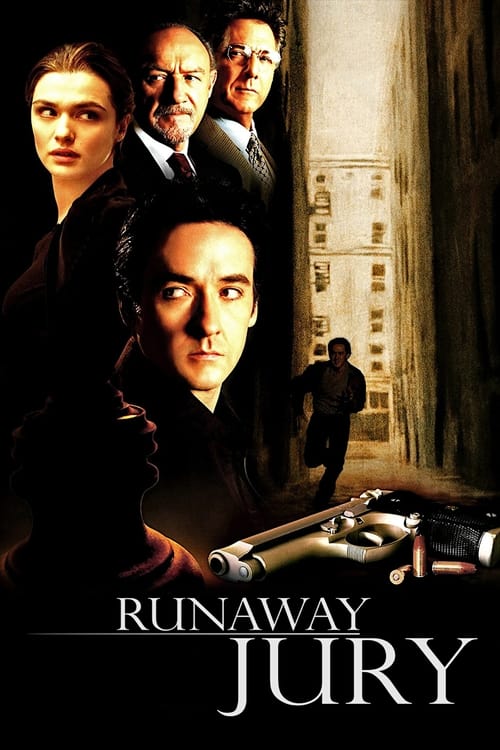
Runaway Jury
After a workplace shooting in New Orleans, a trial against the gun manufacturer pits lawyer Wendell Rohr against shady jury consultant Rankin Fitch, who uses illegal means to stack the jury with people sympathetic to the defense. But when juror Nicholas Easter and his girlfriend Marlee reveal their ability to sway the jury into delivering any verdict they want, a high-stakes cat-and-mouse game begins.
Working with a respectable budget of $60.0M, the film achieved a respectable showing with $80.2M in global revenue (+34% profit margin).
1 win & 3 nominations


Plot Structure
Story beats plotted across runtime


Narrative Arc
Emotional journey through the story's key moments
Story Circle
Blueprint 15-beat structure
Arcplot Score Breakdown
Weighted: Precision (70%) + Arc (15%) + Theme (15%)
Runaway Jury (2003) showcases carefully calibrated narrative architecture, characteristic of Gary Fleder's storytelling approach. This structural analysis examines how the film's 15-point plot structure maps to proven narrative frameworks across 2 hours and 7 minutes. With an Arcplot score of 6.5, the film balances conventional beats with creative variation.
Characters
Cast & narrative archetypes

Nicholas Easter
Marlee
Rankin Fitch
Wendall Rohr
Doyle
Main Cast & Characters
Nicholas Easter
Played by John Cusack
A seemingly ordinary juror who secretly manipulates the jury from within, driven by a hidden agenda against the gun industry.
Marlee
Played by Rachel Weisz
A mysterious woman who offers to 'sell' the jury verdict, working alongside Nicholas with personal motivations for revenge.
Rankin Fitch
Played by Gene Hackman
A ruthless jury consultant who uses surveillance, intimidation, and manipulation to secure verdicts for gun manufacturers.
Wendall Rohr
Played by Dustin Hoffman
A passionate plaintiff's attorney seeking justice for victims of gun violence, fighting an uphill battle against corporate power.
Doyle
Played by Jeremy Piven
Fitch's efficient and morally flexible second-in-command who coordinates surveillance and intimidation operations.
Structural Analysis
The Status Quo at 1 minutes (1% through the runtime) establishes A day trader prepares for work at his New Orleans brokerage firm, establishing the ordinary world that will be shattered by violence. The mundane morning routine creates a false sense of normalcy.. Notably, this early placement immediately immerses viewers in the story world.
The inciting incident occurs at 15 minutes when Nick Easter is selected for the jury despite Fitch's team flagging him as problematic. Simultaneously, the mysterious Marlee contacts Fitch, offering to sell him the verdict. The disruption is twofold: an unknown player enters the game.. At 12% through the film, this Disruption aligns precisely with traditional story structure. This beat shifts the emotional landscape, launching the protagonist into the central conflict.
The First Threshold at 32 minutes marks the transition into Act II, occurring at 25% of the runtime. This indicates the protagonist's commitment to Nick proves his power by making the entire jury wear matching clothes to court—a seemingly innocent gesture that demonstrates his total control over the group. Marlee delivers her ultimatum to Fitch: pay her price or lose the verdict. The game is officially on., moving from reaction to action.
At 64 minutes, the Midpoint arrives at 50% of the runtime—precisely centered, creating perfect narrative symmetry. Significantly, this crucial beat Fitch's team discovers damaging information about Nick's past—his connection to a previous gun violence case. The stakes escalate dramatically as Fitch believes he now has leverage. Marlee raises her price to ten million dollars, and Fitch must decide whether to pay or destroy them., fundamentally raising what's at risk. The emotional intensity shifts, dividing the narrative into clear before-and-after phases.
The Collapse moment at 95 minutes (75% through) represents the emotional nadir. Here, Fitch discovers the full truth: Nick's girlfriend was killed in a school shooting years ago, and this entire operation is personal revenge. Fitch believes he can now destroy Nick by exposing his bias. The couple's carefully constructed plan appears to be crumbling., reveals the protagonist at their lowest point. This beat's placement in the final quarter sets up the climactic reversal.
The Second Threshold at 102 minutes initiates the final act resolution at 80% of the runtime. The twist: Nick and Marlee anticipated Fitch's discovery. They've been playing him all along. Marlee reveals to Rohr that they never intended to sell the verdict—they wanted Fitch to pay, then deliver justice anyway. They have evidence of Fitch's crimes., demonstrating the transformation achieved throughout the journey.
Emotional Journey
Runaway Jury's emotional architecture traces a deliberate progression across 15 carefully calibrated beats.
Narrative Framework
This structural analysis employs proven narrative structure principles that track dramatic progression. By mapping Runaway Jury against these established plot points, we can identify how Gary Fleder utilizes or subverts traditional narrative conventions. The plot point approach reveals not only adherence to structural principles but also creative choices that distinguish Runaway Jury within the drama genre.
Gary Fleder's Structural Approach
Among the 6 Gary Fleder films analyzed on Arcplot, the average structural score is 7.0, reflecting strong command of classical structure. Runaway Jury takes a more unconventional approach compared to the director's typical style. For comparative analysis, explore the complete Gary Fleder filmography.
Comparative Analysis
Additional drama films include After Thomas, South Pacific and Dirty Dancing: Havana Nights. For more Gary Fleder analyses, see Don't Say a Word, Kiss the Girls and Homefront.
Plot Points by Act
Act I
SetupStatus Quo
A day trader prepares for work at his New Orleans brokerage firm, establishing the ordinary world that will be shattered by violence. The mundane morning routine creates a false sense of normalcy.
Theme
Rankin Fitch declares that trials are won or lost in jury selection, not in the courtroom. This statement establishes the film's central question: Can justice survive when the system itself is corrupted?
Worldbuilding
The world of high-stakes litigation is established. We meet Fitch's surveillance operation, the grieving widow Celeste Wood pursuing her lawsuit against gun manufacturer Vicksburg Firearms, and the legal teams assembling for battle. Nick Easter appears as a potential juror.
Disruption
Nick Easter is selected for the jury despite Fitch's team flagging him as problematic. Simultaneously, the mysterious Marlee contacts Fitch, offering to sell him the verdict. The disruption is twofold: an unknown player enters the game.
Resistance
Both legal teams prepare their strategies while Fitch investigates Nick and Marlee. Wendell Rohr represents the moral center, pursuing justice for the widow. Nick begins subtly influencing fellow jurors, demonstrating his ability to manipulate group dynamics.
Act II
ConfrontationFirst Threshold
Nick proves his power by making the entire jury wear matching clothes to court—a seemingly innocent gesture that demonstrates his total control over the group. Marlee delivers her ultimatum to Fitch: pay her price or lose the verdict. The game is officially on.
Mirror World
The relationship between Nick and Marlee is revealed as they meet secretly, showing they are partners with a shared mission. Their bond represents the thematic counterpoint—justice pursued through manipulation, fighting fire with fire against Fitch's corruption.
Premise
The promise of the premise unfolds: Nick masterfully manipulates jury dynamics while Marlee plays both sides, negotiating with Fitch and approaching Rohr. Fitch deploys his surveillance apparatus to uncover their identities. The chess match intensifies with each courtroom session.
Midpoint
Fitch's team discovers damaging information about Nick's past—his connection to a previous gun violence case. The stakes escalate dramatically as Fitch believes he now has leverage. Marlee raises her price to ten million dollars, and Fitch must decide whether to pay or destroy them.
Opposition
Fitch launches aggressive countermeasures. He has a juror's house broken into, another followed and harassed. Rohr confronts Marlee about her offer, rejecting her—he won't buy a verdict even for justice. Nick must work harder to maintain jury cohesion as Fitch's pressure mounts.
Collapse
Fitch discovers the full truth: Nick's girlfriend was killed in a school shooting years ago, and this entire operation is personal revenge. Fitch believes he can now destroy Nick by exposing his bias. The couple's carefully constructed plan appears to be crumbling.
Crisis
Nick and Marlee face their darkest moment. Fitch holds all the cards—he knows their identities, their motivation, their vulnerabilities. The jury deliberations are about to begin, and it seems Fitch will either buy the verdict or destroy their credibility entirely.
Act III
ResolutionSecond Threshold
The twist: Nick and Marlee anticipated Fitch's discovery. They've been playing him all along. Marlee reveals to Rohr that they never intended to sell the verdict—they wanted Fitch to pay, then deliver justice anyway. They have evidence of Fitch's crimes.
Synthesis
The finale unfolds. Nick guides the jury to a massive verdict for the plaintiff—$110 million. Marlee delivers Fitch's payment to Rohr as evidence of jury tampering. Fitch realizes too late that he's been outmaneuvered. The gun company is held accountable.
Transformation
Nick and Marlee walk away together, having achieved justice for his murdered girlfriend and all victims of gun violence. The system was corrupt, but they used its own weapons against it. Rohr has won legitimately, and Fitch faces prosecution. Justice prevails through unconventional means.