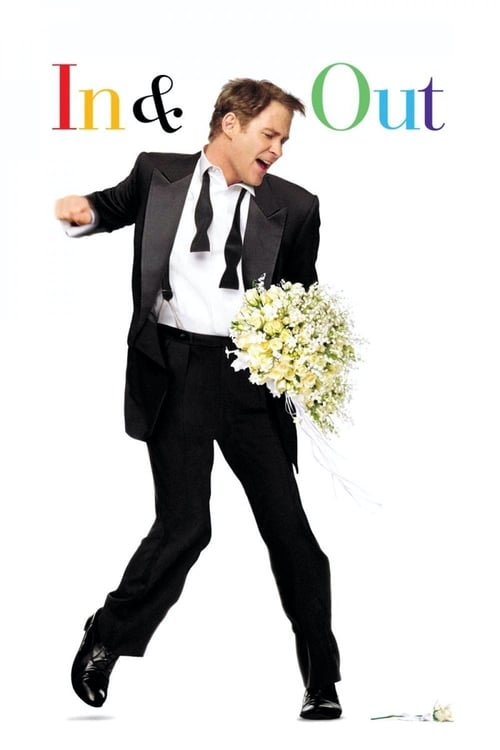
In & Out
A midwestern teacher questions his sexuality after a former student makes a comment about him at the Academy Awards.
Working with a respectable budget of $35.0M, the film achieved a modest success with $63.9M in global revenue (+83% profit margin).
Nominated for 1 Oscar. 7 wins & 18 nominations


Plot Structure
Story beats plotted across runtime


Narrative Arc
Emotional journey through the story's key moments
Story Circle
Blueprint 15-beat structure
Arcplot Score Breakdown
Weighted: Precision (70%) + Arc (15%) + Theme (15%)
In & Out (1997) exhibits meticulously timed dramatic framework, characteristic of Frank Oz's storytelling approach. This structural analysis examines how the film's 15-point plot structure maps to proven narrative frameworks across 1 hour and 30 minutes. With an Arcplot score of 7.3, the film balances conventional beats with creative variation.
Structural Analysis
The Status Quo at 1 minutes (1% through the runtime) establishes Howard Brackett, beloved high school English teacher in small-town Greenleaf, Indiana, is days away from marrying his girlfriend Emily. He's the perfect teacher, loved by all, living a comfortable, predictable life.. Significantly, this early placement immediately immerses viewers in the story world.
The inciting incident occurs at 10 minutes when During the televised Oscar ceremony, Cameron Drake wins Best Actor and publicly outs Howard in his acceptance speech, declaring: "Howard Brackett is gay." The entire town watches in shock. Howard's world explodes in an instant.. At 11% through the film, this Disruption aligns precisely with traditional story structure. This beat shifts the emotional landscape, launching the protagonist into the central conflict.
The First Threshold at 21 minutes marks the transition into Act II, occurring at 23% of the runtime. This indicates the protagonist's commitment to Howard makes the active choice to proceed with the wedding despite the scandal, deciding to prove everyone wrong by going through with marrying Emily. He commits to living the life everyone expects of him., moving from reaction to action.
At 44 minutes, the Midpoint arrives at 49% of the runtime—precisely centered, creating perfect narrative symmetry. Structural examination shows that this crucial beat False victory: The rehearsal dinner goes well, and it seems Howard has weathered the storm. Emily seems satisfied, the town is moving on, and the wedding will happen. Howard appears to have successfully maintained his façade and his life can continue as planned., fundamentally raising what's at risk. The emotional intensity shifts, dividing the narrative into clear before-and-after phases.
The Collapse moment at 66 minutes (73% through) represents the emotional nadir. Here, At the altar, unable to lie anymore, Howard stops the ceremony and declares: "I'm gay." His old life dies completely. Emily is devastated, his parents are shocked, and the entire town witnesses his confession. Everything Howard built—his reputation, relationship, security—collapses., illustrates the protagonist at their lowest point. This beat's placement in the final quarter sets up the climactic reversal.
The Second Threshold at 71 minutes initiates the final act resolution at 79% of the runtime. At Howard's graduation ceremony, Cameron Drake returns to Greenleaf and publicly kisses Howard to show solidarity. This act of courage inspires Howard to stand up for himself. He realizes he must fight back, synthesizing his newfound authenticity with his teaching values., demonstrating the transformation achieved throughout the journey.
Emotional Journey
In & Out's emotional architecture traces a deliberate progression across 15 carefully calibrated beats.
Narrative Framework
This structural analysis employs structural analysis methodology used to understand storytelling architecture. By mapping In & Out against these established plot points, we can identify how Frank Oz utilizes or subverts traditional narrative conventions. The plot point approach reveals not only adherence to structural principles but also creative choices that distinguish In & Out within the comedy genre.
Frank Oz's Structural Approach
Among the 11 Frank Oz films analyzed on Arcplot, the average structural score is 7.2, reflecting strong command of classical structure. In & Out represents one of the director's most structurally precise works. For comparative analysis, explore the complete Frank Oz filmography.
Comparative Analysis
Additional comedy films include The Bad Guys, Ella Enchanted and The Evening Star. For more Frank Oz analyses, see The Dark Crystal, The Indian in the Cupboard and Dirty Rotten Scoundrels.
Plot Points by Act
Act I
SetupStatus Quo
Howard Brackett, beloved high school English teacher in small-town Greenleaf, Indiana, is days away from marrying his girlfriend Emily. He's the perfect teacher, loved by all, living a comfortable, predictable life.
Theme
During bachelor party preparations, Emily's father makes a comment about Howard being "so sensitive" and "cultured," hinting at the film's core theme: authenticity versus conformity, being true to yourself versus living by others' expectations.
Worldbuilding
Establishment of Greenleaf as a conservative small town. Howard's life is shown: teaching poetry, preparing for his wedding to Emily, his relationship with former student Cameron Drake (now a Hollywood star). The town is proud that Cameron is nominated for an Oscar.
Disruption
During the televised Oscar ceremony, Cameron Drake wins Best Actor and publicly outs Howard in his acceptance speech, declaring: "Howard Brackett is gay." The entire town watches in shock. Howard's world explodes in an instant.
Resistance
Howard vehemently denies being gay to everyone—Emily, his parents, colleagues, the media that descends on the town. He debates whether to continue with the wedding. Emily stands by him. Howard tries to prove his heterosexuality, even using a "Straight or Gay?" self-help tape.
Act II
ConfrontationFirst Threshold
Howard makes the active choice to proceed with the wedding despite the scandal, deciding to prove everyone wrong by going through with marrying Emily. He commits to living the life everyone expects of him.
Mirror World
Peter Malloy, an openly gay reporter from a tabloid news show, arrives in Greenleaf to cover the story. He represents everything Howard is afraid to be—out, confident, unapologetic. Peter becomes the thematic mirror showing Howard what authentic living looks like.
Premise
The "fun and games" of Howard trying to act straight while wedding preparations continue. Comic sequences include the masculinity tape, awkward interactions with Peter, bachelor party mishaps, and Howard overcompensating his heterosexuality. The town debates the scandal.
Midpoint
False victory: The rehearsal dinner goes well, and it seems Howard has weathered the storm. Emily seems satisfied, the town is moving on, and the wedding will happen. Howard appears to have successfully maintained his façade and his life can continue as planned.
Opposition
Wedding day arrives. As Howard gets ready, the pressure intensifies. He has increasingly difficult moments suppressing his true self. Peter confronts Howard about living a lie. Howard's internal conflict reaches a breaking point as he walks toward the ceremony.
Collapse
At the altar, unable to lie anymore, Howard stops the ceremony and declares: "I'm gay." His old life dies completely. Emily is devastated, his parents are shocked, and the entire town witnesses his confession. Everything Howard built—his reputation, relationship, security—collapses.
Crisis
Howard faces immediate consequences: he's fired from his teaching job by the school principal. He sits alone, processing the loss of his career, his fiancée, and his place in the community. The dark night where he confronts what being true to himself has cost him.
Act III
ResolutionSecond Threshold
At Howard's graduation ceremony, Cameron Drake returns to Greenleaf and publicly kisses Howard to show solidarity. This act of courage inspires Howard to stand up for himself. He realizes he must fight back, synthesizing his newfound authenticity with his teaching values.
Synthesis
The entire town—students, parents, colleagues—stands up one by one declaring "I'm gay" in solidarity with Howard, even though most aren't. The community chooses acceptance over prejudice. Howard is reinstated. He reconciles with Emily as friends and embraces his identity.
Transformation
Final image: Howard dancing freely at a celebration, surrounded by accepting community members and with Peter. In contrast to the opening's repressed, conforming Howard, he's now authentic, liberated, and genuinely happy. He's found his true self and a community that accepts him.